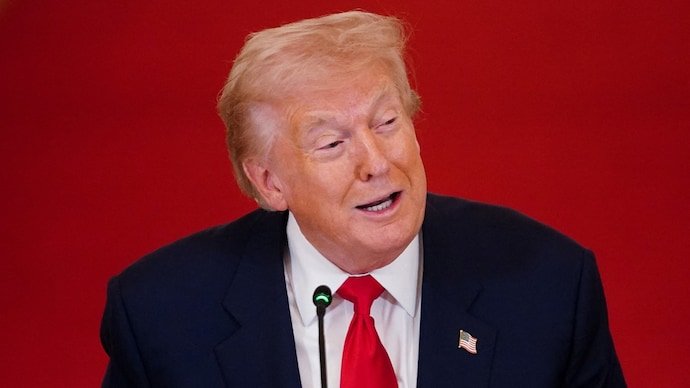
Amid the rapidly escalating conflict in the Middle East, US President Donald Trump has issued a stark warning regarding Iran’s future leadership. Trump stated that the next supreme leader of Iran would not remain in power for long unless the United States approves the appointment. His comments come as Tehran moves closer to officially announcing the successor to Ayatollah Ali Khamenei, who was reportedly killed during recent US–Israeli military strikes.
Iran’s powerful Assembly of Experts — the clerical body responsible for selecting the country’s supreme leader — is believed to have already chosen Khamenei’s successor during a confidential vote. However, the identity of the individual selected for the influential role has not yet been publicly revealed.
Speculation has intensified around the possibility that Mojtaba Khamenei, the son of the late Ayatollah Ali Khamenei, could take over the country’s highest political and religious office. Reports suggest that some senior clerics have privately indicated that the leadership could remain within the Khamenei family.
Trump Warns Iran’s Next Leader Needs US Approval
During an interview with ABC news, Donald Trump suggested that Iran’s future leader would need to gain approval from Washington to remain in power. According to Trump, the geopolitical reality of the ongoing conflict means that the next leader would struggle to maintain authority without international backing from the United States.
“He’s going to have to get approval from us,” Trump said in the interview. “If he doesn’t get approval from us, he’s not going to last long.”
The statement quickly sparked debate internationally, with many political analysts interpreting the remarks as a reflection of rising tensions between Iran and the US-led alliance.
However, Iranian officials strongly rejected the idea that any external power could influence the country’s leadership decisions. Iran’s Foreign Minister Abbas Araghchi emphasized that the appointment of the supreme leader is strictly an internal matter for the Iranian government and its religious authorities.
Speaking on NBC’s Meet the Press, Araghchi stated that no foreign government would be allowed to interfere in Iran’s domestic political processes. He also called on Trump to apologise for the growing conflict in the region.
“We will allow nobody to interfere in our domestic affairs,” Araghchi firmly stated during the interview.
Mojtaba Khamenei Emerges as Possible Successor
The Assembly of Experts, which consists of senior clerics responsible for selecting the supreme leader, confirmed that a decision regarding Khamenei’s successor has already been made. The announcement of the new leader is expected in the coming days.
One of the members of the body, Ayatollah Hosseinali Eshkevari, hinted that the leadership could remain within the Khamenei family. In a video shared by Iranian media outlets, Eshkevari suggested that the legacy of Ayatollah Ali Khamenei may continue through his family.
“The name of Khamenei will continue,” Eshkevari said in the video statement. “The vote has been cast and will be announced soon.”
If Mojtaba Khamenei is officially chosen, he would assume one of the most powerful positions in Iran’s political structure. The supreme leader holds ultimate authority over the country’s armed forces, government institutions, and judiciary.
Mojtaba Khamenei is widely known to represent the conservative faction within Iran’s political establishment. He is also believed to have strong ties with the powerful Islamic Revolutionary Guard Corps (IRGC), which plays a major role in Iran’s military and political landscape.
| Key Topic | Details |
|---|---|
| Previous Supreme Leader | Ayatollah Ali Khamenei |
| Possible Successor | Mojtaba Khamenei |
| Decision Authority | Iran’s Assembly of Experts |
| Trump’s Position | Next leader may not last without US approval |
| Iran’s Response | Leadership decision is an internal matter |
Israel Strikes Iranian Oil Depots as Conflict Intensifies
The debate over Iran’s future leadership comes at a time when the military conflict between Iran and the US–Israel alliance has entered its second week. Overnight Airstrikes targeted several oil storage facilities near Tehran, resulting in massive fires and thick plumes of smoke rising across parts of the Iranian capital.
Iranian authorities reported that at least four people were killed during the attacks on the fuel depots. The explosions caused significant damage to the facilities and disrupted nearby areas.
Israel later confirmed that the oil facilities were targeted because they were allegedly being used to support Iran’s military operations. Israeli officials described the strikes as part of their broader effort to weaken Iran’s military capabilities.
Conflict Spreads Across the Middle East
The conflict has continued to spread across several parts of the Middle East, raising fears of a broader regional war. Iran has launched multiple missiles and drone attacks targeting Israel and several Gulf countries in response to the strikes on its territory.
Explosions were reported in Tel Aviv after Israeli defense systems detected incoming Iranian missiles. Emergency services confirmed that at least six people were injured in the attacks on the city.
Several Gulf nations have also reported damage from projectiles and drones linked to the conflict. Saudi Arabian authorities stated that a missile struck a residential area in the city of Al-Kharj, resulting in two fatalities and twelve injuries.
Meanwhile, Bahrain reported damage to a desalination plant following a drone strike, while Kuwait said that fuel storage tanks at its international airport were hit during the ongoing hostilities.
Rising Human Cost of the War
As the conflict continues to intensify, the human toll has steadily increased. Iranian officials claim that more than 1,200 civilians have been killed since the start of the war, with nearly 10,000 people reportedly injured. These figures have not yet been independently verified by international organizations.
In neighboring Lebanon, nearly 400 people have died in Israeli airstrikes targeting militant positions and infrastructure. Israeli authorities, meanwhile, say that at least ten people have been killed by Iranian missile attacks on Israeli cities.
With military strikes expanding across multiple countries and tensions surrounding Iran’s leadership transition growing, analysts warn that the region could face further instability in the coming weeks.
For now, the world is watching closely as Iran prepares to announce its next supreme leader — a decision that could significantly shape the future direction of the country and its role in the ongoing Middle East conflict.
For breaking news and live news updates, like us on Facebook or follow us on Twitter and Instagram. Read more on Latest World on thefoxdaily.com.



COMMENTS 0