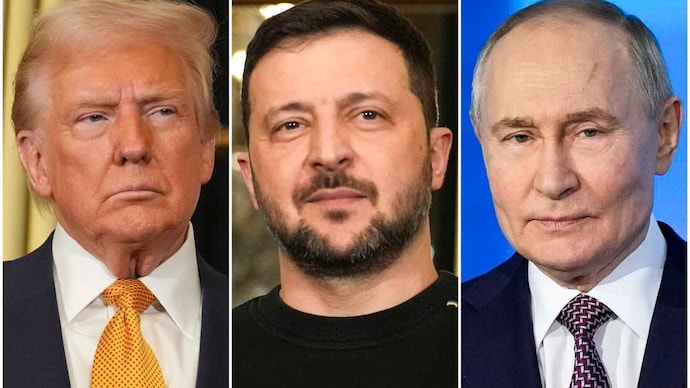
Donald Trump’s bold and wide-ranging peace plan for Ukraine has sharply divided Europe. While some European policymakers view the proposal as a potentially realistic framework to halt the ongoing conflict, many others believe it dangerously aligns with Russia’s strategic interests and undermines Ukraine’s sovereignty.
The plan-crafted during private discussions involving Russian officials and US envoy Steve Witkoff-addresses several of the war’s most sensitive issues head-on. It calls for freezing NATO expansion, banning the deployment of NATO troops inside Ukraine, and establishing a broad non-aggression pact between Russia, Ukraine, and European states. For Russia, the proposal marks the first instance of washington acknowledging that European security cannot be shaped while ignoring Moscow’s long-standing concerns. For European governments, however, the plan appears to formalize Russian priorities at the expense of Ukraine’s territorial integrity.
Among the most contentious elements are the territorial provisions. In line with Russia’s claims that date back to 2014, Crimea, Luhansk, and Donetsk would be recognized as de facto Russian territories. Ukraine would also withdraw from remaining positions in Donetsk to create a demilitarized buffer zone, while the battlefronts in Kherson and Zaporizhzhia would remain frozen. Under the proposal, Ukraine would permanently abandon its NATO membership ambitions and cap its military personnel at 600,000 troops.
In exchange, the United States would offer Ukraine a set of conditional security guarantees. However, these protections would be automatically revoked if Ukraine launched any “unprovoked” military strike inside Russian territory. The plan also includes gradual sanctions relief for Moscow, renewed diplomatic cooperation, and an invitation for Russia to return to the G8. Additionally, $100 billion in frozen Russian assets would be allocated toward rebuilding Ukraine-half of which, notably, would be directed to the United States.
| Key Component | Details of Trump’s Proposal |
|---|---|
| NATO Expansion | Ukraine barred from NATO; alliance cannot station troops in Ukraine. |
| Territorial Control | Crimea, Donetsk, Luhansk recognized as de facto Russian; buffer zone in Donetsk. |
| Military Limits | Ukrainian armed forces capped at 600,000 troops. |
| US Security Guarantees | Protection offered only if Ukraine avoids “without cause” strikes inside Russia. |
| Benefits to Russia | Sanctions relief, renewed cooperation, invitation to rejoin G8. |
| Reconstruction Funding | $100 billion from frozen Russian assets; 50% of proceeds directed to the US. |
Reacting cautiously, President Volodymyr Zelenskyy said he “appreciated the efforts” behind the proposal but stressed that any peace agreement must guarantee Ukraine’s protection from future aggression. European reactions were far more critical. EU foreign policy chief Kaja Kallas stated that the plan cannot work without Europe’s participation, while Germany’s foreign minister dismissed the document as nothing more than “a list of topics.”
The Kremlin, meanwhile, adopted a restrained tone, emphasizing the need to address the “root causes” of the conflict-particularly its opposition to NATO’s eastward expansion. Yet despite ongoing diplomatic discussions, the central question remains unresolved: is Trump’s proposal a viable foundation for peace negotiations, or is it merely a politically dramatic plan destined to collapse under mutual distrust?
For breaking news and live news updates, like us on Facebook or follow us on Twitter and Instagram. Read more on Latest World on thefoxdaily.com.



COMMENTS 0