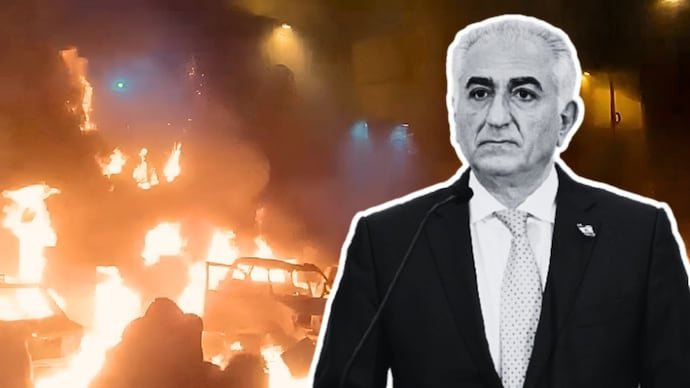
Reza Pahlavi, the eldest son of Iran’s last monarch Shah Mohammad Reza Pahlavi, left Iran in 1978 at the age of 17 to undergo fighter pilot training in the United States. Within a year, the Iranian monarchy collapsed under the weight of the 1979 Islamic Revolution. His parents fled, the Shah died in exile, and Crown Prince Reza never returned to his homeland.
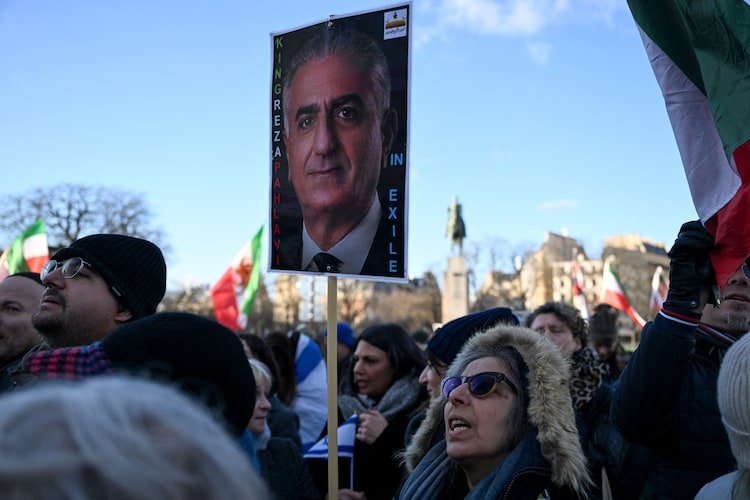
More than four decades later, Iran is once again in turmoil. As nationwide protests against Supreme Leader Ayatollah Ali Khamenei intensify, slogans such as “This is the final battle, Pahlavi will return,” “Javid Shah” (Long live the Shah), and “Mullahs must leave Iran” are being heard from Tehran to provincial cities.
The resurgence of monarchist chants has reignited a long-dormant question: can Crown Prince Reza Pahlavi move beyond being a nostalgic symbol and become a real political force in modern Iran? And if the Islamic Republic weakens or collapses, is there space—politically or socially—for his return?
These questions gain urgency amid escalating unrest, mounting economic hardship, open defiance of the clerical establishment, repeated warnings from US President Donald Trump, and renewed global speculation about regime change in Tehran.
Khamenei Under Pressure, Reports of an Escape Plan
Iran has now witnessed nearly two weeks of sustained protests across at least 222 cities and towns, including Tehran and the clerical stronghold of Qom. What began as anger over inflation, unemployment, and rising costs has rapidly evolved into direct calls for the overthrow of Ayatollah Khamenei’s rule.
In places such as Asgharabad, protesters have openly condemned Iran’s financial and military support for militant groups in Gaza and Lebanon, arguing that national wealth has been diverted abroad while Iranians struggle at home.
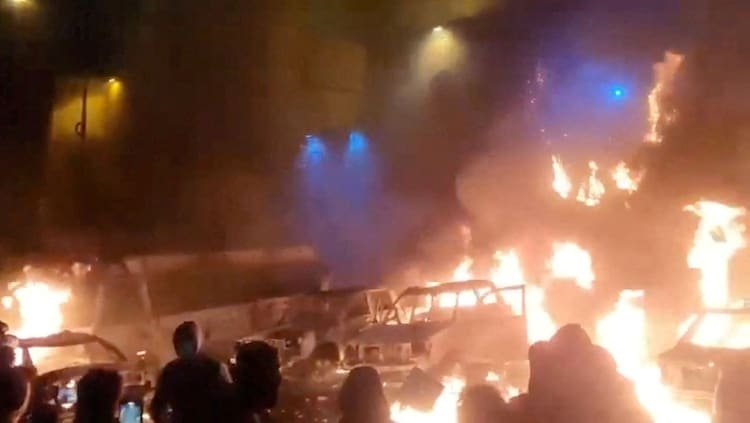
On Thursday night alone, demonstrators set buses, trucks, cars, and motorcycles ablaze. In response, authorities imposed a nationwide internet shutdown and deployed security forces with increasing brutality. According to Norway-based NGO Iran Human Rights, at least 45 people have been killed and more than 2,260 arrested so far.
Amid the unrest, international media reports have fueled speculation about the regime’s stability. The UK-based Times reported that Ayatollah Khamenei may be preparing an escape route to Russia, while French outlets claimed senior Iranian officials were quietly seeking visas for family members in Paris. If accurate, such moves would signal deep anxiety at the very top of the Islamic Republic.
Crown Prince Reza Pahlavi Emerges as a Unifying Face
Since the protests intensified in late December 2025, Crown Prince Reza Pahlavi has become the most recognizable opposition figure associated with the movement—despite remaining in exile.
His name has been chanted in Tehran, Isfahan, Marvdasht, and inside Tehran’s Grand Bazaar, a critical economic hub. Merchants there joined demonstrators in rejecting the Islamic Republic and voicing support for Pahlavi’s return.
On January 6, Reza Pahlavi issued his most direct call yet for coordinated civil resistance, urging Iranians to chant slogans from rooftops and streets at exactly 8 PM on January 8 and 9. In video messages, he praised protesters’ courage and claimed that large crowds had forced some security personnel to retreat or defect.
In a subsequent televised address, Pahlavi said he was ready to return to Iran when conditions permit, stating that he has spent his life preparing to serve the nation and could help lead a final transition away from clerical rule.
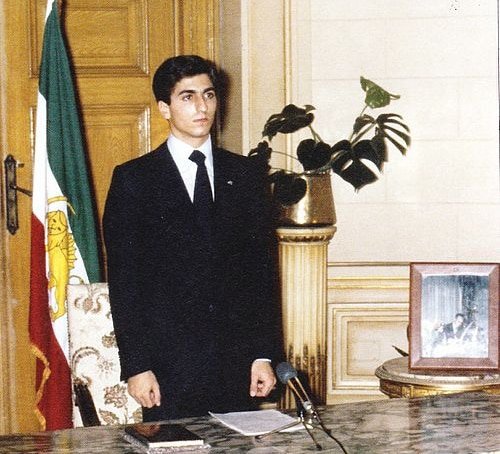
How Much Support Does Reza Pahlavi Really Have?
Supporters of the former crown prince argue that his popularity is overwhelming. Canadian MP Goldie Ghamari, who is of Iranian descent, claimed on X that Reza Pahlavi enjoys approval ratings exceeding 80 percent—figures that many analysts dispute.
Political analysts caution that protest chants and diaspora enthusiasm do not necessarily translate into a nationwide political mandate inside Iran. Shahin Modarres, a political analyst and human rights activist, told Germany’s Deutsche Welle that monarchist supporters represent only a segment of Iranian society.
According to research by the Germany-based GAMAAN Institute, approximately 35 percent of Iranians express support for Reza Pahlavi—a significant number, but far from a consensus. “That is very high,” Modarres noted, “but it also raises a serious question: if support is that strong, why has the Islamic Republic survived for 46 years?”
Michael Rubin of the American Enterprise Institute has described Pahlavi as the most recognizable opposition figure among Iranians, noting that chants of his name stem from both nostalgia and a rejection of the current system.
The Risks, Limits, and the Role of the United States
In practical terms, Reza Pahlavi cannot return to Iran while the Khamenei regime remains in power. Any attempt would almost certainly result in immediate arrest. Even in a post-Khamenei scenario, serious risks would remain.
Analysts warn that removing Khamenei alone would not dismantle the system of velayat-e faqih (Guardianship of the Islamic Jurist), which is enforced by powerful institutions such as the Islamic Revolutionary Guard Corps (IRGC) and the Basij militia.
US-based security expert Roger Macmillan has argued that without dismantling these pillars and replacing them with a genuinely Iranian-led, secular, representative transition, the risk is merely regime continuity under a different face.
The position of the United States further complicates matters. While President Donald Trump has repeatedly voiced support for Iranian protesters and warned the Khamenei regime, he has stopped short of endorsing any specific successor.
Trump has described Reza Pahlavi as “a nice man,” but has also said it would be “not appropriate” to meet him, signaling Washington’s reluctance to publicly back a monarchist alternative. As Trump himself put it, “We should let everybody go out there and see who emerges.”
Symbol or Solution?
For now, Reza Pahlavi appears to function primarily as a unifying symbol for a fragmented opposition—someone who represents rejection of clerical rule rather than a clearly defined future system.
He has consistently opposed foreign military intervention and insisted that change must come from within Iran. Whether that position, combined with sustained protests and possible defections within the regime, can translate into real political transformation remains uncertain.
The chants of “Pahlavi will return” reflect deep anger with the present—but whether Iranians ultimately choose monarchy, republic, or an entirely new model of governance will only be decided on Iranian soil, not in exile.
For breaking news and live news updates, like us on Facebook or follow us on Twitter and Instagram. Read more on Latest World on thefoxdaily.com.




COMMENTS 0