- Islamabad Turns Into a Fortress Ahead of Talks
- Why Islamabad? Pakistan’s Emerging Role as Mediator
- Security Measures: “Foolproof” or Fragile?
- Security Extends Beyond the Ground: Airspace Protection
- Visa-on-Arrival Facility for Delegates and Media
- What’s at Stake in the US-Iran Talks?
- Conclusion: A High-Stakes Diplomatic Test for Pakistan
Introduction: Islamabad has been placed under unprecedented Security lockdown as Pakistan prepares to host high-stakes talks between the United States and Iran starting April 11, 2026. Amid a fragile Ceasefire following weeks of escalating conflict, authorities have imposed sweeping restrictions across the capital—including traffic curbs, school closures, and market shutdowns—to ensure the safety of visiting delegations. With global attention focused on these negotiations, Pakistan is positioning itself as a key diplomatic mediator while navigating significant security and logistical challenges.
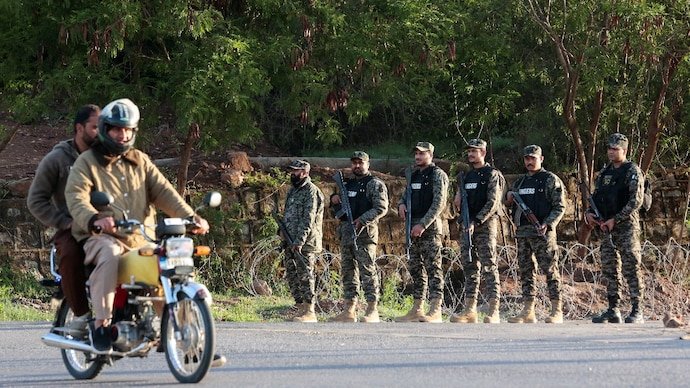
Islamabad Turns Into a Fortress Ahead of Talks
In the lead-up to the crucial diplomatic engagement, Islamabad’s Red Zone—the city’s most sensitive administrative district—has been effectively sealed off. The area houses Parliament, major government offices, embassies, and key international institutions.
Authorities have blocked multiple roads leading into the Red Zone, restricting civilian movement almost entirely. Security forces, including armed police and paramilitary units, have established checkpoints across major intersections to control access and monitor activity.
The visible transformation of Islamabad into a heavily guarded zone reflects the high stakes of the upcoming talks.
Traffic Curbs and Public Shutdowns
To minimise disruptions and security risks, the government has announced a two-day public holiday in the capital. This has led to:
- Closure of schools and educational institutions
- Shuttering of markets and commercial establishments
- Significant reduction in public transport services
Only essential services remain operational, with authorities urging residents to avoid unnecessary travel. Traffic diversions have been implemented across the city to facilitate smooth movement of official convoys.
For many residents, the city’s usually busy streets now appear unusually quiet—an eerie calm before a potentially historic diplomatic moment.
Why Islamabad? Pakistan’s Emerging Role as Mediator
The decision to host the US-Iran talks in Islamabad underscores Pakistan’s growing role in regional Diplomacy. Following its involvement in facilitating a recent ceasefire between the two nations, Pakistan has positioned itself as a bridge between Washington and Tehran.
This diplomatic opportunity comes at a time when both the US and Iran are seeking to avoid further escalation after weeks of intense conflict.
Background: A Fragile Ceasefire
The talks follow a two-week ceasefire that brought temporary relief after a period of heightened tensions in the Middle East. The conflict, triggered by a major geopolitical flashpoint earlier this year, had raised fears of a broader regional war.
The ceasefire has created a narrow window for dialogue—one that both sides appear willing to explore, albeit cautiously.
The Islamabad talks are seen as a critical test of whether diplomacy can succeed where military escalation failed.
Security Measures: “Foolproof” or Fragile?
Pakistan’s Interior Ministry has assured visiting delegations of “foolproof security.” Senior officials have emphasised that every possible measure is being taken to ensure the safety of participants.
Multi-Layered Security Deployment
The security plan includes:
- Heavy deployment of police and paramilitary forces
- Establishment of multiple security checkpoints
- Surveillance across key routes and venues
- Restricted access to sensitive areas
A 30-member advance team from the United States has already arrived in Islamabad to assess these arrangements, highlighting the seriousness with which security concerns are being addressed.
Venue Under Watch: Serena Hotel
The talks are expected to take place at the Serena Hotel, a well-known venue for diplomatic events in Islamabad. The hotel and its surrounding areas have been placed under heightened security, with restricted entry and continuous monitoring.
Despite these measures, concerns remain among some international observers regarding the overall security environment.
Voices of Concern
Some former officials and analysts have expressed reservations about the safety of hosting such high-profile talks in Pakistan. They point to historical security challenges and the complexity of managing threats in a volatile regional context.
These concerns add another layer of pressure on Pakistani authorities to ensure a smooth and incident-free event.
Security Extends Beyond the Ground: Airspace Protection
Security arrangements are not limited to Islamabad’s streets. Reports indicate that Pakistan has also taken extensive measures to secure its airspace during the arrival and departure of delegations.
Air Force Deployment
The Pakistan Air Force (PAF) has reportedly deployed:
- IL-78 refuelling tankers
- C-130 transport aircraft
- Airborne Warning and Control Systems (AWACS)
These assets are being used to monitor and secure flight paths, ensuring safe passage for aircraft carrying officials from both countries.
Escort for Iranian Delegation
Fighter jets have reportedly been assigned to escort the Iranian delegation’s aircraft during its journey to Islamabad. This precaution is aimed at preventing any potential threats during transit, particularly given the sensitive geopolitical environment.
The scale of these measures highlights the extraordinary nature of the situation and the level of coordination involved.
Visa-on-Arrival Facility for Delegates and Media
In a bid to facilitate smooth participation, Pakistan has introduced a visa-on-arrival policy for all individuals attending the talks, including journalists.
Special facilitation desks have been set up at major airports to assist incoming delegates, ensuring quick processing and minimal delays.
This move reflects Pakistan’s effort to project efficiency and hospitality while managing a complex international event.
What’s at Stake in the US-Iran Talks?
The Islamabad negotiations are more than just another diplomatic meeting—they represent a critical juncture in US-Iran Relations.
Key Objectives
- Prevent further military escalation
- Extend or formalise the existing ceasefire
- Establish a framework for future dialogue
Both nations have strong incentives to avoid prolonged conflict, but deep mistrust continues to complicate negotiations.
Global Implications
The outcome of these talks could have far-reaching consequences, including:
- Stability in the Middle East
- Global energy market fluctuations
- Shifts in international alliances
| Aspect | Impact if Talks Succeed | Impact if Talks Fail |
|---|---|---|
| Regional Stability | Reduced tensions | Renewed conflict risk |
| Energy Markets | Price stabilisation | Potential price surge |
| Global Diplomacy | Strengthened mediation role | Loss of trust in diplomacy |
Conclusion: A High-Stakes Diplomatic Test for Pakistan
Islamabad’s transformation into a fortified zone underscores the importance of the upcoming US-Iran talks. From roadblocks and school closures to airspace surveillance and international coordination, Pakistan is leaving little to chance.
As the world watches, the success of these negotiations will depend not only on diplomatic skill but also on Pakistan’s ability to provide a secure and neutral platform for dialogue.
Looking ahead, if the talks yield positive results, Pakistan could solidify its position as a key mediator in global conflicts. However, any setback—whether diplomatic or security-related—could have significant repercussions.
For now, Islamabad stands at the center of global attention, balancing opportunity with risk in one of the most closely watched diplomatic events of 2026.
For breaking news and live news updates, like us on Facebook or follow us on Twitter and Instagram. Read more on Latest World on thefoxdaily.com.






COMMENTS 0