- What Happened: A Rapid and Massive Military Operation
- Core Question: Was Lebanon Part of the Ceasefire?
- Why Israel Continued Strikes in Lebanon
- Human Impact: Civilians Bear the Brunt
- Lebanon’s Response: Strong Condemnation
- Regional Fallout: Rising Tensions and Global Concerns
- Analysis: A Ceasefire with Limits
- Conclusion: A Fragile Pause in a Complex Conflict
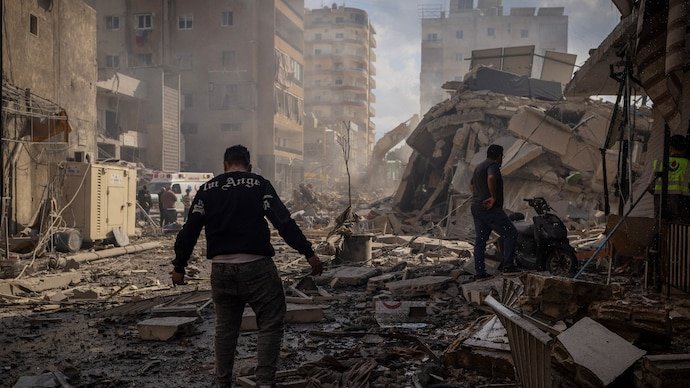
The announcement of a two-week ceasefire between the United States and Iran was expected to calm tensions across the Middle East. Instead, Lebanon witnessed one of the most intense and deadly assaults of the ongoing conflict. Within hours of the ceasefire announcement, Israel launched more than 100 airstrikes in just 10 minutes, targeting multiple locations including Beirut, the Bekaa Valley, and southern Lebanon. The attacks left over 250 people dead and hundreds injured, raising urgent questions about why Lebanon was not spared despite expectations of de-escalation.
What Happened: A Rapid and Massive Military Operation
The scale and speed of the Israeli operation shocked observers and residents alike. The strikes were described as the largest coordinated assault of the current war, hitting more than 100 targets almost simultaneously.
Explosions echoed across Beirut throughout the day, with thick smoke rising over residential neighborhoods. Emergency services struggled to respond as casualties mounted rapidly.
Key Facts About the Attack
| Aspect | Details |
|---|---|
| Total Strikes | 100+ airstrikes |
| Time Frame | Within 10 minutes |
| Locations | Beirut, Bekaa Valley, Southern Lebanon |
| Casualties | 250+ killed, hundreds injured |
| Nature of Operation | Largest coordinated assault of the conflict |
For civilians on the ground, the ceasefire announcement offered little relief. Instead of calm, the region experienced one of its most violent days.
Core Question: Was Lebanon Part of the Ceasefire?
The central issue behind the escalation lies in a fundamental disagreement over the scope of the ceasefire. Different parties have offered conflicting interpretations, leading to confusion and, ultimately, continued violence.
Iran’s Position: Lebanon Included
Iran has maintained that Lebanon was an integral part of the ceasefire framework. According to its proposed plan, the agreement was meant to halt hostilities across all interconnected fronts, including Israeli operations in Lebanon.
Iranian officials have argued that continued strikes violate the spirit and possibly the terms of the agreement. In response to what it views as breaches, Tehran reportedly took steps affecting regional stability, including actions related to the Strait of Hormuz.
Pakistan’s View: A Regional Ceasefire
Pakistan’s Prime Minister Shehbaz Sharif also presented the ceasefire as a broader regional agreement. In a public statement, he indicated that the deal covered multiple areas, explicitly mentioning Lebanon.
“An immediate ceasefire everywhere including Lebanon,” Sharif stated, framing the agreement as comprehensive.
This interpretation raised expectations that violence across the region would pause simultaneously.
US and Israel: Lebanon Excluded
In contrast, both the United States and Israel have firmly stated that Lebanon was never part of the ceasefire agreement.
Israeli leadership made it clear that operations against Hezbollah would continue regardless of the truce with Iran. The United States echoed this position, emphasizing that the ceasefire applied only to the US-Iran conflict.
“Lebanon is not part of the cease-fire,” US officials clarified, citing Hezbollah’s involvement as a key factor.
This divergence in interpretation created a critical gap one that played out violently on the ground.
Why Israel Continued Strikes in Lebanon
Israel’s decision to proceed with large-scale strikes despite the ceasefire can be understood through several strategic considerations.
1. Hezbollah as a Separate Threat
Israel views Hezbollah as an independent and immediate Security threat, distinct from Iran’s direct engagement with the United States. As a result, operations targeting Hezbollah were not considered part of the ceasefire restrictions.
2. Military Objectives Still Active
The Israeli military stated that it targeted command centres, missile infrastructure, and other strategic sites linked to Hezbollah. These objectives were seen as ongoing priorities that could not be paused.
3. Pre-Existing Conflict Dynamics
The Israel-Hezbollah conflict had already escalated significantly before the ceasefire announcement. This momentum made an immediate halt unlikely, especially without explicit inclusion in the agreement.
4. Strategic Signaling
Continuing operations may also serve as a signal to both Hezbollah and Iran that Israel retains the ability and willingness to act decisively, regardless of broader diplomatic developments.
In simple terms, the ceasefire addressed one conflict layer but left another fully active.
Human Impact: Civilians Bear the Brunt
While political leaders debated interpretations, civilians in Lebanon faced devastating consequences. Entire neighborhoods were affected, with families caught in the crossfire.
Authorities reported hundreds of casualties, though figures varied as the situation continued to evolve. Hospitals were overwhelmed, and emergency responders struggled to reach affected areas.
Impact on the Ground
- Significant loss of life and injuries
- Destruction of residential buildings
- Mass displacement of civilians
- Strain on emergency and healthcare services
Many families who had hoped to return home following the ceasefire announcement were forced to delay their plans indefinitely.
Lebanon’s Response: Strong Condemnation
Lebanese leadership strongly condemned the strikes, describing them as violations of international norms and agreements. Officials emphasized that continued attacks undermine any efforts toward peace and stability.
Hezbollah also responded sharply, labeling the strikes a serious breach and warning of consequences if operations continue.
These reactions highlight the risk of further escalation, especially if retaliatory actions intensify.
Regional Fallout: Rising Tensions and Global Concerns
The situation in Lebanon is not isolated it has broader implications for the entire region. The escalation risks drawing in additional actors and expanding the conflict further.
Key Regional Risks
- Widening of conflict beyond current zones
- Increased tension between major powers
- Disruption of energy supply routes
- Growing humanitarian crisis
The involvement of multiple countries and groups makes the situation highly volatile, with each development carrying potential ripple effects.
Analysis: A Ceasefire with Limits
The events in Lebanon reveal a critical limitation of the current ceasefire it is not comprehensive. By focusing narrowly on the US-Iran dynamic, the agreement left other active conflicts unresolved.
This selective approach can create false expectations. While headlines may suggest peace, the reality on the ground can be very different.
In this case, the ceasefire acted more like a pause in one part of the storm, while another part intensified.
Conclusion: A Fragile Pause in a Complex Conflict
The massive Israeli strikes on Lebanon, despite a widely discussed ceasefire, underscore the complexity of modern conflicts. With different parties interpreting the agreement in different ways, the result has been confusion and continued violence.
Israel’s focus on Hezbollah, combined with the US position that Lebanon was excluded, explains why operations continued. Meanwhile, Iran and Pakistan’s broader interpretation highlights the challenges of achieving consensus in international Diplomacy.
Looking ahead, any lasting peace will require clearer agreements that address all active fronts, not just selected ones. Until then, ceasefires may offer temporary relief in some areas while leaving others exposed an uneasy reality for a region already under strain.
For breaking news and live news updates, like us on Facebook or follow us on Twitter and Instagram. Read more on Latest World on thefoxdaily.com.





COMMENTS 0