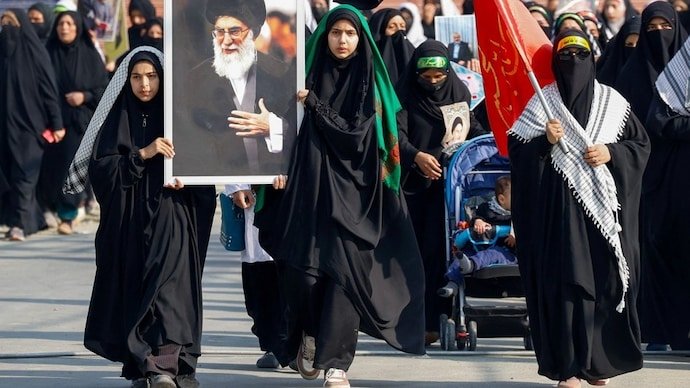
Israel’s Defense Minister Israel Katz revealed that the decision to assassinate Iran’s Supreme Leader, Ayatollah Ali Khamenei, was made several months before the operation was ultimately carried out. According to Katz, Israeli Prime Minister Benjamin Netanyahu approved the plan in November during a high-level security meeting that focused on growing concerns about Iran’s military ambitions and its influence across the Middle East.
The revelation sheds new light on the strategic planning behind the U.S.-Israeli air assault that began early Saturday morning. The strike resulted in the death of Iran’s top leader, marking a historic and highly controversial moment in modern warfare. Analysts say it is the first time in recent history that an airstrike has successfully targeted and killed the sitting leader of a sovereign nation.
Speaking to Israeli television network N12, Katz explained that senior officials gathered in a confidential security forum late last year to evaluate potential responses to what Israel considers an escalating threat from Iran.
“Back in November, we convened with the prime minister in a very restricted forum,” Katz said during the interview. “At that meeting, Prime Minister Benjamin Netanyahu set a clear objective — the elimination of Ali Khamenei.”
According to Katz, the operation was initially scheduled to take place around mid-2026. However, the timeline changed dramatically after political unrest and protests erupted across Iran in January. Israeli officials reportedly feared that the pressure on Iran’s leadership could trigger retaliatory actions against Israel or American military assets stationed throughout the Middle East.
Due to those concerns, Israel shared details of the plan with Washington and accelerated the timeline for the operation. The coordination between Israeli and U.S. officials eventually led to the large-scale joint air campaign that began last weekend.
The Airstrikes targeted several strategic locations inside Iran and were part of a broader military effort that Israel says was designed to weaken Iran’s military infrastructure and leadership structure.
The killing of Khamenei during the opening phase of the operation has intensified tensions across the region and sparked a rapidly expanding conflict. Over the past week, retaliatory attacks and counterstrikes have spread beyond Iran and Israel, affecting several countries across the Middle East.
Iranian forces have reportedly launched missile and drone attacks toward targets in Israel as well as U.S. military installations and allied facilities located in the Persian Gulf and Iraq. In response, Israel has carried out additional strikes not only inside Iran but also against Hezbollah, the Iran-backed militant group operating in Lebanon.
The escalating violence has already resulted in significant casualties and political fallout. Security experts warn that the confrontation could develop into a wider regional war if diplomatic efforts fail to de-escalate tensions.
Israeli officials argue that the campaign is necessary to eliminate what they describe as an existential threat posed by Iran’s nuclear ambitions and ballistic missile capabilities. Israel has long accused Iran of secretly pursuing nuclear weapons technology — a claim Tehran repeatedly denies.
In addition to concerns about nuclear development, Israeli leaders have pointed to Iran’s support for armed groups across the Middle East as a major factor behind their security strategy. Organizations such as Hezbollah in Lebanon and other Iranian-aligned militias have played key roles in regional conflicts for decades.
Despite the targeted killing of its top leader, Iran’s government has not shown any indication that it intends to surrender power or abandon its strategic objectives. Iranian officials have vowed retaliation and continue to accuse Israel and the United States of violating international law.
The events surrounding the assassination of Khamenei have therefore created one of the most volatile geopolitical situations in recent years, with global powers closely monitoring developments across the region.
Key Developments in the Israel–Iran Escalation
| Event | Details | Timeline |
|---|---|---|
| Decision to target Khamenei | Israeli leadership reportedly approved the assassination plan during a restricted security meeting led by Prime Minister Benjamin Netanyahu. | November (Previous Year) |
| Iranian protests influence timeline | Growing unrest inside Iran raised concerns that its leadership might launch attacks on Israel or U.S. forces. | January |
| Plan shared with Washington | Israel communicated the operation to U.S. officials and began coordinating the military strategy. | Early 2026 |
| Joint airstrikes begin | U.S. and Israeli forces launched large-scale airstrikes targeting Iranian leadership and military infrastructure. | Saturday (Operation Launch) |
| Khamenei killed in strike | The Iranian Supreme Leader was killed during the early phase of the air assault. | Same Day as Operation Start |
| Regional escalation | Iran retaliated with missile strikes while Israel targeted Hezbollah positions in Lebanon. | Ongoing |
Growing Risk of a Wider Middle East Conflict
With hostilities continuing across several countries, international observers warn that the situation could escalate further if additional actors become involved. Diplomatic channels remain active, but the scale of military activity suggests that tensions between Israel, Iran, and their allies may remain high for the foreseeable future.
As global leaders call for restraint, the assassination of Iran’s supreme leader and the subsequent wave of retaliatory attacks have reshaped the geopolitical landscape of the Middle East, raising serious questions about the future stability of the region.
For breaking news and live news updates, like us on Facebook or follow us on Twitter and Instagram. Read more on Latest World on thefoxdaily.com.


COMMENTS 0