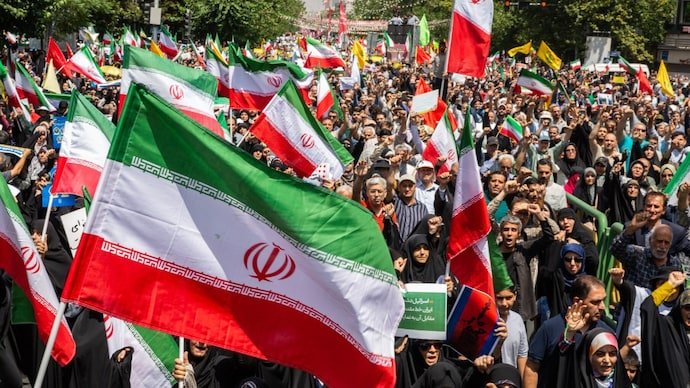
A significant contradiction has emerged at the center of the ongoing geopolitical tensions involving Iran, as Israeli officials have reportedly warned the United States about the grave risks faced by Iranian civilians. While publicly encouraging Iranians to rise against their government, Israel has privately cautioned that such protests could lead to widespread violence and loss of life.
According to a reported diplomatic communication, Israeli leadership believes that any large-scale uprising within Iran could be met with overwhelming force by state authorities. This stark warning reveals deep concerns about the humanitarian consequences of potential unrest, even as calls for resistance continue on the global stage.
Public Messaging vs Private Assessment
Reports indicate that Israeli officials have conveyed to US counterparts that Iran’s leadership remains stable and determined to maintain control. Despite sustained military and economic pressure, there are currently no clear signs that the Iranian government is nearing collapse.
A diplomatic cable, reportedly shared via the US Embassy in Jerusalem, suggested that any mass mobilization by Iranian citizens would likely be suppressed forcefully. The internal message emphasized that civilians participating in protests could face severe consequences if demonstrations grow in scale.
Iran’s Internal Security Forces Maintain Control
Central to this assessment is the strength of Iran’s internal security system. Authorities believe that the Islamic Revolutionary Guard Corps (IRGC), along with affiliated groups such as the Basij, continues to maintain firm control across the country.
Previous instances of civil unrest have demonstrated the government’s readiness to act decisively. Earlier protests driven by economic challenges and political dissatisfaction reportedly resulted in significant casualties, reinforcing concerns about how future demonstrations may unfold.
| Key Factor | Current Assessment |
|---|---|
| Regime Stability | Remains strong with no visible signs of collapse |
| Security Control | IRGC and allied forces maintain dominance |
| Response to Protests | High likelihood of forceful suppression |
| Risk to Civilians | Severe, especially during large-scale demonstrations |
Continued Calls for Uprising Amid Concerns
Despite these concerns, Israel has continued to publicly encourage Iranian citizens to challenge their leadership. Statements from senior officials have emphasized support for what they describe as the aspirations of the Iranian people.
At the same time, private communications suggest that Israeli authorities are urging the United States to be prepared for potential scenarios involving civilian unrest, including the need to respond to rapidly evolving situations on the ground.
This dual approach highlights the strategic complexity of the situation—balancing efforts to apply internal pressure on Iran’s leadership while acknowledging the potential human cost of such actions.
Rising Military Pressure on Iran
The broader conflict has intensified, with multiple reported strikes targeting key infrastructure within Iran. These reportedly include military facilities, weapons stockpiles, and security-related installations.
While such actions are aimed at weakening Iran’s strategic capabilities, internal assessments suggest that the leadership structure remains largely intact. This indicates that military pressure alone may not immediately translate into political change.
| Area of Impact | Reported Targets |
|---|---|
| Military Infrastructure | Missile stockpiles and defense systems |
| Security Installations | Police stations and checkpoints |
| Strategic Facilities | Key operational and nuclear-related sites |
US Position Reflects Caution
The United States has also acknowledged the risks associated with civilian protests in such a volatile environment. Officials have indicated concerns about the ability of unarmed demonstrators to withstand potential state crackdowns.
At the same time, there appears to be a shift in Washington’s broader strategy. While earlier rhetoric supported significant internal change, recent statements suggest a more cautious approach, focusing on stability and risk management rather than direct calls for regime change.
Ongoing Conflict and Global Implications
As the conflict continues into its third week, there are no clear signs of resolution. Although Iran’s military capabilities may have been impacted, its political control remains largely unaffected.
The situation is also having global economic repercussions. Disruptions in key energy routes, including concerns around the Strait of Hormuz, have contributed to rising energy prices and increased uncertainty in international markets.
With geopolitical tensions escalating and international stakeholders divided on the next course of action, the crisis remains highly unpredictable. The coming weeks are likely to be critical in determining whether the situation stabilizes or escalates further.
For breaking news and live news updates, like us on Facebook or follow us on Twitter and Instagram. Read more on Latest World on thefoxdaily.com.






COMMENTS 0