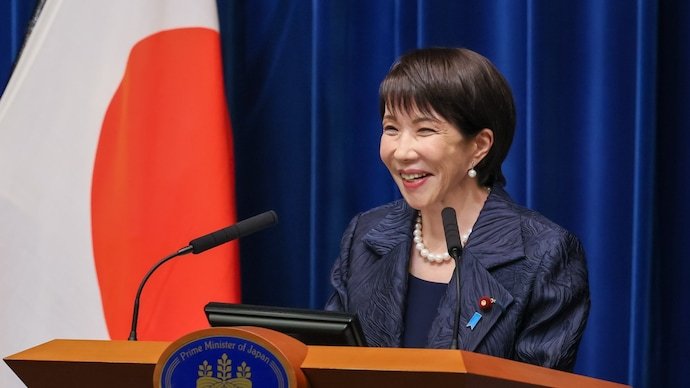
According to exit poll data released by japan’s public broadcaster NHK and corroborated by several leading national networks, Prime Minister Sanae Takaichi’s ruling coalition is on course to retain a decisive majority in the country’s crucial lower house Elections held on Sunday.
NHK projections suggest that the Liberal Democratic Party (LDP)-led alliance could secure close to two-thirds of the 465-seat House of Representatives, the more powerful chamber of Japan’s Parliament. Such a result would mark a significant improvement over the coalition’s pre-election standing and solidify Takaichi’s political authority early in her tenure.
The anticipated electoral surge is expected to give Prime Minister Takaichi the political capital needed to accelerate her right-wing policy agenda. Her vision includes strengthening Japan’s military capabilities, revitalizing the economy, and recalibrating foreign policy as regional tensions with china continue to intensify.
Takaichi made history in October by becoming Japan’s first female prime minister, a milestone moment in the country’s traditionally male-dominated political landscape. Her ascent to leadership was widely seen as a turning point for the ruling party, which has governed Japan for most of the past seven decades.
Despite her strong personal popularity, the Liberal Democratic Party has faced persistent headwinds in recent years, including financial controversies and religious-linked scandals that have dented public trust. In a calculated political move, Takaichi called for snap elections just three months after taking office, aiming to capitalize on her momentum before public sentiment could shift.
With geopolitical pressure mounting in the Indo-Pacific region, particularly due to China’s growing assertiveness, Takaichi has made no secret of her intention to bolster Japan’s defense posture. Alongside military reforms, she has emphasized economic resilience as a national priority.
On the international front, the prime minister has also expressed a desire to deepen ties with the United States, describing Washington as Japan’s most critical strategic partner. She has signaled openness to working closely with US President Donald Trump, acknowledging both the importance and unpredictability of the alliance.
Political analysts note that Takaichi’s leadership style — firm, direct, and occasionally sharp-witted — has resonated particularly well with younger voters. Upon assuming office, she famously pledged to “work, work, work,” a mantra that has become emblematic of her no-nonsense approach to governance.
Latest polling data indicates that the LDP achieved a landslide victory in the lower house, with opposition parties struggling to mount a unified challenge. Even with the emergence of a new centrist bloc and a visibly growing far-right presence, opposition forces remained fragmented and electorally weak.
Takaichi had publicly staked her political future on the outcome, asserting that her party — along with its ally, the Japan Innovation Party — would secure a clear majority in the 465-member lower house.
“If the LDP fails to win a majority, I will step down,” the prime minister had declared ahead of the vote — a statement that underscored both her confidence and the high stakes of the election.
For breaking news and live news updates, like us on Facebook or follow us on Twitter and Instagram. Read more on Latest World on thefoxdaily.com.


COMMENTS 0