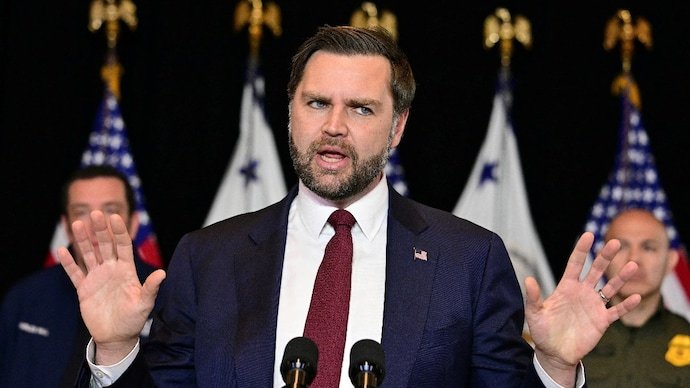
- JD Vance Clarifies: Lebanon Was Never Part of the Ceasefire
- Shehbaz Sharif’s Statement: A Broader Interpretation
- Ground Reality: Israel Intensifies Strikes on Lebanon
- Hezbollah Responds: Ceasefire Fragility Exposed
- Diplomatic Confusion: Miscommunication or Strategic Messaging?
- The Bigger Picture: A Multi-Front Conflict
- Human Cost: Rising Casualties and Growing Concerns
- Conclusion: Clarity Needed in a Complex Conflict
A major diplomatic disagreement has emerged between US Vice President JD Vance and Pakistan Prime Minister Shehbaz Sharif over the scope of the recently discussed Iran ceasefire. The confusion comes at a critical moment, as Israel intensifies military operations in Lebanon and Hezbollah resumes attacks. Speaking publicly, Vance clarified that the ceasefire agreement never included Lebanon, directly contradicting earlier claims made by Sharif. The disagreement highlights growing uncertainty around what the ceasefire actually covers, when it applies, and how it impacts ongoing regional conflicts.
JD Vance Clarifies: Lebanon Was Never Part of the Ceasefire
JD Vance addressed the controversy head-on, rejecting claims that Lebanon was included in the ceasefire arrangement. He suggested that the misunderstanding may have arisen from misinterpretation rather than deliberate miscommunication.
“I think this comes from a legitimate misunderstanding. We never made that promise,” Vance said.
According to Vance, the ceasefire was narrowly defined and focused specifically on Iran and US-aligned countries in the region. This clarification is significant because it sets clear boundaries on what the agreement was intended to achieve.
What the Ceasefire Actually Covers
- Focus on Iran and its direct engagement with the United States
- Protection of US allies, including Israel and Gulf Arab states
- Exclusion of Lebanon and Hezbollah-related conflict
In essence, the ceasefire was designed to address a specific geopolitical tension—not to act as a blanket pause across all regional conflicts.
Shehbaz Sharif’s Statement: A Broader Interpretation
In contrast, Shehbaz Sharif had earlier suggested that the ceasefire extended to Lebanon and other US allies. His public statement appeared to indicate a more comprehensive agreement, even tagging JD Vance in the announcement.
This broader interpretation created immediate confusion, as it implied that hostilities in Lebanon would also pause under the same framework. However, Vance’s clarification now suggests that this was not the case.
The difference in messaging has raised questions about communication gaps in high-level Diplomacy. Whether it was a misunderstanding or a difference in interpretation, the impact has been significant—especially on public perception.
Ground Reality: Israel Intensifies Strikes on Lebanon
While leaders debated the scope of the ceasefire, the situation on the ground escalated dramatically. Israel launched one of its deadliest waves of strikes on Lebanon since the conflict with Hezbollah began last month.
The scale and speed of the operation underscored the fact that Lebanon was not covered by any ceasefire protections.
Key Facts About the Latest Strikes
| Aspect | Details |
|---|---|
| Date | Wednesday |
| Casualties | Over 250 reported dead |
| Injuries | More than 1,100 injured |
| Main Target Areas | Beirut, Bekaa Valley, Southern Lebanon |
| Operation Scale | 100+ targets hit within 10 minutes |
The strikes hit densely populated areas, including residential and commercial zones in Beirut, causing widespread destruction and panic.
Hezbollah Responds: Ceasefire Fragility Exposed
The Iran-backed group Hezbollah, which had briefly paused its attacks following the US-Iran ceasefire announcement, resumed rocket fire toward northern Israel shortly after the strikes.
This rapid escalation highlights a critical flaw in limited ceasefire agreements—when not all parties are included, violence can quickly reignite.
In this case, Hezbollah’s actions reinforced the reality that the ceasefire did not apply to its operations, further validating Vance’s clarification.
Why the Ceasefire Failed to Hold in Lebanon
- Lebanon was not included in the agreement
- Hezbollah operates independently of Iran in tactical decisions
- Ongoing hostilities created immediate triggers for retaliation
The situation demonstrates how partial agreements can sometimes create more confusion than clarity—especially in a region with multiple overlapping conflicts.
Diplomatic Confusion: Miscommunication or Strategic Messaging?
The conflicting statements from Vance and Sharif have sparked debate among analysts and observers. Was this a simple misunderstanding, or does it reflect deeper issues in diplomatic coordination?
There are two main possibilities:
1. Genuine Misunderstanding
Diplomatic language can be complex, and interpretations may vary. It is possible that Sharif interpreted the ceasefire more broadly than intended.
2. Strategic Messaging
Alternatively, the broader framing may have been an attempt to encourage de-escalation across the region by signaling a wider peace effort.
Either way, the episode highlights the importance of clear communication in international diplomacy—because ambiguity, especially during conflict, can have real-world consequences.
The Bigger Picture: A Multi-Front Conflict
The Middle East conflict is not a single, unified war. Instead, it is a network of interconnected confrontations involving multiple actors with different objectives.
Main Conflict Layers
- US-Iran Tensions: Central diplomatic focus of the ceasefire
- Israel-Hezbollah Conflict: Active military engagement in Lebanon
- Regional Alliances: Involvement of Gulf states and other players
This layered structure makes it extremely difficult to implement comprehensive ceasefires. Agreements that address one aspect of the conflict often leave others untouched.
In simple terms, it’s like trying to fix one leak in a pipe system that has several others—progress is made, but the overall problem remains.
Human Cost: Rising Casualties and Growing Concerns
Beyond diplomacy and strategy, the human impact of the conflict continues to grow. Reports indicate hundreds of casualties in Lebanon, with significant damage to infrastructure and civilian areas.
Authorities have provided varying figures, with civil Defense reporting higher casualty numbers and health officials cautioning that the situation is still evolving.
This uncertainty reflects the chaotic nature of conflict zones, where accurate information is often difficult to obtain in real time.
Impact on Civilians
- Loss of life and injuries
- Displacement of families
- Damage to homes and infrastructure
- Increased humanitarian challenges
While political leaders debate terms and definitions, civilians bear the immediate consequences—a stark reminder of what is truly at stake.
Conclusion: Clarity Needed in a Complex Conflict
The disagreement between JD Vance and Shehbaz Sharif over the scope of the Iran ceasefire underscores a critical issue in modern diplomacy—clarity. While the United States maintains that Lebanon was never part of the agreement, earlier statements suggested otherwise, leading to confusion at a crucial moment.
At the same time, escalating violence in Lebanon and Hezbollah’s renewed attacks highlight the limitations of narrowly defined ceasefires. When key actors are excluded, peace remains fragile and temporary.
Looking ahead, successful diplomacy in the region will require not only strategic coordination but also precise communication. In a conflict where every word can influence actions on the ground, clarity is not just helpful—it is essential. Until then, the gap between diplomatic intentions and ground realities is likely to persist, keeping the region on edge.
For breaking news and live news updates, like us on Facebook or follow us on Twitter and Instagram. Read more on Latest World on thefoxdaily.com.






COMMENTS 0