- Global Energy Crisis at a Glance
- Middle East: Conflict Targets Critical Energy Infrastructure
- Russia: Ukraine Expands Drone Warfare on Energy Targets
- United States: Port Arthur Refinery Explosion Adds to Disruptions
- Oil Prices Surge and Markets React
- Strait of Hormuz: The Critical Chokepoint
- Global Impact and Future Risks
- Conclusion
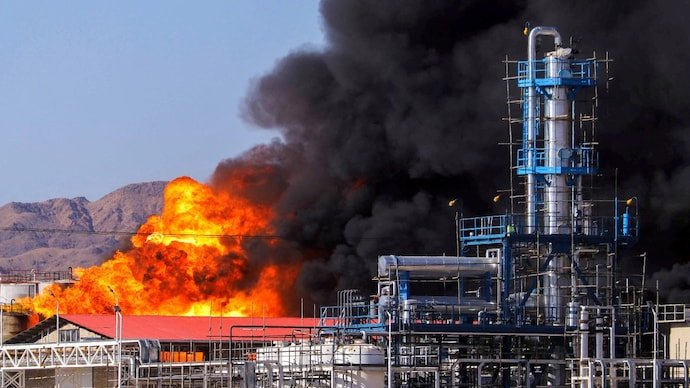
The world may be on the brink of an unprecedented energy crisis as simultaneous disruptions hit major oil and gas hubs across multiple regions. From escalating conflict in the Middle East to drone strikes in Russia and a major refinery shutdown in the United States, Global energy markets are facing extreme volatility.
India’s Prime Minister Narendra Modi recently warned in the Rajya Sabha that the ongoing crisis would have long-term consequences, particularly for countries dependent on imported crude oil, natural gas, and petrochemicals.
The closure of the Strait of Hormuz by Iran, combined with targeted attacks on energy infrastructure, has sent shockwaves through global markets. Brent crude prices have surged above $100 per barrel, reflecting growing fears of a prolonged supply disruption.
Global Energy Crisis at a Glance
| Region | Incident | Impact |
|---|---|---|
| Middle East | Attacks on oil & gas facilities | Major supply disruptions |
| Russia | Ukrainian drone strikes on refineries | Export and production challenges |
| United States | Port Arthur refinery explosion | Temporary shutdown of major facility |
| Global Markets | Oil prices surge above $100 | Inflation and supply fears |
Middle East: Conflict Targets Critical Energy Infrastructure
The Iran-Israel conflict has intensified, with energy infrastructure becoming a primary target. Since late February, attacks have escalated across the Persian Gulf, severely impacting oil and gas production.
One of the most significant strikes targeted Iran’s South Pars gas field—the largest in the world—triggering retaliatory attacks across the region. Qatar’s Ras Laffan Industrial City, home to the world’s largest LNG facility, suffered extensive damage, forcing production cuts that could reduce global LNG supply by up to 17%.
Saudi Arabia’s SAMREF refinery in Yanbu and Kuwait’s Mina al-Ahmadi and Mina Abdullah refineries were also hit by drone strikes, causing fires and operational disruptions. The UAE temporarily shut down gas facilities following missile interceptions.
These coordinated attacks have raised fears of long-term damage to energy infrastructure, with analysts warning that rebuilding could take years.
Russia: Ukraine Expands Drone Warfare on Energy Targets
In Eastern Europe, Ukraine has intensified its drone campaign against Russian energy assets, aiming to disrupt fuel supplies critical to Moscow’s military operations.
Key facilities, including the Saratov refinery operated by Rosneft, were struck, damaging storage tanks and processing units. Additional attacks targeted refineries in Ufa and the Baltic oil terminal at Primorsk, impacting export capacity.
These strikes, some involving hundreds of drones and reaching deep into Russian territory, have complicated Russia’s ability to maintain steady oil exports, particularly to major buyers like India.
Russia has responded with counterattacks on Ukraine’s energy infrastructure, further escalating the conflict and increasing risks to global energy stability.
United States: Port Arthur Refinery Explosion Adds to Disruptions
In the United States, a major industrial accident added to global concerns. Explosions and fire at the Valero refinery in Port Arthur, Texas, forced a shutdown of one of the country’s largest oil processing facilities.
The refinery, capable of processing approximately 435,000 barrels per day, plays a crucial role in producing gasoline, diesel, and jet fuel. Its temporary closure has reduced fuel output at a time when global supply is already under pressure.
Although unrelated to geopolitical conflict, the incident has compounded the overall disruption in energy markets.
Oil Prices Surge and Markets React
Global oil markets have reacted sharply to these overlapping crises. Before the conflict, Brent crude traded between $70 and $73 per barrel. Following attacks in the Gulf, prices briefly spiked to $119 before stabilizing in the $100+ range.
Short-term fluctuations have been influenced by diplomatic signals, including temporary pauses in military action. However, the broader trend remains upward due to supply concerns.
| Time Period | Brent Crude Price | Market Trigger |
|---|---|---|
| Pre-Conflict | $70–$73 | Stable supply conditions |
| Post-Gulf Attacks | Up to $119 | Infrastructure strikes |
| Temporary Dip | -11% | Diplomatic signals |
| Current स्तर | Above $100 | Ongoing disruptions |
Strait of Hormuz: The Critical Chokepoint
The Strait of Hormuz remains at the center of the crisis. Handling nearly 20% of the world’s oil supply, any disruption to this route has immediate global consequences.
Iran’s blockade has significantly restricted oil flows, contributing to an estimated shortfall of up to 8 million barrels per day, according to energy analysts.
Global Impact and Future Risks
The International Energy Agency has described the situation as potentially the “largest oil supply disruption in history.” With multiple regions affected simultaneously, the crisis is unlike previous supply shocks that were limited to a single geography.
The impact is already being felt worldwide, with rising fuel prices, inflationary pressures, and growing concerns about energy security.
For countries like India, which rely heavily on imported energy, the situation poses significant economic challenges. Increased dependence on alternative suppliers such as the United States and Russia may not fully offset disruptions if attacks continue.
| Impact Area | Potential Consequence |
|---|---|
| Global Oil Supply | Severe shortages |
| Energy Prices | Continued volatility |
| Inflation | Rising cost of goods |
| Energy Security | Increased geopolitical risk |
Conclusion
With energy infrastructure under attack across multiple continents and critical supply routes disrupted, the world is facing a potential energy crisis of historic proportions. The convergence of geopolitical conflict, industrial accidents, and strategic chokepoint disruptions has created a perfect storm for global oil markets.
Unless swift diplomatic efforts succeed in stabilizing the situation, the risk of prolonged supply shortages and economic fallout will continue to grow—making this one of the most critical moments for global energy security in modern history.
For breaking news and live news updates, like us on Facebook or follow us on Twitter and Instagram. Read more on Latest World on thefoxdaily.com.






COMMENTS 0