- Thousands of Flights Cancelled as Travel Grinds to a Halt
- “A Mean Storm”: Meteorologists Warn of Dangerous Conditions
- Extreme Cold, Heavy Snow and Ice Warnings Issued
- Catastrophic Ice Threat Raises Power Outage Fears
- Wind Chills Plunge to Life-Threatening Levels
- Southern States Brace for Severe Disruptions
- Schools Closed, Events Cancelled Nationwide
- Emergency Response and Federal Preparedness
- Communities Prepare as Storm Moves East
- Recovery Expected to Be Slow
A massive winter storm has battered large parts of the United States over the weekend, forcing the cancellation of more than 7,000 flights and plunging millions of Americans into what meteorologists describe as some of the harshest winter conditions of the season.
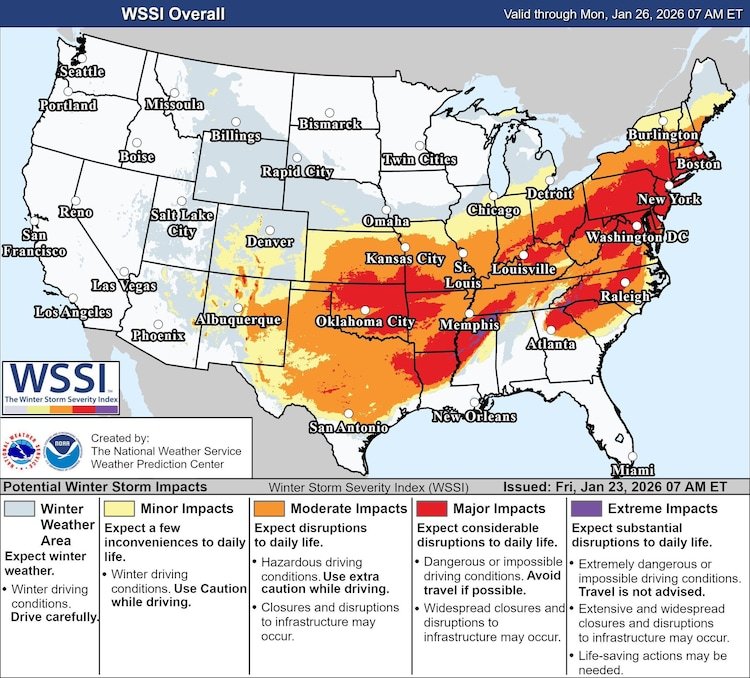
The sprawling storm system stretched from the Rocky Mountains to the Eastern Seaboard, bringing heavy snow, sleet, freezing rain, and Arctic air to vast portions of the country. According to weather authorities, more than 200 million people are expected to experience unusually severe winter weather in the coming days.
Thousands of Flights Cancelled as Travel Grinds to a Halt
Travel disruptions escalated rapidly as the storm intensified. Flight-tracking website FlightAware reported that more than 3,200 flights within, into, or out of the United States were cancelled on Saturday, followed by over 4,800 cancellations on Sunday.
Major aviation hubs including Dallas, Chicago, and other Midwestern and Northeast airports were among the worst affected. Airlines urged passengers to closely monitor schedules as delays and cancellations continued to ripple across the country.
By Friday alone, nearly 5,000 flights nationwide had already been cancelled or delayed, highlighting the scale of disruption caused by the storm.
“A Mean Storm”: Meteorologists Warn of Dangerous Conditions
Meteorologists described the system as the strongest and most expansive winter storm of the season. Jacob Asherman of the US Weather Prediction Center warned of the combined dangers posed by heavy Snowfall and plunging temperatures.
“This is a mean storm,” Asherman said, underscoring the threat facing the eastern two-thirds of the country as Arctic air pushed southward.
Early impacts were felt on Friday across Texas, Oklahoma, and Kansas, where snowfall began as bitterly cold air surged south. Forecasters cautioned that the storm’s most dangerous phase would unfold over the weekend, stretching from the southern Rockies through the Midwest and into New England.
Extreme Cold, Heavy Snow and Ice Warnings Issued
The National Weather Service issued winter storm, ICE storm, and extreme cold warnings across areas home to more than 200 million residents. Parts of the Rockies, Plains, Mid-Atlantic, and Northeast were forecast to receive over a foot of snow, with disruptions expected to last several days in some regions.
In Michigan, deep snowfall buried vehicles and made roads nearly impassable, while whiteout conditions were reported near Lake Michigan as powerful winds whipped across the region.
Catastrophic Ice Threat Raises Power Outage Fears
Forecasters expressed particular concern about “catastrophic” ice accumulations along the southern edge of the snow belt. Areas at highest risk included the southern Plains, lower Mississippi Valley, Tennessee Valley, and parts of the Southeast.
Up to an inch of ice was predicted in some locations—enough to snap trees, bring down power lines, and shut down highways. States including Louisiana, Mississippi, and Tennessee faced the greatest freezing rain threat.
“That level of ice can cause damage comparable to a hurricane,” Asherman warned, cautioning residents to prepare for widespread and prolonged power outages.
Wind Chills Plunge to Life-Threatening Levels
In parts of Minnesota and the Dakotas, wind chill temperatures dropped below minus 50 degrees Fahrenheit. Meteorologists warned that exposure to such cold without adequate protection could lead to hypothermia within minutes.
Even regions accustomed to harsh winters were facing unusually dangerous conditions. Sub-zero temperatures were forecast to push as far south as the Ohio Valley, lower Mississippi Valley, and parts of the Mid-Atlantic, with some long-standing cold records at risk of being broken.
Southern States Brace for Severe Disruptions
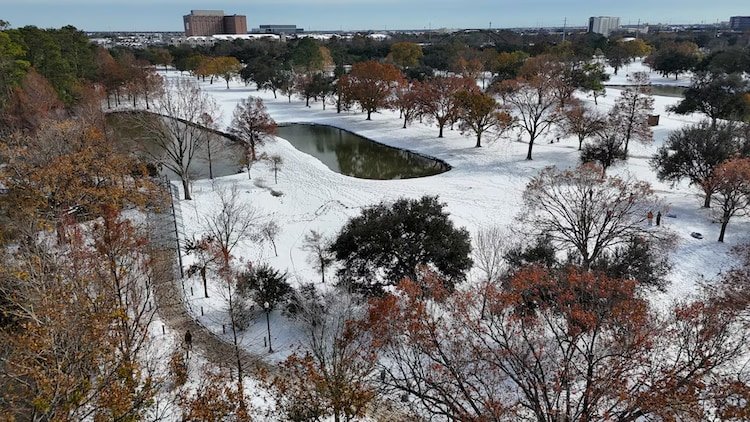
Officials warned that ice and extreme cold could severely disrupt travel and utilities in southern states that are less equipped for prolonged winter weather. AccuWeather meteorologist Brandon Buckingham said Dallas could see up to half an inch of ice.
“This will quickly turn into a treacherous situation,” Buckingham said, noting the heightened risk for motorists and infrastructure.
Schools Closed, Events Cancelled Nationwide
Schools across the Midwest shut down as wind chills plunged to as low as minus 40 degrees Fahrenheit, conditions that can cause frostbite in minutes. In Chicago, classes were cancelled and church services moved online.
Public events were also affected, with carnival parades in Louisiana postponed and performances at Nashville’s Grand Ole Opry either delayed or held without live audiences.
Emergency Response and Federal Preparedness
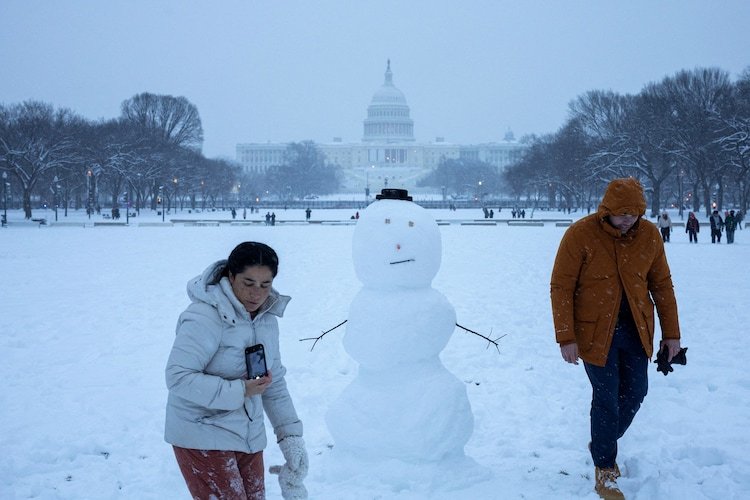
Emergency responses intensified nationwide. Washington, DC Mayor Muriel Bowser requested National Guard assistance as forecasts predicted 6 to 8 inches of snow. New York City Mayor Zohran Mamdani mobilised sanitation crews, calling the city’s snow response “the nation’s largest snow-fighting operation.”
The Federal Emergency Management Agency (FEMA) placed nearly 30 search-and-rescue teams on standby and pre-positioned over 7 million meals, 600,000 blankets, and 300 generators.
President Donald Trump said FEMA was “fully prepared” and that the federal government was coordinating closely with state and local authorities.
Communities Prepare as Storm Moves East
Across the country, residents rushed to prepare. In Dallas, Maricela Resendiz stocked up on essentials for her family. “Just being out of the way, staying in,” she said.
Shelters and warming centres were opened to protect vulnerable populations. In Detroit, Whittni Slater, who had been sleeping in her car, found refuge at a warming centre. “It was very warm and welcoming,” she said.
Recovery Expected to Be Slow
As the storm continues its eastward march, meteorologists warned that recovery could take time. Lingering ice, deep snow, and dangerously cold temperatures are expected to persist well after the system weakens early next week.
Authorities urged residents to remain cautious, limit travel, and follow official advisories as one of the most disruptive winter storms of the season continues to impact the nation.
For breaking news and live news updates, like us on Facebook or follow us on Twitter and Instagram. Read more on Latest World on thefoxdaily.com.


COMMENTS 0