- The Intelligence Claims: What the Report Suggests
- Official Response: Denial and Controlled Messaging
- The Absence That Fuels Speculation
- Understanding the Role of Iran’s Supreme Leadership
- Timeline of Key Developments
- Geopolitical Impact: Why the World Is Watching Closely
- Analysis: Between Information and Interpretation
- Statements and Signals
- The Bigger Picture: Power, Perception, and Uncertainty
- Conclusion
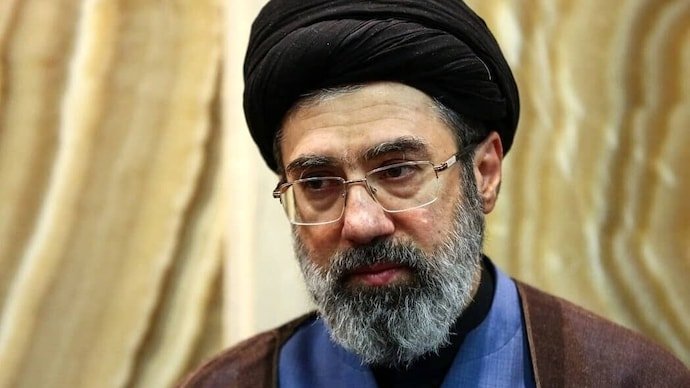
Mojtaba Khamenei, a senior Iranian cleric and reported successor within Iran’s power structure, is said to be unconscious and undergoing treatment in the city of Qom following injuries sustained in an alleged Airstrike. According to emerging reports, the same strike is also claimed to have killed his father, former Supreme Leader Ali Khamenei, on February 28. These developments, if confirmed, could mark a turning point in Iran’s political landscape.
The report, based on intelligence inputs allegedly shared between the United States, Israel, and Gulf allies, claims that Mojtaba Khamenei is in critical condition and unable to participate in decision-making. He is reportedly being treated in a private hospital in Qom, a city known for its deep religious importance in Shia Islam. However, Iranian officials have strongly denied these claims, insisting that he remains in control and actively involved in state affairs.
This situation raises several key questions: Is Mojtaba Khamenei truly incapacitated? Why has he not appeared publicly? And what does this mean for Iran’s political stability? While definitive answers remain elusive, the situation is already shaping regional and global discussions.
The Intelligence Claims: What the Report Suggests
At the center of this story is a reported intelligence memo that paints a concerning picture. According to the document, Mojtaba Khamenei sustained severe injuries during a targeted airstrike and is currently unable to lead. The memo reportedly describes his condition as critical, stating that he is not in a position to make decisions or guide the country.
The report also reveals his location in Qom for the first time since these events unfolded. Intelligence agencies are said to have known his whereabouts earlier but chose not to disclose it publicly. This delayed revelation has only added to the mystery and speculation.
From a strategic perspective, such intelligence leaks are rarely accidental. They can serve multiple purposes—signaling capability, influencing public perception, or applying psychological pressure. In this case, the leak has amplified scrutiny on Iran’s leadership during a sensitive time.
Official Response: Denial and Controlled Messaging
Iranian authorities have firmly rejected claims that Mojtaba Khamenei is incapacitated. Officials maintain that he is alive, recovering, and actively involved in shaping the country’s response to ongoing regional tensions. This narrative is supported by state-controlled media, which has released statements attributed to him.
In addition, a video was broadcast showing a figure believed to be Khamenei entering a war room and reviewing a strategic map. While intended to reassure the public, the video has not been independently verified, leaving room for doubt.
This kind of controlled messaging is not unusual in high-stakes geopolitical environments. Governments often aim to project stability, especially when uncertainty could invite external pressure or internal unrest.
The Absence That Fuels Speculation
One of the most striking aspects of this situation is Mojtaba Khamenei’s absence from public view. Since the reported incident, there have been no confirmed live appearances. In today’s hyper-connected world, where leaders frequently communicate through media and public events, such silence is unusual and often interpreted as a sign of deeper issues.
Naturally, this has led to widespread speculation. Some believe the reports of his critical condition may be accurate, while others argue that the absence is a deliberate Security measure. In volatile regions, limiting a leader’s exposure can sometimes be a strategic choice.
Still, the lack of verifiable evidence keeps the debate alive—and increasingly intense.
Understanding the Role of Iran’s Supreme Leadership
To grasp the significance of these developments, it is important to understand the role of Iran’s top leadership. The Supreme Leader holds ultimate authority over the country’s Military, judiciary, and major policy decisions. This position is central to Iran’s governance and stability.
Any uncertainty surrounding this role can have serious consequences, including:
- Disruptions in decision-making at the highest level
- Potential power struggles within the political system
- Increased vulnerability to external geopolitical pressures
- Uncertainty in military and strategic planning
In short, leadership stability in Iran is not just a domestic issue—it has global implications.
Timeline of Key Developments
| Date | Event |
|---|---|
| February 28 | Reported airstrike targeting Iranian leadership figures |
| Following Days | Claims emerge regarding severe injuries and leadership changes |
| Recent Reports | Allegations that Mojtaba Khamenei is unconscious in Qom |
| Ongoing | Iranian officials deny claims and release controlled media content |
Geopolitical Impact: Why the World Is Watching Closely
The Middle East is already navigating a complex web of tensions, and any uncertainty in Iran’s leadership adds another layer of risk. Iran plays a central role in regional dynamics, influencing conflicts, alliances, and energy markets.
If the reports of Mojtaba Khamenei’s condition are accurate, the implications could include:
- Shifts in regional power balance
- Changes in Iran’s foreign policy approach
- Increased volatility in global oil markets
- Heightened diplomatic activity among global powers
Even unverified reports can trigger real-world consequences. Markets react, governments reassess strategies, and public perception shifts rapidly.
Analysis: Between Information and Interpretation
This situation highlights the challenge of separating fact from narrative. On one side, intelligence reports suggest a leader who is critically injured and unable to govern. On the other, official statements insist on continuity and control.
The truth may not lie entirely with either side. It is possible that Mojtaba Khamenei sustained injuries but is not completely incapacitated. Alternatively, the reports could be exaggerated to influence perception.
Here’s where a bit of logic—and a touch of humor—helps: in Geopolitics, every side tends to present a version of reality that serves its interests. One side says, “They’re कमजोर,” while the other replies, “We’re perfectly fine.” The truth? Usually somewhere in the middle, quietly ignoring both press releases.
This makes critical thinking essential when consuming such news. Readers should consider the source, the timing, and the potential motivations behind each claim.
Statements and Signals
Recent statements attributed to Mojtaba Khamenei have emphasized resilience and defiance. In one such message, he reportedly condemned the killing of a senior intelligence official and asserted that such actions would not weaken the system.
“Assassinations will not weaken the regime,” the statement declared, reinforcing a message of strength and continuity.
Whether these statements reflect his direct involvement or are part of a broader communication strategy remains unclear. However, they play an important role in shaping both domestic and international perceptions.
The Bigger Picture: Power, Perception, and Uncertainty
Beyond the immediate headlines, this story reflects a larger reality about modern geopolitics. Information is no longer just a tool for reporting events—it is a strategic asset used to influence outcomes.
Three key insights stand out:
- Information shapes reality: What people believe can influence political and economic decisions
- Uncertainty creates opportunity: Both allies and adversaries adjust strategies based on perceived strength
- Leadership matters deeply: Stability at the top affects every layer of governance
In situations like this, clarity is often the first casualty. What remains is a mix of facts, claims, and interpretations—all competing for attention and credibility.
Conclusion
The reported condition of Mojtaba Khamenei has introduced significant uncertainty into an already tense geopolitical environment. While intelligence-based reports suggest he is critically injured and unconscious, official Iranian sources continue to deny these claims and project an image of stability.
Until independently verified information emerges, the situation will remain unclear. What is certain, however, is that leadership in Iran plays a crucial role not only domestically but also on the global stage.
As events continue to unfold, observers around the world will be watching closely—not just for confirmation of facts, but for what those facts could mean for the future of regional and international stability.
For breaking news and live news updates, like us on Facebook or follow us on Twitter and Instagram. Read more on Latest World on thefoxdaily.com.




COMMENTS 0