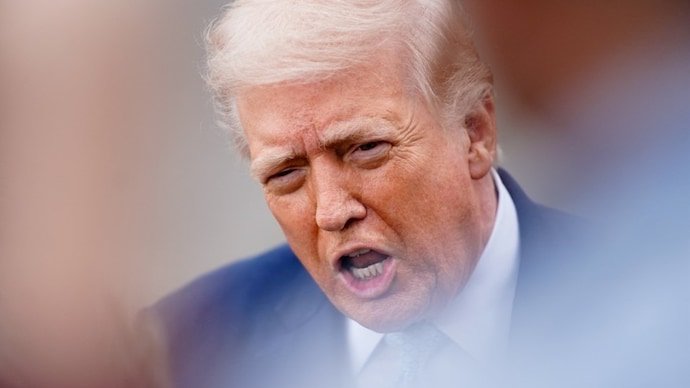
US President Donald Trump has firmly ruled out the possibility of a ceasefire with Iran, signaling that American military operations—alongside Israel—will continue despite growing international pressure for de-escalation. His remarks highlight a hardline stance as the conflict intensifies into a broader regional crisis across the Middle East.
Speaking to reporters at the White House, Trump made it clear that while diplomatic engagement remains an option, it will not come at the cost of ongoing military action. “Look, I don’t want to do a truce, but we can talk,” he said. “When you’re destroying the other side, you don’t do a ceasefire.”
The statement underscores Washington’s current strategy: maintain maximum military pressure while leaving limited room for negotiations. As Airstrikes and retaliatory actions continue across the region, fears of a prolonged and destabilizing conflict are rising globally.
Trump’s Claim: “We Have Won”
Adopting a notably assertive tone, Trump declared that US operations have already crippled Iran’s military infrastructure. According to him, Tehran’s defense capabilities have been significantly degraded after weeks of sustained strikes.
“They don’t have a navy. Their air force is gone. They don’t have equipment,” Trump stated, portraying Iran as militarily weakened and unable to effectively respond.
He went further, claiming outright victory: “I think we’ve won. We’ve destroyed everything—air force, navy, anti-aircraft systems.” However, such claims remain difficult to independently verify and are likely to be contested by analysts and international observers.
Diplomacy Without De-escalation
While Trump did not completely shut the door on dialogue, he made it clear that negotiations would not involve pausing military operations. This approach reflects a long-standing doctrine of negotiating from a position of strength.
“We can have dialogue, but I don’t want a ceasefire,” he reiterated before departing for Florida. This signals a dual-track strategy—continued military engagement paired with conditional diplomatic outreach.
Critics argue that such a stance risks prolonging the conflict, while supporters believe it increases leverage over Iran in any future negotiations.
Strait of Hormuz: A Global Flashpoint
One of the most critical concerns emerging from the conflict is the disruption in the Strait of Hormuz, a vital maritime chokepoint through which nearly 20% of the world’s oil and liquefied natural gas flows.
Trump acknowledged that the waterway has been effectively “clogged” due to ongoing hostilities but expressed confidence that it would eventually reopen.
“It’s a simple military operation, but it needs a lot of help,” he said, calling for international cooperation. He specifically urged major energy-dependent nations like china and Japan to contribute to securing the route.
“China uses 90% of its energy imports, Japan about 95%. It would be good if they participated,” Trump added, emphasizing the global stakes involved.
| Key Factor | Details |
|---|---|
| Strait Importance | Handles ~20% of global oil and LNG trade |
| Current Status | Severely disrupted due to conflict |
| US Position | Open through military coordination |
| International Role | Expected participation from NATO, China, Japan |
| Economic Impact | Oil prices up ~50% since conflict began |
Frustration with Allies
Trump also criticized NATO allies for what he described as a lack of willingness to support efforts to reopen the Strait of Hormuz. “NATO could help us, but they haven’t had the courage so far,” he remarked.
The criticism reflects growing tensions not just between the US and Iran, but also within Western alliances over how to respond to the crisis.
Alignment with Israel
Trump emphasized that the United States and Israel remain closely aligned in their strategic objectives. “The partnership is excellent. We both want victory,” he said, indicating that Washington expects Israel to continue coordinating closely with US military efforts.
This alignment has been a defining feature of the conflict, shaping both military operations and diplomatic messaging.
Uncertainty Over Future Targets
When questioned about potential strikes on Iran’s key oil infrastructure, including Kharg Island, Trump remained deliberately vague. “I might have a plan, I might not,” he said, declining to provide specifics.
This ambiguity suggests that further escalation remains a possibility, particularly if strategic energy assets become targets.
Human Rights Concerns and Escalating Toll
Trump also condemned reports of Iran executing three protesters, calling the actions “terrible” and accusing Iranian authorities of brutality. The remarks added a Human Rights dimension to the ongoing geopolitical conflict.
Meanwhile, the humanitarian and economic toll continues to mount. Since the conflict began on February 28, more than 2,000 people have reportedly been killed, primarily in Iran and Lebanon.
The disruption of energy routes has triggered a sharp rise in global oil prices—up approximately 50%—raising fears of a wider economic shock that could affect countries far beyond the region.
Conclusion: A Conflict with No Immediate End
Trump’s rejection of a ceasefire signals a continuation of aggressive US military policy toward Iran, even as global concerns about escalation grow. By combining sustained military pressure with limited openness to talks, Washington appears committed to reshaping the strategic balance in the region.
However, with vital energy routes under threat, rising casualties, and increasing international unease, the path forward remains uncertain. Whether this approach leads to a decisive outcome or a prolonged conflict will depend on how both sides—and the global community—respond in the coming weeks.
For breaking news and live news updates, like us on Facebook or follow us on Twitter and Instagram. Read more on Latest World on thefoxdaily.com.





COMMENTS 0