- Minnesota Emerges as Central Hub of Protest Movement
- Nationwide Participation Across Urban and Rural Areas
- Creative Protests and Symbolic Messaging
- Wide Range of Issues Fuel Public Anger
- Political Reactions Dismiss Protests
- Voices from the Ground Highlight Public Sentiment
- Global Expansion of ‘No Kings’ Movement
- High-Profile Support Adds Momentum
- Growing Movement Signals Rising Political Tension
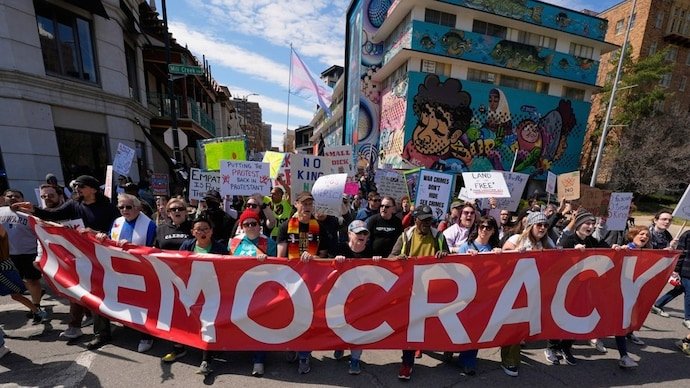
Millions of people across the United States and Europe took to the streets as part of the growing “No Kings” protest movement, voicing opposition to President Donald Trump’s policies, including immigration crackdowns, the ongoing Iran conflict, and concerns over civil rights.
The protests, held on Saturday, saw large gatherings in major cities as well as smaller towns, reflecting a broad-based mobilisation of citizens from diverse backgrounds. Demonstrators expressed frustration over a wide range of issues, from foreign policy decisions to domestic governance.
In Minnesota, one of the focal points of the movement, thousands gathered in a show of solidarity against immigration enforcement measures and broader political developments.
Minnesota Emerges as Central Hub of Protest Movement
The flagship “No Kings” event took place on the Capitol lawn in St. Paul, Minnesota, drawing a massive crowd. The gathering featured prominent voices from across entertainment, Politics, and activism.
Musician Bruce Springsteen headlined the event, performing and addressing the crowd. He praised the people of Minnesota for their resistance against increased immigration enforcement and highlighted their role in inspiring nationwide activism.
His performance included a song written in response to recent controversial incidents involving federal officers, adding an emotional tone to the protest.
Nationwide Participation Across Urban and Rural Areas
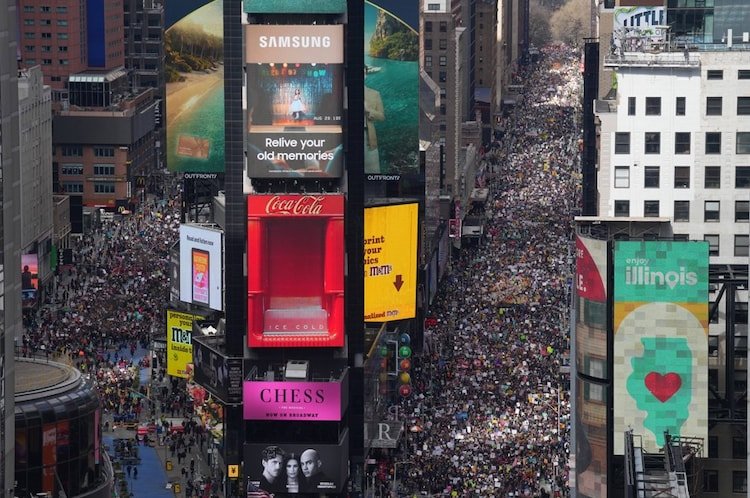
The demonstrations were not limited to major metropolitan areas. From small towns like Driggs in Idaho to large cities such as New York, Americans gathered in significant numbers to participate in the protests.
Organisers reported that participation extended across all 50 states, highlighting the widespread reach of the movement.
| Protest Detail | Information |
|---|---|
| Total Events Registered | Over 3,100 across the US |
| Estimated Attendance (Previous Rallies) | 5 million (June), 7 million (October) |
| Expected Attendance (Latest) | Up to 9 million participants |
| Key Locations | Minnesota, New York, Washington, Kansas, San Diego |
| International Reach | Europe, Latin America, Australia |
Creative Protests and Symbolic Messaging
Demonstrators used creative expressions to convey their message, with costumes, placards, and performances playing a key role. Protesters carried slogans such as “Put down the crown” and “Regime change begins at home,” reflecting opposition to perceived authoritarian tendencies.
In Washington, crowds marched from the Lincoln Memorial to the National Mall, chanting slogans and using drums and bells to amplify their presence.
Some participants used satire to criticise government agencies, including groups dressed in themed costumes to mock immigration enforcement authorities.
Wide Range of Issues Fuel Public Anger
The protests were driven by a combination of concerns, including stricter immigration laws, the Iran war, economic inequality, and perceived rollbacks of transgender rights.
Speakers at the Minnesota rally also criticised the growing influence of billionaires in shaping economic and political decisions, adding another dimension to the movement’s demands.
Many participants emphasised that their involvement was motivated by a broader desire to protect democratic values and civil liberties.
Political Reactions Dismiss Protests
The protests were met with criticism from Republican leaders and White House officials. A spokesperson described the demonstrations as lacking genuine public support and attributed them to organised political networks.
Similarly, representatives from the National Republican Congressional Committee criticised the rallies, characterising them as platforms for extreme views.
Despite these responses, organisers maintained that the turnout reflected widespread public dissatisfaction and growing momentum.
Voices from the Ground Highlight Public Sentiment
Protesters across the country shared personal reasons for participating, ranging from concerns about governance to broader social issues. Many described the movement as a source of hope and collective action.
Civil liberties advocates also stressed the importance of public demonstrations in safeguarding democratic freedoms, noting that fear should not deter citizens from expressing their views.
Global Expansion of ‘No Kings’ Movement
The protests extended beyond the United States, with demonstrations organised in multiple countries across Europe, Latin America, and Australia. In some regions, the movement adopted alternative names such as “No Tyrants,” reflecting local political contexts.
In cities like Rome, London, and Paris, protesters gathered to voice opposition not only to US policies but also to broader global issues, including war, governance, and Human Rights.
Demonstrators carried banners calling for peace, an end to conflict, and resistance against far-right politics, signalling the international resonance of the movement.
High-Profile Support Adds Momentum
The Minnesota rally featured messages and appearances from well-known figures, including actors, musicians, political leaders, and labour representatives. Their participation helped amplify the movement’s message and attract wider attention.
Speakers highlighted the scale of public participation, arguing that the sheer number of people taking part sends a strong signal to political leaders.
Organisers noted that a significant portion of participants came from outside major cities, including suburban and traditionally conservative regions, indicating a broader shift in public engagement.
Growing Movement Signals Rising Political Tension
As the “No Kings” protests continue to expand, they are becoming a significant indicator of political sentiment both within the United States and internationally.
With millions participating and a wide range of issues at stake, the movement underscores increasing public engagement in political discourse and the challenges facing current leadership.
Whether these demonstrations will influence policy decisions remains to be seen, but they have already made a substantial impact in shaping the global conversation around governance, rights, and accountability.
For breaking news and live news updates, like us on Facebook or follow us on Twitter and Instagram. Read more on Latest World on thefoxdaily.com.



COMMENTS 0