
Two advanced Nvidia H200 Artificial Intelligence chips reportedly reached a Chinese university with links to the People’s Liberation Army (PLA), despite the institution being on the US government’s export blacklist. The purchase has renewed concerns in Washington about whether restrictions designed to limit China’s access to advanced American computing technology are working as intended.
The institution involved is Northwestern Polytechnical University (NPU), a defence-focused university in the Chinese city of Xi’an. According to procurement records reviewed by Reuters, the university purchased two Nvidia H200 processors in October for 874,700 yuan, equivalent to approximately $123,000.
The chips were reportedly purchased through a domestic Chinese technology supplier rather than directly from Nvidia. The transaction is significant because NPU is listed by the US Department of Commerce as an entity subject to export restrictions, meaning the sale of controlled American technology to the institution would normally require authorisation that is generally denied.
The report also identified a wider pattern involving Chinese universities and research organisations obtaining access to restricted Nvidia processors through local suppliers and computing-service arrangements. This raises a difficult question for US policymakers: how can Washington restrict the direct sale of advanced chips while preventing blacklisted institutions from accessing the same computing power through third parties?
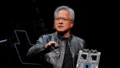
The development comes as Nvidia CEO Jensen Huang faces increased scrutiny in Washington over his company’s China strategy and separate allegations involving his reported relationship with Alice Huang, a former Megaspeed executive whom US officials reportedly suspect of having links to Chinese intelligence. Nvidia’s board has launched an independent investigation into whether its CEO was targeted by a foreign intelligence effort.
How Did the Blacklisted Chinese University Obtain Nvidia H200 Chips?
According to Reuters, Northwestern Polytechnical University purchased two Nvidia H200 processors through Shaanxi Bosuan Network Technology, a domestic Chinese supplier. The transaction appeared in a procurement record dated October 21, 2026, published on the university’s website.
The purchase was reportedly made for the university’s management school. The records listed a total price of 874,700 yuan, or approximately $123,000, for the two processors.
Instead of purchasing the chips directly from Nvidia, the university obtained them through a local intermediary. This purchasing arrangement is important because US export controls generally regulate the export, re-export and transfer of controlled technology to restricted entities. A transaction involving a domestic supplier can make it more difficult for authorities to establish where a processor originated and whether it was transferred in violation of applicable restrictions.
The procurement records do not, by themselves, establish how the supplier obtained the processors or whether the transaction violated US law. However, they demonstrate why regulators are concerned about indirect access to restricted computing technology.
University Also Obtained Access Through Computing-Service Contracts
The reported purchase of two H200 chips was not the only way the university obtained access to Nvidia computing power.
Reuters reviewed additional procurement and corporate records indicating that Northwestern Polytechnical University had entered into computing-resource rental arrangements involving servers equipped with advanced Nvidia processors.
These arrangements are particularly important because an organisation does not necessarily need to own a physical AI chip to use its computing capacity. A university can rent access to a remote server containing powerful processors and use that infrastructure to train AI models, run simulations or conduct research.
According to the reporting, the university’s computing arrangements included access to servers containing H200, A100 and A800 processors. Such services can provide substantial computing capacity without requiring the customer to purchase and maintain the hardware directly.
For export-control authorities, this creates a more complicated enforcement challenge. Tracking the physical sale of a processor is different from monitoring who can remotely access a server containing that processor.
Why Is Northwestern Polytechnical University on the US Export Blacklist?
Northwestern Polytechnical University is one of China’s prominent defence-focused universities. It has a history of research connected with military aircraft, satellites, missiles and other technologies relevant to China’s defence sector.
The university belongs to the group commonly known as the Seven Sons of National Defense. This group consists of Chinese universities with close connections to the country’s defence industry and military research programmes.
The US Department of Commerce placed Northwestern Polytechnical University on its Entity List in 2001 over concerns involving missile-proliferation activities and military-related research. Its inclusion means that exports, re-exports and transfers of certain controlled American technologies to the institution are subject to strict licensing requirements.
The restrictions are intended to prevent sensitive US-origin technology from reaching organisations that could use it for activities considered contrary to American national security and foreign policy interests.
Why the University’s Research Matters
Advanced AI computing has applications across civilian and military research. Powerful processors can support complex simulations, data analysis, image recognition, autonomous systems and the development of sophisticated AI models.
At a defence-focused university, access to high-performance computing can therefore have implications beyond ordinary academic research. The same underlying computing capabilities used for scientific projects can also support work relevant to aerospace engineering, military planning and other strategic technologies.
This does not mean that the two H200 processors purchased by the university were necessarily used for military purposes. The procurement records establish the reported purchase, not the specific projects for which the chips were ultimately deployed.
Nevertheless, the university’s defence-related connections explain why its access to advanced American computing technology attracts particular attention from US regulators.
What Makes Nvidia H200 Chips So Important?
The Nvidia H200 is a high-performance graphics processing unit designed for demanding artificial intelligence and high-performance computing workloads. Unlike ordinary consumer graphics cards, it is built to handle the large volumes of data and calculations required to train and operate advanced AI systems.
AI models require substantial computing resources to process information, identify patterns and generate outputs. As models become larger and more sophisticated, access to powerful processors becomes increasingly important for organisations developing or deploying them.
The H200 is part of Nvidia’s Hopper-generation data centre GPU family. It features high-bandwidth memory designed to help processors handle large datasets and demanding AI workloads.
Its capabilities make it useful for tasks such as:
- AI model training: Processing large datasets and performing the calculations required to train complex artificial intelligence models.
- AI inference: Running trained models to generate responses, predictions and other outputs.
- Scientific computing: Supporting demanding simulations and research calculations.
- Engineering applications: Processing complex workloads used in technical research and modelling.
- Large-scale data analysis: Handling computationally intensive tasks involving substantial quantities of information.
Access to these processors can influence how quickly an organisation develops AI systems and how large or complex its computing projects can become. This is why advanced Nvidia chips have become an important part of the technology competition between the United States and China.
Why Did the US Restrict Nvidia’s Advanced AI Chips to China?
Washington’s restrictions on advanced semiconductor technology are part of a broader effort to limit China’s access to computing capabilities that could support military modernisation and other strategically sensitive applications.
Advanced AI processors are important because they can accelerate the development of sophisticated machine-learning systems. These systems have potential applications in intelligence analysis, military research, autonomous technologies and weapons-related development.
US officials and lawmakers have repeatedly raised concerns that access to high-performance American chips could strengthen China’s military and technological capabilities.
Export controls are therefore designed to restrict the transfer of certain advanced processors, semiconductor manufacturing equipment and related technologies to China and specific Chinese organisations.
However, the rules are not necessarily a blanket prohibition on every American semiconductor product entering China. Restrictions depend on the product’s technical specifications, the destination, the end user and the applicable licensing requirements.
Even where certain chip exports are permitted under specific conditions, separate restrictions can apply to organisations on the Entity List. Northwestern Polytechnical University’s listing is particularly relevant because it faces restrictions that are not automatically removed simply because a particular class of chip may be eligible for a different export arrangement.
How Can Restricted AI Chips Reach Chinese Institutions Through Third Parties?
The reported H200 purchase highlights a central challenge in enforcing semiconductor export controls: advanced computing technology can reach an end user through several layers of suppliers and service providers.
A university does not always need to order a processor directly from its manufacturer. It may purchase equipment from a domestic distributor, acquire servers through another company or rent computing capacity from a cloud provider.
Each arrangement creates a different monitoring challenge for regulators.
1. Domestic Suppliers Can Act as Intermediaries
When a Chinese institution purchases a processor from a local supplier, the transaction may not appear as a direct sale from an American semiconductor company to the restricted end user.
Authorities must establish where the hardware originated, how it entered the country and whether the relevant export restrictions were followed. This can require cooperation between governments, manufacturers, distributors and local enforcement agencies.
The Northwestern Polytechnical procurement record identified a domestic supplier, but the reported information does not establish the complete supply route through which the two H200 processors reached that supplier.
2. Cloud Computing Allows Access Without Ownership
Cloud computing creates another route through which restricted technology can potentially be accessed.
Instead of purchasing an H200 processor, a university or research organisation can rent computing time on a server equipped with the chip. The hardware may be owned by a separate company and located in a different facility.
This arrangement can give users access to powerful computing resources without requiring them to physically possess the processors.
It also makes enforcement more complicated. Regulators may need to examine not only hardware ownership but also server locations, customer identities, remote access permissions and the actual users of the computing service.
3. Tracking the Final User Is Difficult
Export controls are most effective when authorities can identify the final destination and end user of restricted technology. However, complex commercial arrangements can make that process difficult.
A chip may be sold to one company, installed in a data centre operated by another organisation and eventually accessed by a university or research institution through a rental agreement.
Without effective end-user verification and monitoring, a restricted organisation may potentially gain access to computing power even when a direct hardware sale would not be approved.
This is why the latest procurement findings have renewed calls for stronger chip-tracking requirements and greater oversight of cloud computing services involving advanced processors.
What Does the H200 Purchase Reveal About Gaps in US Export Controls?
The reported purchase does not automatically prove that US export controls have failed in every respect. It does, however, highlight areas where enforcement may face practical limitations.
Washington can restrict direct exports to blacklisted institutions, but preventing indirect access requires visibility into the wider technology supply chain. Domestic distributors, resellers, cloud providers and data centre operators can all become relevant to enforcement.
Reuters reviewed 26 procurement and corporate records indicating that other Chinese universities and research organisations had also purchased restricted Nvidia processors or rented access to computing services powered by them.
The findings included access to processors such as the H100, H200, A100, A800 and H800. Several of the institutions involved reportedly had connections to China’s defence sector or military research.
This broader pattern suggests that the issue extends beyond a single university or two processors. It raises questions about how effectively export restrictions can be enforced when advanced computing resources are available through a network of commercial intermediaries.
For US policymakers, the challenge is to prevent restricted end users from obtaining access without unnecessarily disrupting legitimate international business and research activities.
Jensen Huang’s Argument for Continuing Nvidia Chip Sales to China
Nvidia CEO Jensen Huang has argued that allowing American semiconductor companies to continue selling certain products in China can help preserve US technological leadership.
His position is that maintaining access to the Chinese market can keep customers dependent on American technology and strengthen Nvidia’s global competitive position. If US companies withdraw completely, Chinese customers could turn to domestic alternatives and accelerate the development of their own semiconductor industry.
Huang has also argued that American companies should remain competitive in international markets rather than surrendering customers to foreign technology suppliers.
However, this position has faced criticism from US lawmakers who believe that access to advanced American AI processors could strengthen China’s military and intelligence capabilities.
Some lawmakers have argued that the national security risks of allowing powerful processors to reach China outweigh the commercial benefits of maintaining sales in that market.
The latest H200 procurement findings are likely to add pressure to this debate. If blacklisted institutions can obtain restricted computing power through domestic suppliers or rented servers, lawmakers may question whether existing licensing and monitoring arrangements provide sufficient protection.
US Lawmakers Seek a Briefing From Nvidia CEO on November 18
The controversy surrounding Nvidia has also brought renewed congressional attention to Jensen Huang’s business relationships and the company’s activities involving China.
Three Republican congressional committee chairmen have requested a briefing with Huang on November 18, 2026, over his reported contacts with Alice Huang, the former Megaspeed executive whom US authorities reportedly suspect of having links to Chinese intelligence.
The request comes amid wider concerns about the possibility that advanced Nvidia processors were obtained by Chinese customers despite US restrictions.
Both Republicans and Democrats have called for stronger oversight of China’s access to advanced American AI technology. Proposals discussed by lawmakers include greater congressional supervision of semiconductor exports and requirements to track the movement and use of restricted chips.
The briefing could give lawmakers an opportunity to question Nvidia about its customer relationships, export-control compliance and safeguards designed to prevent restricted technology from reaching prohibited end users.
However, the reported procurement by Northwestern Polytechnical University and the allegations involving Alice Huang are separate issues. The university’s purchase records do not establish that she arranged the transaction or that Jensen Huang was involved in it.
How Is the Alice Huang Controversy Connected to Nvidia?
The H200 procurement report comes at a time when Nvidia is dealing with separate allegations concerning its CEO’s reported relationship with Alice Huang, a former senior executive at Singapore-based data centre company Megaspeed.
US officials reportedly suspect that Alice Huang was connected to China’s Ministry of State Security and may have gathered information about Nvidia through her relationship with Jensen Huang. The allegations have not been publicly substantiated in full, and China has rejected claims that she was involved in espionage.
Megaspeed has also attracted scrutiny over suspicions that its business network helped Chinese customers obtain advanced Nvidia chips subject to US export restrictions.
Separate reporting has alleged that the network of companies associated with Alice Huang and her family helped facilitate substantial shipments of Nvidia processors to Chinese firms. These claims remain subject to scrutiny and should not be treated as established findings of criminal wrongdoing.
The overlap between the allegations has created additional pressure on Nvidia because the company is simultaneously facing questions about its international chip sales, customer relationships and leadership oversight.
Nvidia Opens an Independent Investigation Into Jensen Huang
Nvidia’s board has announced an independent investigation following reports that Jensen Huang may have been targeted by a foreign intelligence effort through his reported relationship with Alice Huang.
The company said its board had no reason to believe that US national security or Nvidia’s trade secrets had been compromised. It also said Huang supported the investigation and would cooperate fully.
Huang separately sent an apology to Nvidia employees acknowledging that he had been unfaithful to his wife, Lori Huang. He accepted responsibility for his actions and apologised to his family and colleagues.
In his letter, he wrote:
“I owe my family and all of you an apology. I was unfaithful to my wife. My actions hurt her and our children. There is no excuse for what I did. I am deeply sorry.”
He also reaffirmed his commitment to Nvidia and said he would work to regain the confidence of employees, board members, partners and shareholders.
The company has said that Huang will continue leading Nvidia while the investigation proceeds. The board’s review is intended to examine the concerns raised by recent reporting, rather than treating the allegations as already proven.
Why the Northwestern Polytechnical Purchase Matters for the US-China AI Competition
The reported purchase of H200 processors matters because advanced AI computing has become an important part of the wider technology competition between Washington and Beijing.
Both countries are investing in artificial intelligence, semiconductor manufacturing and high-performance computing. Access to advanced processors can influence how quickly researchers and companies develop new models and applications.
For the United States, export controls are intended to preserve an advantage in strategically important technologies and prevent sensitive computing capabilities from reaching organisations that could use them for military purposes.
For China, access to advanced computing resources remains important to its efforts to develop domestic AI systems and reduce dependence on foreign semiconductor suppliers.
The reported purchase highlights the difficulty of balancing these competing interests. Even strict restrictions on direct exports may have limited effectiveness if restricted institutions can obtain similar computing power through commercial intermediaries or remote services.
The issue also extends beyond Nvidia. It raises broader questions about how governments should regulate cloud computing, data centre services and the international movement of advanced technology.
What Happens Next?
The latest procurement findings are likely to intensify calls for stronger monitoring of advanced AI processors and the companies that distribute or rent access to them.
US lawmakers may seek more detailed information from Nvidia about its export-control procedures, customer verification systems and efforts to prevent restricted institutions from accessing its technology.
Regulators may also face pressure to examine whether existing rules adequately cover cloud computing services. If a blacklisted institution can rent access to a server containing a restricted processor, controlling the physical sale of that processor may not be sufficient to prevent access.
The November 18 briefing request involving Jensen Huang is another development to watch. Lawmakers are seeking answers about his reported contacts with Alice Huang, while the separate H200 procurement findings have added urgency to the debate over China’s access to advanced AI technology.
For now, the available records establish that Northwestern Polytechnical University reportedly purchased two H200 chips through a domestic supplier and obtained access to other Nvidia computing resources through service arrangements. They do not independently establish the complete supply chain, the precise end use of the two processors or whether the transaction resulted in a violation of US law.
Key Facts About Nvidia H200 Chips Reaching a Blacklisted Chinese University
- University involved: Northwestern Polytechnical University in Xi’an, China, an institution with close connections to the country’s defence sector.
- Purchase: The university reportedly bought two Nvidia H200 processors in October 2026.
- Reported value: The transaction was worth 874,700 yuan, or approximately $123,000.
- Domestic supplier: The chips were reportedly purchased from Shaanxi Bosuan Network Technology rather than directly from Nvidia.
- Export restrictions: Northwestern Polytechnical University has been on the US Commerce Department’s Entity List since 2001.
- Additional access: Procurement records also indicated that the university obtained access to Nvidia processors through computing-resource rental arrangements.
- US response: Lawmakers are seeking stronger oversight of advanced chip exports and have requested a briefing with Jensen Huang on November 18.
- Nvidia investigation: The company’s board has launched an independent investigation into whether its CEO was targeted by a foreign intelligence effort.
The reported arrival of Nvidia H200 chips at Northwestern Polytechnical University highlights a significant enforcement challenge for US export controls. Restricting direct sales to blacklisted institutions may not be enough if advanced processors can reach them through local suppliers, data centres and rented computing services. As Washington reassesses its approach to China’s access to AI technology, the case could strengthen demands for more effective chip tracking, stricter end-user verification and greater oversight of the global computing supply chain.
For breaking news and live news updates, like us on Facebook or follow us on Twitter and Instagram. Read more on Latest World on thefoxdaily.com.





COMMENTS 0