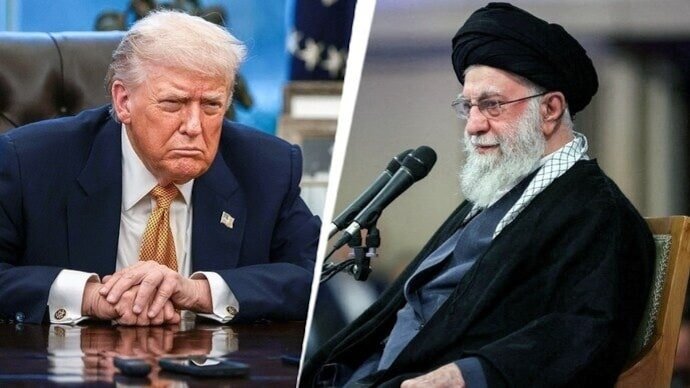
Iran appeared to be on the brink. Streets were flooded with protests demanding the overthrow of the regime. Reports suggested thousands had been killed. As tensions escalated, US President Donald Trump issued a stark warning, saying, “Help is on the way.” American military assets began moving across the region. Fighter jets were repositioned. Personnel were evacuated. Iran shut down its airspace. The world watched closely, bracing for strikes that seemed inevitable.
Military movement intensified. Surveillance aircraft loitered near Iranian territory. US refuelling tankers shuttled between Diego Garcia and Hawaii. Britain followed suit, pulling out non-essential staff from regional bases. Yet despite all the positioning, nothing followed. No bombs. No missiles. No invasion. What came instead were sanctions.
Iran was not attacked. No B-2 bombers crossed red lines. No strike packages were launched. What unfolded was precautionary positioning rather than escalation. Analysts noted the posture remained defensive, suggesting pressure without ignition.
Trump’s rhetoric, however, did not soften. He warned Tehran against executions, encouraged protesters to persist, and promised consequences. His administration publicly floated options ranging from cyber operations to targeted Airstrikes. But instead of military action, the US Treasury moved swiftly, imposing sanctions on senior IRGC commanders, security officials linked to the crackdown, and energy traders operating across Iran, the UAE, Singapore and the UK.
On the surface, the logic was sound. Military strikes risk uniting a fractured regime, ending protests and triggering regional retaliation. Sanctions, by contrast, apply sustained pressure without provoking immediate escalation. But behind closed doors, a more decisive calculation was taking place, and it was centred in Riyadh.
By conventional logic, Saudi Arabia should have welcomed an Iranian collapse. Decades of Sunni-Shia rivalry, proxy wars and ideological hostility would suggest so. Yet 2026 is not governed by ideology. It is governed by deficits, solvency and oil prices.
The number that explains Saudi Arabia’s restraint is $44 billion. That is the estimated fiscal gap Riyadh faces. The Saudi welfare model is already under strain at current oil prices. The system works above $94 a barrel. It hurts at $60. It collapses at $40.
Iran is the wild card. A regime change or sanctions relief could immediately release up to 160 million barrels of Iranian oil currently held in floating storage, followed by an additional one to two million barrels per day entering global supply. Such a surge would likely crash oil prices from $60 to $40. For Saudi Arabia, that is not discomfort. That is insolvency.
Historically, Riyadh could protect prices by cutting production. But this is no longer viable. In 2026, nearly one million barrels per day of cheaper oil from other producers are entering the market, many with break-even costs between $35 and $45. Saudi cuts would not lift prices; they would only surrender market share.
This is the trap Saudi Arabia faces. It cannot cut supply. It cannot survive $40 oil. And it cannot absorb Iran’s sudden return to the market. Riyadh opposes war with Iran because it creates instability. It also fears peace with Iran because it threatens oil prices. What Saudi Arabia needs is a sanctioned Iran, isolated, constrained and frozen in place.
This reality has nothing to do with Sunni versus Shia ideology. It is about balance sheets. This is why Saudi Arabia reportedly denied US overflight permissions. This is why Oman, Qatar and Saudi Arabia launched what diplomats described as a long and frantic last-minute effort to de-escalate. They were not protecting Tehran. They were protecting themselves.
They warned Washington about the risks: disruption in the Strait of Hormuz, attacks on US bases, retaliatory strikes and oil market chaos. Trump listened.
His decision was driven by calculation, not compassion. Military options remain on the table, but the cost-benefit analysis did not justify them. Sanctions are cheap. Bombs are not. A regional war would send oil markets into turmoil. A collapsed Iranian regime could unleash a flood of oil with equally devastating consequences.
That is why Treasury sanctions replaced Tomahawk missiles. Publicly, Washington claims to stand with the Iranian people. Privately, it is calibrating pressure on Tehran without detonating the region.
Saudi Arabia’s influence stems not from affection for Iran, but from fear of oil mathematics. Enough fear to halt a war, shift policy from missiles to sanctions, and demonstrate that in 2026, oil prices matter more than philosophy, morality or even the promise of regime change.
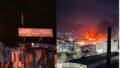
Iran continues to burn. Protests simmer. Sanctions bite. But the pause reveals a hard truth: revolutions are not decided only on the streets. They are decided on spreadsheets. And today, Saudi Arabia’s balance sheet speaks louder than Iran’s burning avenues.
For breaking news and live news updates, like us on Facebook or follow us on Twitter and Instagram. Read more on Latest World on thefoxdaily.com.

COMMENTS 0