- What Prompted Pakistan’s Military Deployment?
- Islamabad Turns Into a High-Security Zone
- Inside the Air Armada: What Pakistan Deployed
- Strategic Reach Beyond Iran
- Diplomatic Stakes: Why These Talks Matter
- Rising Tensions Add Complexity
- What Happens If Talks Are Delayed?
- Conclusion: A High-Risk, High-Stakes Operation
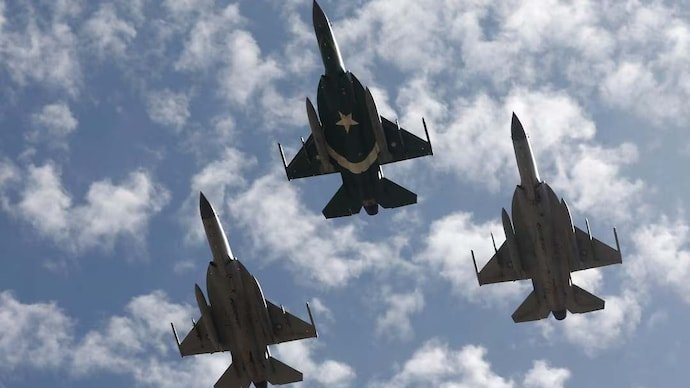
As Pakistan prepares to host high-stakes talks between the United States and Iran, it has launched an unprecedented military operation by deploying Fighter Jets and support aircraft to the Middle East. The move, which includes escort missions and aerial surveillance, is aimed at ensuring the safe passage of the Iranian delegation to Islamabad amid ongoing regional tensions. With fragile ceasefire conditions and geopolitical rivalries at play, Pakistan’s decision reflects both security concerns and the immense diplomatic pressure surrounding the talks.
What Prompted Pakistan’s Military Deployment?
The primary reason behind Pakistan’s air deployment is to provide a secure aerial corridor for the Iranian delegation traveling to Islamabad. With tensions still simmering in the Middle East despite a recent ceasefire, there are concerns about potential disruptions, including hostile actions that could derail the peace process.
Pakistan’s role as host places it in a sensitive position. Any security lapse—especially involving foreign dignitaries—could have far-reaching diplomatic consequences. As a result, authorities have opted for a “zero-risk” approach, deploying significant airpower to ensure safe transit.
Focus on Preventing External Threats
One of the key concerns is the possibility of interference during the Iranian delegation’s journey. Given the complex geopolitical environment, including tensions involving Israel and Iran, Pakistan appears to be preparing for any contingency.
The deployment is not just defensive but also strategic—designed to deter any potential misadventure that could jeopardize the talks before they even begin.
Islamabad Turns Into a High-Security Zone
Security measures are not limited to the skies. Islamabad has effectively been transformed into a fortified zone ahead of the talks. Key areas have been locked down, and advanced air defense systems have been activated across sensitive regions.
Officials have emphasized that a comprehensive security plan is in place to protect all visiting dignitaries. The scale of preparations reflects the importance of the event, which is being closely watched by the international community.
“A comprehensive plan has been prepared to provide foolproof security to all foreign guests,” a senior Pakistani official stated.
This level of preparedness highlights Pakistan’s intent to position itself as a reliable mediator on the global stage.
Inside the Air Armada: What Pakistan Deployed
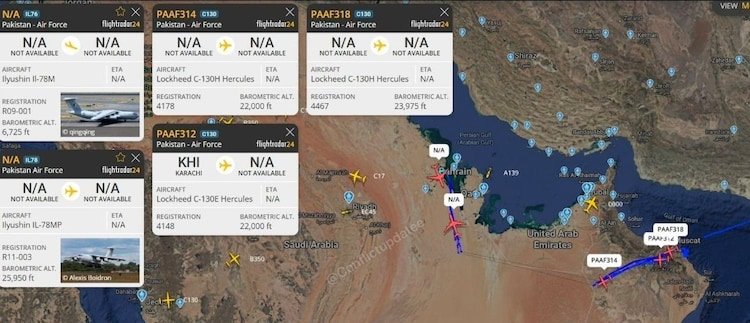
The Pakistan Air Force (PAF) has mobilized a wide range of aircraft to execute this operation. The deployment is notable not only for its scale but also for the variety of capabilities involved.
| Aircraft Type | Role |
|---|---|
| JF-17 Thunder & F-16 | Fighter jets for escort and air defense |
| IL-78 Tankers | Aerial refueling for extended missions |
| C-130 Hercules | Logistics and operational support |
| AWACS | Airborne surveillance and monitoring |
“Eyes in the Sky” Surveillance
Airborne Warning and Control Systems (AWACS) are playing a crucial role by continuously monitoring airspace from Pakistan to the Persian Gulf. These systems provide real-time intelligence, allowing rapid response to any potential threat.
The inclusion of refueling aircraft ensures that fighter jets can remain airborne for extended durations, maintaining uninterrupted coverage during the delegation’s journey.
Strategic Reach Beyond Iran
Interestingly, Pakistan’s deployment is not limited to Iranian airspace. Reports indicate that Pakistani aircraft have also been spotted near regions such as the UAE and Saudi Arabia. This suggests a broader coordination effort, possibly involving regional allies.
Such positioning enhances operational flexibility and ensures that Pakistan can respond quickly across a wider geographic area if required.
It also reflects the interconnected nature of Middle Eastern security, where developments in one area can quickly impact others.
Diplomatic Stakes: Why These Talks Matter
The upcoming talks between the United States and Iran are among the most significant diplomatic engagements in recent years. If successful, they could pave the way for a lasting resolution to a conflict that has already caused significant loss of life and instability.
For Pakistan, hosting these talks is both an opportunity and a challenge. Successfully facilitating dialogue between two adversaries could elevate its global diplomatic standing. However, failure—especially due to security issues—could have the opposite effect.
A Rare Opportunity for Dialogue
If the meeting takes place as planned, it would represent one of the highest-level engagements between the two nations in decades. This adds to the urgency of ensuring a smooth and secure process.
As one academic observer noted, the outcome of these talks could influence the future stability of the entire region.
Rising Tensions Add Complexity
The situation remains volatile despite a ceasefire. Disagreements over related issues, including regional conflicts involving allied groups, have created uncertainty around the talks.
Recent developments, including renewed military actions in parts of the Middle East, have further complicated the situation. These factors increase the risk of last-minute disruptions, making Pakistan’s security measures even more critical.
Diplomatic Friction in the Background
Verbal exchanges between political leaders have also added to the tension. Such rhetoric, while not uncommon, can influence the broader atmosphere in which negotiations take place.
In this context, Pakistan’s military preparedness serves not only as a defensive measure but also as a signal of its commitment to ensuring the talks proceed without interference.
What Happens If Talks Are Delayed?
There are indications that logistical or political challenges could delay the talks. Uncertainty surrounding participation and disagreements over key issues have raised questions about whether the meeting will proceed as scheduled.
For Pakistan, this creates a delicate situation. The country must maintain high security readiness while also navigating evolving diplomatic dynamics.
Even if the talks are delayed, the current deployment demonstrates Pakistan’s willingness to invest significant resources in supporting peace efforts.
Conclusion: A High-Risk, High-Stakes Operation
Pakistan’s decision to deploy fighter jets and support aircraft to the Middle East ahead of the US-Iran Talks reflects the extraordinary stakes involved. By creating a secure aerial corridor and reinforcing its defense posture, Pakistan is aiming to eliminate any risk that could derail the negotiations.
While the move highlights the country’s growing diplomatic ambitions, it also underscores the fragile nature of the current geopolitical environment. With tensions still simmering and uncertainties surrounding the talks, Pakistan’s “iron escort” strategy is as much about deterrence as it is about assurance.
Looking ahead, the success of this operation—and the talks themselves—could have lasting implications not only for regional stability but also for Pakistan’s role on the global stage.
For breaking news and live news updates, like us on Facebook or follow us on Twitter and Instagram. Read more on Latest World on thefoxdaily.com.






COMMENTS 0