- What Triggered the Pakistan-Israel Diplomatic Clash?
- Khawaja Asif Deletes Controversial Post
- Escalating Rhetoric and Global Reactions
- Pakistan’s Role as a Mediator Under Pressure
- Background: US-Iran Ceasefire and Islamabad Talks
- Strait of Hormuz: A Critical Pressure Point
- Diplomacy in the Age of Social Media
- What This Means for Pakistan’s Diplomatic Strategy
- Conclusion: A Test of Diplomatic Balance
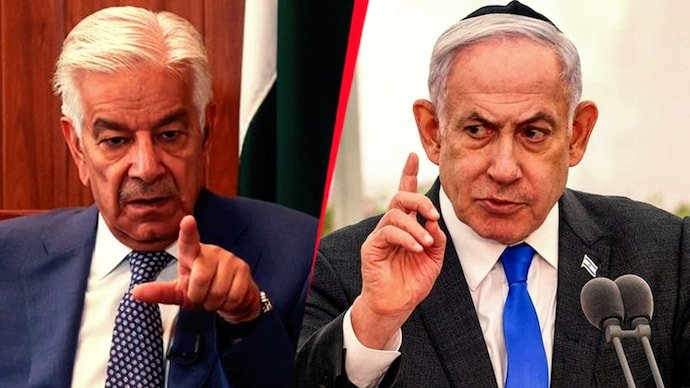
A fresh diplomatic controversy has erupted between Pakistan and Israel just days before critical US-Iran Peace Talks scheduled in Islamabad in April 2026. Pakistan’s Defence Minister Khawaja Asif triggered the row with strongly worded remarks against Israel, accusing it of committing “genocide” and calling it “evil.” The comments drew a sharp response from Israeli Prime Minister Benjamin Netanyahu’s office, which questioned Pakistan’s credibility as a neutral mediator. Asif later deleted his Social Media posts, but the damage was already done raising concerns about Pakistan’s diplomatic balancing act at a crucial geopolitical moment.
What Triggered the Pakistan-Israel Diplomatic Clash?
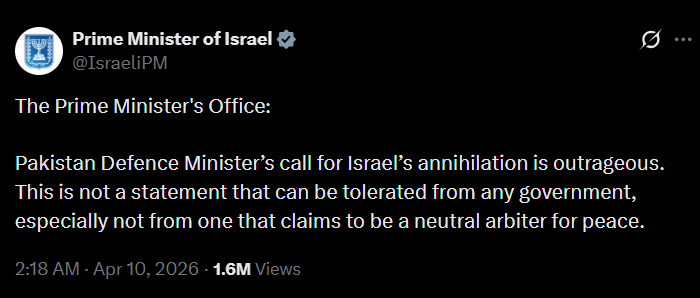
The controversy began when Khawaja Asif posted a series of strongly worded statements on social media criticising Israel’s actions in the Middle East. His remarks included allegations of ongoing violence in Lebanon and broader criticism of Israel’s policies in the region.
In one of his now-deleted posts, Asif described Israel as “evil” and a “curse for humanity,” while also making highly provocative comments about its creation and actions. These statements quickly gained traction online and drew international attention.
The timing of the remarks proved particularly sensitive, as Pakistan was preparing to host high-level diplomatic talks involving the United States and Iran.
Israel’s Immediate Reaction
Israel responded swiftly and strongly. The office of Prime Minister Benjamin Netanyahu condemned the remarks, calling them “outrageous” and unacceptable, especially from a country positioning itself as a neutral mediator.
“This is not a statement that can be tolerated from any government, especially not from one that claims to be a neutral arbiter for peace.”
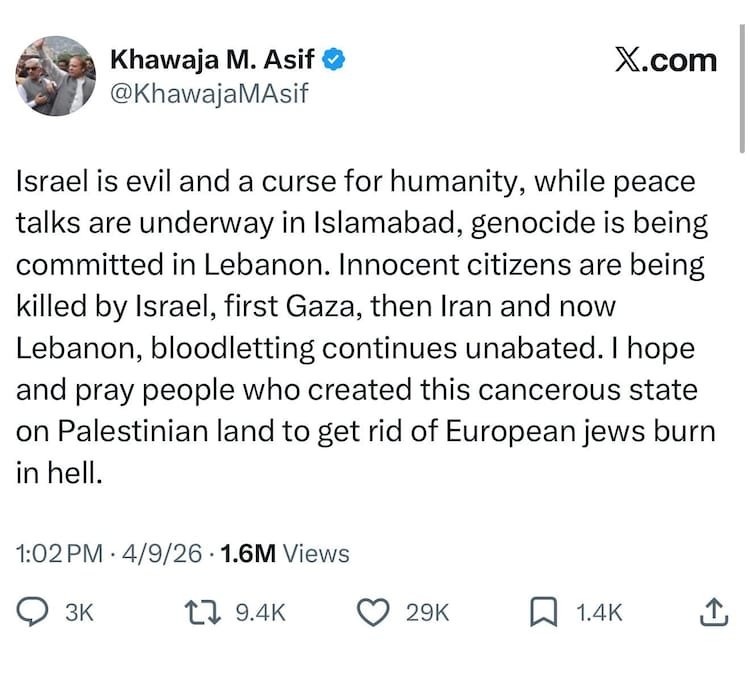
The response highlighted a key concern: how can a country openly criticise one side while claiming neutrality in related diplomatic efforts?
Khawaja Asif Deletes Controversial Post
Following the backlash, Khawaja Asif deleted the controversial posts from his social media account. However, the deletion did little to calm tensions, as the statements had already circulated widely.
The move was seen by many analysts as an attempt to contain diplomatic fallout ahead of the Islamabad talks. Still, critics argue that removing the posts does not erase the underlying sentiment or its potential impact.
Damage Control or Strategic Retreat?
The deletion raises an important question: was this a case of damage control or a calculated step to prevent further escalation?
In Diplomacy, timing is everything. Deleting the posts just before hosting sensitive talks suggests an awareness of the potential consequences. At the same time, it also indicates the challenges Pakistan faces in maintaining a consistent foreign policy narrative.
Escalating Rhetoric and Global Reactions
The controversy did not end with Netanyahu’s response. Israeli Foreign Minister Gideon Sa’ar also strongly criticised Asif’s remarks, describing them as inflammatory and unacceptable.
He argued that such language undermines any claim of neutrality and complicates ongoing diplomatic efforts.
“Referring to a state in such terms amounts to a dangerous escalation of rhetoric.”
The exchange highlights how quickly diplomatic tensions can escalate in the age of social media, where statements can reach a global audience within minutes.
Pakistan’s Role as a Mediator Under Pressure
The timing of this diplomatic clash is particularly significant because Pakistan is currently playing a role in facilitating dialogue between the United States and Iran.
Islamabad has been actively positioning itself as a mediator, leveraging its relationships with multiple countries in the region. However, this role requires a delicate balance one that may now be under strain.
Why Neutrality Matters
For any country acting as a mediator, neutrality is essential. Even the perception of bias can undermine trust and reduce the effectiveness of diplomatic efforts.
In this context, Asif’s remarks have raised concerns about whether Pakistan can maintain the level of impartiality required for successful mediation.
| Factor | Impact on Mediation |
|---|---|
| Public Statements | Can influence perception of neutrality |
| Diplomatic Relations | Affects trust between parties |
| Timing of Remarks | Critical during active negotiations |
Background: US-Iran Ceasefire and Islamabad Talks
The controversy unfolds against the backdrop of a fragile ceasefire between the United States and Iran. Pakistan has been credited with helping facilitate initial communication between the two sides.
The upcoming talks in Islamabad are seen as a crucial step in preventing further escalation and exploring long-term solutions.
Rising Tensions in the Region
Despite the ceasefire, tensions remain high. Disputes over key issues such as regional security and economic concerns continue to challenge diplomatic progress.
The situation is further complicated by ongoing developments in Lebanon and other parts of the Middle East, which have added layers of complexity to the negotiations.
Strait of Hormuz: A Critical Pressure Point
One of the most pressing concerns linked to the broader conflict is the disruption of oil flows through the Strait of Hormuz a vital global shipping route.
Recent reports indicate a significant drop in maritime traffic, raising concerns about Global energy supply and economic stability.
| Metric | Normal Activity | During Ceasefire |
|---|---|---|
| Daily Ship Traffic | ~140 vessels | Significantly reduced |
| Oil Flow | Stable | Disrupted |
This disruption has added urgency to diplomatic efforts, as prolonged instability could have far-reaching consequences for global markets.
Diplomacy in the Age of Social Media
The incident involving Khawaja Asif also highlights a broader trend: the increasing role of social media in international diplomacy.
While platforms like X (formerly Twitter) allow leaders to communicate directly with the public, they also carry risks. A single post can trigger international reactions, complicate negotiations, and shift narratives.
The Double-Edged Sword
- Advantage: Immediate communication and transparency
- Risk: Misinterpretation and rapid escalation
In this case, what may have been intended as a political statement quickly became a diplomatic issue with global implications.
What This Means for Pakistan’s Diplomatic Strategy
Pakistan now faces the challenge of managing the fallout while maintaining its role in ongoing peace efforts. This will require careful messaging, strategic engagement, and possibly confidence-building measures with all parties involved.
The country’s ability to navigate this situation could shape its international standing in the months ahead.
Key Challenges Ahead
- Rebuilding trust with stakeholders
- Maintaining neutrality in public and private communication
- Ensuring successful execution of the Islamabad talks
Balancing domestic political narratives with international expectations will be critical.
Conclusion: A Test of Diplomatic Balance
The controversy surrounding Khawaja Asif’s remarks and their subsequent deletion underscores the complexities of modern diplomacy. At a time when Pakistan is attempting to position itself as a key mediator in a sensitive geopolitical conflict, even a single statement can have far-reaching consequences.
While the immediate focus remains on the upcoming US-Iran talks, the broader issue is one of credibility and trust. Can Pakistan maintain its role as a neutral broker while navigating internal and external pressures?
Looking ahead, the answer will depend on how effectively Islamabad manages both its messaging and its actions. In today’s interconnected world, diplomacy is no longer confined to closed-door meetings it plays out in real time, often in public view.
And as this episode shows, in global politics, words can travel fast but their impact lasts much longer.
For breaking news and live news updates, like us on Facebook or follow us on Twitter and Instagram. Read more on Latest World on thefoxdaily.com.



COMMENTS 0