Any discussion involving Pakistan and “division” immediately recalls the historic 1971 split, when the nation lost its eastern wing, East Pakistan, which later became Bangladesh. However, the division now making headlines is administrative rather than territorial-and it is one that Pakistan’s current government appears keen to pursue.
According to Geo TV, Pakistan’s Federal Minister for Communications, Abdul Aleem Khan, stated that the creation of several new, smaller provinces will “definitely happen,” arguing that such a move would improve governance and public service delivery. But several policy experts, historians, and senior bureaucrats sharply disagree, warning that further fragmentation of Pakistan’s provinces could deepen instability rather than solve existing crises.
The debate over expanding Pakistan’s provincial structure has been ongoing for decades. During Independence in 1947, the country had five provinces: East Bengal, West Punjab, Sindh, the North-West Frontier Province (NWFP), and Balochistan. After the 1971 Liberation War, East Bengal seceded to form Bangladesh, while the NWFP was later renamed Khyber Pakhtunkhwa. Punjab, Sindh, and Balochistan have since remained unchanged.
Amid Rising Unrest in Balochistan and KP, Pakistan Moves to Revisit Provincial Boundaries
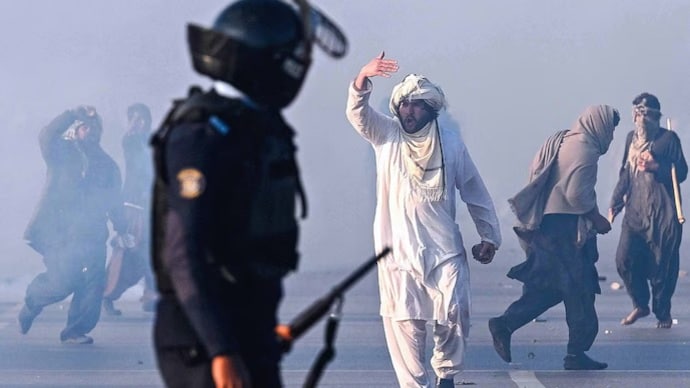
The renewed proposal to carve out more provinces comes at a time when Balochistan and Khyber Pakhtunkhwa (KP) are witnessing heightened tensions and growing political discontent against the hybrid government of Prime Minister Shehbaz Sharif and Pakistan’s powerful military leadership under Field Marshal Asim Munir.
As reported by Pakistani daily Dawn, Abdul Aleem Khan’s remarks follow several policy seminars, televised debates, and expert discussions centered on the idea of expanding Pakistan’s number of provinces. Speaking at a political convention, the Istehkam-e-Pakistan Party (IPP) leader argued that the administrative restructuring would strengthen the government’s control and improve service delivery.
He further added-citing Geo TV-that three new provinces each would be carved out from Sindh, Punjab, Balochistan, and Khyber Pakhtunkhwa, drawing comparisons with neighboring countries that operate with multiple smaller administrative units.
Khan, an influential figure within the IPP-a coalition partner in the Sharif-led civilian government-defended the proposal. However, the plan faces resistance. The Pakistan People’s Party (PPP), led by Bilawal Bhutto Zardari, which has historically opposed the breakup of Sindh, remains firmly against any such move. Sindh Chief Minister Murad Ali Shah reiterated in November that the PPP would not tolerate any attempt to bifurcate or trifurcate the province.
While similar proposals have surfaced several times before, none have materialized. This time, however, the idea has gained traction with several think tanks and coalition partners, including the Sindh-based Muttahida Qaumi Movement-Pakistan (MQM-P). The MQM-P has stated that it intends to use all legal and democratic tools available-including pushing for the 28th Constitutional Amendment-to advocate for new provinces.
Experts Warn: Creating New Provinces Could Trigger More Problems Than Solutions
Veteran bureaucrat and former police official Syed Akhtar Ali Shah questioned the assumption that “more provinces equals better governance.” Writing in The Express Tribune, Shah emphasized that the idea requires deep constitutional, administrative, and historical scrutiny before any decisions are made.
He explained that Pakistan has experimented with multiple administrative systems-such as Ayub Khan’s two-unit system and local government models like Basic Democracies. Instead of creating stability, these experiments often widened grievances and created deeper political fault lines.
Shah believes that Pakistan’s real crisis stems from weak state institutions, flawed enforcement mechanisms, and ineffective local governance. Without addressing these foundational issues, merely redrawing provincial lines could aggravate existing disparities.
“Gaps in governance, along with the fragility of rule of law, are Pakistan’s core problems-not the number of provinces. Weak institutions, inconsistent enforcement, and limited accountability have undermined the state’s capacity. Multiplying provinces without reforming these structures may worsen the situation instead of improving it.”
Similarly, Ahmed Bilal Mehboob, president of the Pakistan-based think tank Pildat, argued in Dawn that attempts at large-scale restructuring have historically intensified grievances rather than reducing them. He added that creating new provinces would be extremely costly, politically contentious, and logistically complex.
According to Mehboob, the primary issue is not the size of provinces but the lack of genuine devolution of power to the grassroots level. Strengthening local government systems, he argued, is far more important than multiplying administrative units.
Both Shah and Mehboob concluded that Pakistan should prioritize strengthening local governance mechanisms already outlined in the Constitution, empower existing administrative divisions, and fix institutional weaknesses before attempting any major administrative overhaul.
Analysts warn that without resolving these underlying and long-standing issues, Pakistan’s proposed creation of new provinces could deepen internal fractures and create more challenges for a country already battling political polarization, economic instability, and security concerns.
For breaking news and live news updates, like us on Facebook or follow us on Twitter and Instagram. Read more on Latest World on thefoxdaily.com.





COMMENTS 0