- Who, What, When, Where, Why, How
- Pakistan’s Warning: Expanding the Battlefield
- India’s Response: A Doctrine of Deterrence
- From Pahalgam to Operation Sindoor: The Context
- Pattern of Escalatory Language
- Former Envoy’s Comments Add Fuel
- Regional Pressures: A Wider Security Picture
- Analysis: Rhetoric vs Reality
- Key Developments at a Glance
- Insight: Why Words Matter in Geopolitics
- What Happens Next?
- Conclusion: A Familiar Yet Fragile Equation
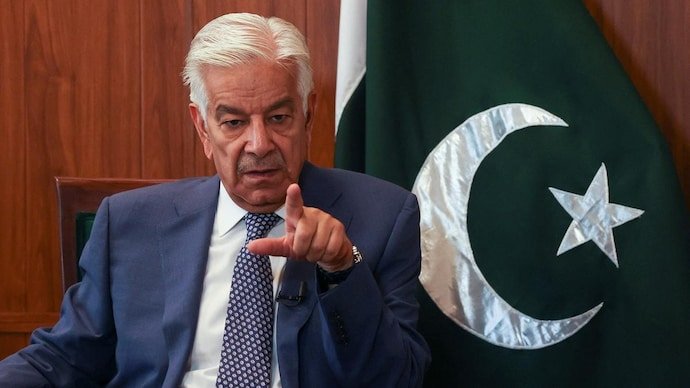
Fresh tensions have surfaced between India and Pakistan after Pakistan’s Defence Minister Khawaja Asif warned that any future conflict could extend deep into Indian territory, specifically naming Kolkata as a potential target. The remarks, made in Sialkot, have triggered sharp reactions and renewed focus on the fragile security dynamics in the region.
Asif’s statement comes shortly after India’s Defence Minister Rajnath Singh reiterated that any “misadventure” by Pakistan would invite an “unprecedented and decisive” response. The exchange reflects a familiar pattern in India-Pakistan relations-sharp rhetoric, strategic messaging, and a constant balancing act between deterrence and escalation.
While no immediate military developments accompany these statements, the language used on both sides signals a hardening stance, raising concerns about the trajectory of future engagements.
Who, What, When, Where, Why, How
Who: Pakistan Defence Minister Khawaja Asif and India Defence Minister Rajnath Singh.
What: Verbal escalation involving threats of expanding conflict zones.
When: Latest remarks made on April 2026.
Where: Statements made in Sialkot (Pakistan) and Kerala (India).
Why: Ongoing strategic tensions following past military escalation and concerns over future conflict scenarios.
How: Public statements, media interactions, and political messaging.
Pakistan’s Warning: Expanding the Battlefield
Khawaja Asif’s remarks marked a significant escalation in tone, suggesting that future conflicts would not remain limited to border areas.
“If India tries to stage any false flag operation this time… we will take it to Kolkata.”
He further claimed that any upcoming conflict could extend beyond the traditional 200–250 km zone, adding:
“We will enter their territory and strike them inside their own homes.”
Notably, Asif also alleged the possibility of a “false flag” operation involving planted evidence, though he provided no supporting proof for the claim.
Such assertions are not new in India-Pakistan discourse, where accusations often accompany periods of heightened tension. However, naming a major metropolitan city like Kolkata adds a sharper edge to the rhetoric.
India’s Response: A Doctrine of Deterrence
India has not issued a direct response to Asif’s latest remarks, but Defence Minister Rajnath Singh’s recent statement reflects the country’s strategic posture.
“If such dirty actions are repeated… our armed forces will give a befitting reply which they would not forget ever.”
Singh’s comments referenced India’s response to the April 2025 Pahalgam terror attack, signaling that the country’s approach is rooted in recent operational experience.
The emphasis on “unprecedented and decisive” action aligns with India’s evolving military doctrine, which increasingly focuses on swift and targeted retaliation.
From Pahalgam to Operation Sindoor: The Context
To understand the current rhetoric, it is essential to revisit the events of April 2025. The Pahalgam terror attack, which claimed 26 lives, triggered a four-day military escalation between India and Pakistan.
India responded with “Operation Sindoor,” launching missile and drone strikes targeting what it described as terror infrastructure across Pakistan and Pakistan-occupied Kashmir.
Pakistan retaliated with artillery fire, drones, and missile strikes, expanding the scope of the conflict.
The situation de-escalated following a ceasefire agreement on May 10, 2025, after direct talks between the two sides.
This sequence of events continues to shape current military and political thinking, influencing both rhetoric and preparedness.
Pattern of Escalatory Language
Asif’s remarks are part of a broader pattern where political and military leaders use strong language to signal resolve.
Interestingly, this rhetoric often serves multiple purposes:
- Domestic Messaging: Demonstrating strength to internal audiences
- Strategic Signalling: Warning adversaries against potential actions
- Psychological Impact: Shaping perceptions and deterrence
However, such statements can also increase the risk of misinterpretation, particularly in an already volatile environment.
Former Envoy’s Comments Add Fuel
Adding to the controversy, former Pakistan High Commissioner to India Abdul Basit recently made remarks about targeting Indian cities in a hypothetical scenario.
“If someone sees us with a bad eye… Pakistan will have no other option than to attack India wherever it wants.”
Although Basit described the situation as unlikely, the comments contributed to the perception of escalating rhetoric.
Diplomatic voices, even when speaking hypothetically, can influence public discourse and amplify tensions.
Regional Pressures: A Wider Security Picture
The timing of these statements is also significant. Pakistan is currently dealing with tensions on its western front, with Afghan authorities accusing it of conducting Airstrikes in regions such as Kabul, Kandahar, and Paktika.
While independent verification remains limited, reports of casualties and damage have added to regional instability.
This broader context suggests that Pakistan’s statements may also be influenced by its wider security challenges, not just its relationship with India.
Analysis: Rhetoric vs Reality
Despite the strong language, there is currently no evidence of immediate military escalation between India and Pakistan. Experts often caution against taking such statements at face value.
Key considerations include:
- Lack of Evidence: Claims of “false flag” operations remain unsubstantiated
- No Troop Movement: No verified reports of unusual military buildup
- Historical Precedent: Similar rhetoric has occurred without escalation
In many cases, such statements are part of strategic communication rather than indicators of imminent action.
That said, the risk lies in cumulative escalation-where repeated strong statements gradually narrow diplomatic space.
Key Developments at a Glance
| Aspect | Details |
|---|---|
| Pakistan Statement | Kolkata named as potential target |
| India’s Position | “Unprecedented and decisive” response warning |
| Trigger Context | Post-2025 Pahalgam attack tensions |
| Military Action History | Operation Sindoor and subsequent escalation |
| Current Status | No active military escalation reported |
Insight: Why Words Matter in Geopolitics
In International Relations, words are rarely just words. Statements by senior officials can influence markets, military readiness, and public sentiment.
Think of it this way: in geopolitics, a sentence can sometimes travel faster than a missile-and occasionally cause just as much disruption.
This is why analysts closely watch not just actions, but language. A shift in tone can signal changes in policy, intent, or strategy.
What Happens Next?
The immediate future will likely depend on whether rhetoric translates into action. Possible scenarios include:
- Cooling of tensions through diplomatic channels
- Continued verbal exchanges without escalation
- Increased military preparedness as a precaution
Given the history of both nations, a return to cautious stability is often the most likely outcome-though never guaranteed.
Conclusion: A Familiar Yet Fragile Equation
The latest exchange between Pakistan and India reflects a familiar pattern of heightened rhetoric without immediate escalation. However, the naming of specific cities and the intensity of language mark a notable shift.
While both sides appear to be reinforcing their positions, the absence of concrete action suggests that this remains, for now, a war of words rather than weapons.
Still, in a region where history has shown how quickly situations can change, even words carry weight.
Because in South Asian geopolitics, escalation rarely begins with action-it often starts with a sentence.
For breaking news and live news updates, like us on Facebook or follow us on Twitter and Instagram. Read more on Latest World on thefoxdaily.com.






COMMENTS 0