In a significant diplomatic development, Pakistan has reportedly offered the United Kingdom a quid pro quo deal involving the transfer of convicted sex offenders of Pakistani descent from Britain in exchange for the extradition of two prominent political critics living in exile. According to a report by the US-based independent outlet Drop Site News, Islamabad signaled that it would facilitate the return of notorious grooming gang convicts—such as Qari Abdul Rauf and Adil Khan—if Britain hands over Adil Raja and Shahzad Akbar, both of whom have been vocal critics of Pakistan’s current hybrid governance structure.
Both dissidents have been residing in the UK since April 2022 after falling out with Pakistan’s political-military establishment. Their criticism specifically targets the Shehbaz Sharif government and Pakistan’s powerful military leadership under General Asim Munir, making them high-value targets for Islamabad’s security apparatus.
The UK’s grooming gang scandals, involving networks predominantly comprising Pakistani-heritage men, shocked the world due to their scale and brutality. Victims—mostly white British girls—were systematically groomed, threatened, trafficked, and gang-raped. In several horrifying cases, young girls reported being abused by 30 to 40 men in a single night, exposing deep failures in law enforcement and social care systems.
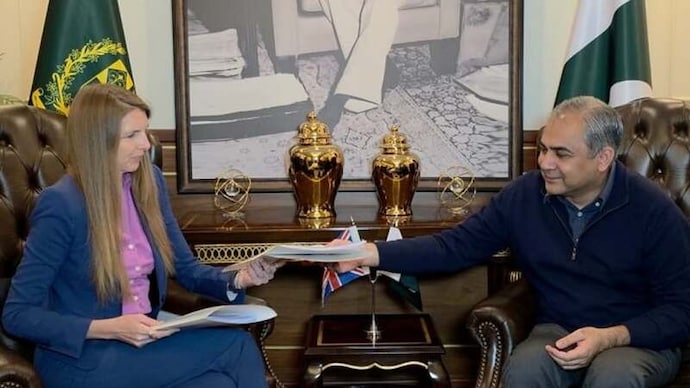
This latest geopolitical angle emerged shortly after Pakistan’s Interior Minister Mohsin Naqvi met the UK High Commissioner. The meeting followed weeks of official denials by Pakistan regarding “fake news” circulating abroad about political unrest and claims surrounding imprisoned former PM Imran Khan. The timing is notable, especially as the British government under Prime Minister Keir Starmer has renewed efforts to deport offenders like Adil Khan and Qari Abdul Rauf back to Pakistan.
Adding urgency to the issue, tech entrepreneur Elon Musk claimed that as many as “a quarter of a million” children in the UK may have been affected by grooming networks, further intensifying public pressure on British authorities.
For years, both legal and diplomatic roadblocks prevented progress. Many convicted offenders attempted to renounce their Pakistani nationality to avoid deportation, while Pakistan repeatedly refused to accept them back. However, the reported deal suggests Islamabad may now be willing to shift its position—but only in exchange for the two political figures it seeks to silence.
Notably, the proposed arrangement has not been formally confirmed by either government or acknowledged by mainstream Western media outlets.
Critics Warn Pakistan Is “Weaponising Grooming Gang Offenders” to Silence Exiled Dissidents
The alleged plan surfaced shortly after UK High Commissioner Jane Marriott met Pakistan’s Interior Minister Mohsin Naqvi in Islamabad on December 4. Official statements highlighted discussions on “security cooperation,” tackling “fake news,” and repatriating undocumented Pakistanis. However, none of the public communiqués referenced grooming gang convicts—an omission many analysts consider strategic.
According to Drop Site News, citing confidential sources, Naqvi framed the deportation of Rauf and Khan under the broad umbrella of “Pakistanis illegally residing in the UK,” a categorization that avoids explicitly mentioning their criminal history.
Regarding the two political dissidents, Dawn reported that Naqvi stressed Pakistan would not tolerate “slander and defamation against state institutions by individuals sitting abroad.” Observers widely interpret this as a direct reference to Raja and Akbar.
Pakistan is reportedly prepared to issue new travel documents to the grooming gang convicts, whose deportation has been stalled since 2018 when they lost UK citizenship and effectively became stateless after attempting to renounce their Pakistani nationality. This loophole allowed them to avoid forced repatriation for years.
Reacting sharply, former Imran Khan aide Shahzad Akbar wrote on X that his commentary on Pakistan’s “Human Rights abuses, rising authoritarianism, unconstitutional amendments, and the current crisis over military leadership” has angered the regime, leading to efforts to silence him.
Waqas Ahmed, a New York–based journalist who contributed to the Drop Site News report, stated on X: “Ordinary people don’t think like this, but the Pakistani government does. They have now figured out how to use British grooming gangs as diplomatic leverage against overseas critics.”
Lahore-based commentator Faraz echoed this sentiment on X, saying, “The Pakistani government now uses grooming gangs as diplomatic leverage.”
The International Human Rights Foundation condemned the alleged strategy as “transnational repression,” pointing out that Islamabad’s actions are part of a wider crackdown on dissent. The organization highlighted that Adil Raja was “court-martialled in absentia” and handed a 14-year sentence “without prior notice, legal representation, or a right to defense,” urging the UK Government to consider these serious human rights violations before entertaining Pakistan’s request.
Understanding the Pakistani-Origin Grooming Gangs: A Dark Chapter in UK Crime History
Pakistani-origin grooming gangs have been one of the most painful and controversial criminal issues in modern UK history. Beginning in the 1990s, networks of predominantly Pakistani men targeted vulnerable girls—mostly white working-class teenagers—through manipulation, coercion, and extreme violence.
Town after town—Rotherham, Rochdale, Oldham, Telford—revealed patterns of grooming, trafficking, and gang rape. Some of the most disturbing cases include the brutal torture of several girls by the Hussain brothers, the repeated assault of one victim by over 100 men, the murder of a teenage girl and her family in Telford, and numerous cases where victims were raped by dozens of men in a single night.
The Rochdale case of 2012 remains one of the most notorious, sparking national inquiries, political outrage, and calls for systemic reform. Yet, diplomatic tensions have prevented the deportation of several convicts. Pakistan has historically refused to accept them, citing the loss of citizenship and potential security risks under its dual nationality laws.
Since late 2024, the issue has regained global attention, in part due to Elon Musk’s sustained pressure campaign on X. Musk has pledged financial and legal support to hold “corrupt officials” accountable, increasing political pressure on the Starmer government.
Prime Minister Keir Starmer announced plans for a national inquiry in June 2024, but by December, the process remains stalled amid controversies, including accusations that Labour is backing away from women’s rights and concerns that the inquiry could be politically manipulated. Several advisory panel members have resigned, warning that survivors are losing faith in the process.
London-based journalist Naresh Kaushik, formerly of the BBC and Associated Press, noted in an India Today report that the scandal poses “bad news for the Keir Starmer government,” with many survivors expressing fears that the review may be “deliberately watered down” or influenced to minimize scrutiny.
Despite Section 194 of the UK Extradition Act 2003 allowing special ad hoc extradition arrangements, the UK and Pakistan do not have a formal extradition treaty.
If the alleged quid pro quo is accurate, Islamabad’s leverage over the grooming gang controversy places London in a profound ethical dilemma. With survivor trust already eroded, no formal extradition framework in place, and serious concerns about the potential persecution of dissidents upon return, the rumored deal could ignite fresh diplomatic tensions and deepen public mistrust in both governments.
For breaking news and live news updates, like us on Facebook or follow us on Twitter and Instagram. Read more on Latest World on thefoxdaily.com.






COMMENTS 0