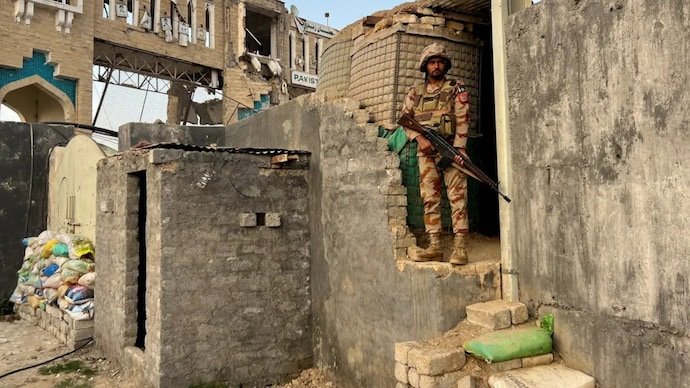
Pakistan has officially resumed military operations against Afghanistan following a temporary ceasefire during the Islamic festival of Eid al-Fitr. The renewed escalation highlights the deepening tensions between the two neighboring countries, with both sides continuing to exchange serious allegations over cross-border militancy.
According to Pakistan’s foreign ministry, the pause in hostilities ended at midnight between March 23 and 24, after which military operations restarted. Officials stated that the campaign will continue until strategic objectives are achieved, particularly targeting what Islamabad describes as terrorist infrastructure operating from Afghan soil.
Why Pakistan Restarted Military Action
Islamabad has long accused the Afghan Taliban government of providing safe haven to Islamist militant groups responsible for attacks inside Pakistan. These allegations have been consistently denied by Kabul, which insists that the rise in militancy is an internal security issue for Pakistan.
Foreign ministry spokesperson Tahir Andrabi emphasized that the ceasefire was only temporary and linked to Eid celebrations, as well as diplomatic appeals from countries such as Turkey, Qatar, and Saudi Arabia. With the truce now over, Pakistan has resumed its operations with renewed intensity.
He stated that the military campaign would continue until Afghanistan reviews what Pakistan calls its “misplaced priority of supporting terrorist infrastructure.”
Recent Escalation and Casualties
The latest round of conflict follows one of the deadliest escalations in recent years. Heavy fighting last month resulted in significant casualties on both sides, further straining already fragile relations.
Afghan authorities have accused Pakistan of carrying out a devastating airstrike on a drug rehabilitation center in Kabul, claiming that over 400 people were killed. Pakistan has strongly rejected these allegations, stating that its strikes were “precise operations targeting military installations and terrorist support networks.”
The conflicting narratives have made it difficult for international observers to verify the exact scale and impact of the attacks.
Key Points of the Ongoing Conflict
| Aspect | Details |
|---|---|
| Ceasefire Period | Temporary halt during Eid al-Fitr |
| Operations Resumed | Midnight between March 23–24 |
| Pakistan’s Position | Accuses Afghan Taliban of supporting militants |
| Afghanistan’s Response | Denies allegations, calls it Pakistan’s internal issue |
| Recent Casualties | Hundreds reported killed in latest escalation |
| International Involvement | Turkey, Qatar, Saudi Arabia urged ceasefire |
Temporary Reopening of Torkham Border
Amid the renewed hostilities, there was limited relief for civilians as the Torkham border crossing in northwest Pakistan was temporarily reopened. The crossing allowed hundreds of stranded Afghan refugees to return home after being stuck for weeks due to ongoing conflict and border closures.
Many refugees expressed frustration over prolonged uncertainty. One Afghan migrant, Zabi Ullah, shared his ordeal, stating, “We have been stranded here for at least a month and a half. We even have sick relatives with us.”
The reopening, however, was short-lived and primarily aimed at easing humanitarian pressure rather than signaling any long-term easing of tensions.
Refugee Crisis and Deportation Policy
Pakistan has hosted millions of Afghan refugees over the decades due to continuous instability in Afghanistan. Currently, more than two million Afghan nationals reside in Pakistan, many of whom arrived during earlier conflicts.
In recent months, Islamabad has intensified its stance on undocumented migrants, directing Afghan nationals without valid visas to leave the country. This policy is part of the Illegal Foreigners Repatriation Plan, launched in late 2023.
Pakistani authorities argue that undocumented migrants are linked to rising crime and militant activities. However, international organizations, including the United Nations, have raised concerns, warning that forced repatriation could violate humanitarian and international legal obligations.
Rising Regional Tensions and Global Concerns
The resumption of military operations has heightened concerns about stability in the region. Continued hostilities between Pakistan and Afghanistan could have wider implications for South Asia, affecting trade, security, and humanitarian conditions.
With both sides maintaining firm positions and diplomatic efforts yielding limited results, prospects for a long-term resolution remain uncertain. Analysts warn that without meaningful dialogue, the situation could escalate further, impacting not just the two countries but the broader region.
What Lies Ahead
As Pakistan continues its military campaign and Afghanistan rejects its allegations, the possibility of sustained conflict looms large. While temporary ceasefires like the one during Eid provide brief relief, they have not translated into lasting peace.
The international community is closely monitoring developments, urging restraint and dialogue. However, unless both nations address the core issues fueling the conflict, tensions are likely to persist in the coming weeks.
For breaking news and live news updates, like us on Facebook or follow us on Twitter and Instagram. Read more on Latest World on thefoxdaily.com.





COMMENTS 0