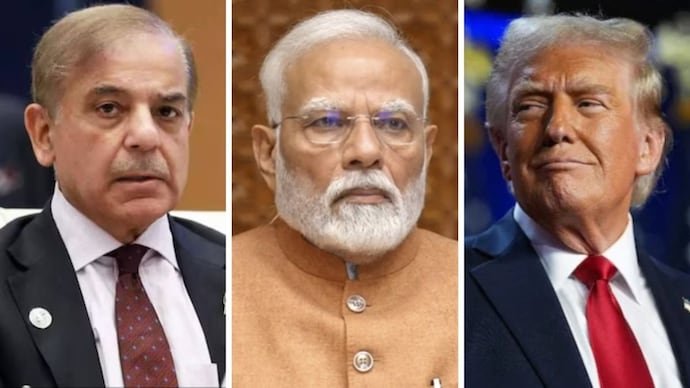
As tensions continue to rise in the ongoing conflict involving Iran, the United States, and Israel, the search for a credible mediator has become increasingly critical. According to US military expert Douglas Macgregor, Indian Prime Minister Narendra Modi could play a pivotal role in facilitating peace negotiations and reducing hostilities.
In a recent podcast discussion, Macgregor emphasized that in today’s complex geopolitical landscape, trust matters more than influence. He argued that India stands out as one of the few nations capable of bridging divides between major global powers.
India’s Strategic Position in Global Diplomacy
Macgregor highlighted India’s growing economic strength, military capability, and diplomatic credibility as key factors that position it uniquely in international affairs. According to him, India enjoys strong relationships with multiple stakeholders involved in the conflict, including the United States, Israel, Russia, and Iran.
“India is a powerful state—economically and militarily—and commands a level of trust that very few countries do,” he noted. This combination of strength and neutrality, he believes, makes India an ideal candidate to act as a mediator.
He further pointed out that Indian leadership has managed to maintain balanced relations across competing global blocs, allowing it to engage with diverse actors without being perceived as biased.
Trump Likely to Listen to PM Modi
Macgregor suggested that US President Donald Trump would likely be receptive to Prime Minister Modi’s input if India chooses to step into a mediating role.
“If President Trump listens to anyone at this stage, it is probably going to be Prime Minister Modi,” he said, underscoring the rapport between the two leaders.
He proposed that India could help develop a practical framework for a ceasefire by narrowing down the key demands from both sides into manageable points. Such an approach, he explained, could pave the way for immediate de-escalation while laying the groundwork for longer-term negotiations.
Macgregor even suggested that Modi could directly engage with Trump, encouraging closer coordination to move peace efforts forward.
India as a Bridge Between Rival Powers
One of India’s greatest strengths, according to the expert, is its ability to maintain constructive relationships with nations that are otherwise in conflict with one another.
He noted that Israel is comfortable with India’s leadership, while India also maintains open communication channels with Russia and Iran. This rare diplomatic balance allows India to function as a neutral intermediary capable of fostering dialogue.
“India is in a position where all sides feel they can talk and be heard,” he explained, adding that this trust is essential for any meaningful negotiation process.
Key Factors Supporting India’s Mediation Role
| Factor | Why It Matters |
|---|---|
| Global Trust | India maintains strong ties with US, Israel, Russia, and Iran |
| Economic Strength | Growing economy enhances diplomatic influence |
| Military Capability | Adds strategic credibility on global stage |
| Neutral Position | Perceived as less biased compared to Western or regional powers |
| Leadership Diplomacy | PM Modi’s relationships with global leaders strengthen dialogue opportunities |
Pakistan’s Role Questioned
While discussing potential mediators, Macgregor was critical of Pakistan’s ability to play a constructive diplomatic role in the conflict. He argued that Pakistan lacks the neutrality required to act as a credible intermediary.
“It’s like someone in a burning building offering you a spare room,” he remarked, suggesting that Pakistan’s internal challenges limit its effectiveness in international mediation.
He pointed to Pakistan’s economic instability as a major concern, noting that financial difficulties reduce its capacity to influence global outcomes meaningfully.
Additionally, he stated that Israel would not view Pakistan as a neutral party, but rather as aligned with opposing interests. This perception, he argued, undermines Pakistan’s credibility in any potential negotiation process.
Statements and Strategic Limitations
Macgregor also referenced statements from Pakistani leadership, including warnings about potential military responses, as factors that complicate its role. Such rhetoric, he suggested, could further erode trust among key stakeholders.
“Why would you turn to Pakistan to close a deal under these circumstances?” he questioned, reinforcing his skepticism about Islamabad’s diplomatic position.
A Conflict With Long-Term Global Impact
Beyond immediate ceasefire efforts, Macgregor warned that the ongoing conflict represents a much larger geopolitical shift. He described the situation as a prolonged struggle with significant economic and strategic consequences worldwide.
According to him, the crisis is not a short-term escalation but part of a broader transformation in global power dynamics. This makes the need for effective mediation even more urgent.
Conclusion
As the search for peace continues, India’s potential role as a mediator is gaining attention. With strong diplomatic ties, global trust, and leadership influence, Prime Minister Narendra Modi could play a crucial role in shaping the path toward de-escalation.
While challenges remain, particularly with differing narratives and deep-rooted tensions, the involvement of a trusted intermediary like India may offer a viable path forward in one of the most complex conflicts in recent times.
For breaking news and live news updates, like us on Facebook or follow us on Twitter and Instagram. Read more on Latest World on thefoxdaily.com.


COMMENTS 0