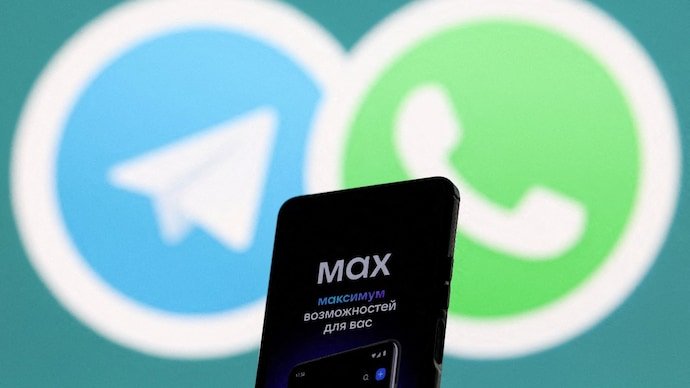
Russia has officially prohibited WhatsApp, the US-based messaging platform owned by Meta Platforms, citing the company’s alleged failure to comply with local regulations. The move marks a significant escalation in Moscow’s tightening control over foreign technology companies and coincides with the government’s promotion of MAX, a state-backed “national messenger.”
The decision was confirmed by Kremlin spokesperson Dmitry Peskov, who stated that the restriction was implemented due to Meta’s refusal to adhere to Russian law. According to Russian authorities, the action is part of a broader strategy to strengthen what they describe as a “sovereign” communications infrastructure.
Kremlin Confirms Ban, Encourages Shift to MAX
Addressing reporters, Peskov said, “Such a decision was indeed made and implemented due to Meta’s unwillingness to comply with Russian law.” He encouraged citizens to adopt MAX as an alternative platform.
“MAX is an accessible alternative, a developing messenger, a national messenger, and it is available on the market for citizens,” Peskov added, positioning the platform as a domestically controlled substitute for foreign messaging services.
Russian officials have rejected allegations from critics who claim that MAX could function as a surveillance tool. Authorities maintain that the platform is designed to integrate public services and simplify access to government-related functions for everyday users.
Part of Broader ‘Digital Sovereignty’ Strategy
The ban on WhatsApp comes after months of mounting pressure on the platform. Moscow has increasingly emphasized the importance of creating a self-reliant digital ecosystem, particularly during periods of geopolitical tension and conflict.
Under this framework, foreign technology companies operating in Russia are required to comply with local regulations, including data storage rules, content moderation requirements, and cooperation with law enforcement. Companies that fail to meet these standards risk fines, operational restrictions, or expulsion from the market.
Meta has already been designated as an extremist organization in Russia, a classification that significantly limits its operations within the country. Prior to the full ban, WhatsApp had warned that Russian authorities were moving toward completely restricting access to its services.
Meta Responds to Russia’s Actions
In a statement addressing the developments, WhatsApp criticized the Russian government’s move, suggesting that the restrictions were intended to push users toward a state-controlled alternative.
“In an attempt to push users to a state-owned surveillance app, the Russian government tried to completely block WhatsApp today,” the company said.
Meta further argued that isolating millions of users from private communication tools would undermine digital security. “Trying to isolate over 100 million users from private and secure communication is a backwards step and can only lead to less safety for people in Russia,” the statement added.
Technical Measures and VPN Usage Increase
Following the latest restrictions, several domain names associated with WhatsApp reportedly disappeared from Russia’s national domain name registry. As a result, the app’s IP addresses were no longer routed to devices inside the country, effectively blocking standard access.
Users seeking to bypass the restriction have increasingly turned to virtual private networks (VPNs) to continue using the messaging service. VPN adoption in Russia has risen significantly in recent months amid tightening digital controls.
A request for comment sent to Roskomnadzor, Russia’s state communications regulator, was not immediately answered.
Previous Restrictions and Legal Pressure
The complete ban follows earlier measures introduced in August, when authorities restricted voice calls on WhatsApp and other messaging platforms. Officials argued that foreign-owned platforms were failing to provide law enforcement with necessary information in cases involving fraud and terrorism.
In December, Roskomnadzor announced further steps to gradually block WhatsApp, accusing the platform of repeatedly violating Russian law. The regulator claimed that the service had been used “to organise and carry out terrorist acts on the territory of the country, to recruit their perpetrators and to commit fraud and other crimes.”
Russian courts have also imposed multiple fines on WhatsApp for failing to remove content deemed prohibited under domestic regulations. Additionally, authorities have demanded that Meta establish a local representative office in Russia to ensure compliance — a requirement the company has not fulfilled.
Impact on Russian Users
With WhatsApp widely used across Russia for personal and business communication, the ban is expected to affect millions of users. While some individuals have migrated to alternative platforms such as Telegram, that service too faces scrutiny from regulators for similar compliance issues.
The situation reflects a broader global debate over digital sovereignty, state oversight, and the balance between national security concerns and user privacy rights. As Russia accelerates efforts to promote MAX as a state-backed alternative, the long-term impact on the country’s digital landscape remains uncertain.
For breaking news and live news updates, like us on Facebook or follow us on Twitter and Instagram. Read more on Latest World on thefoxdaily.com.





COMMENTS 0