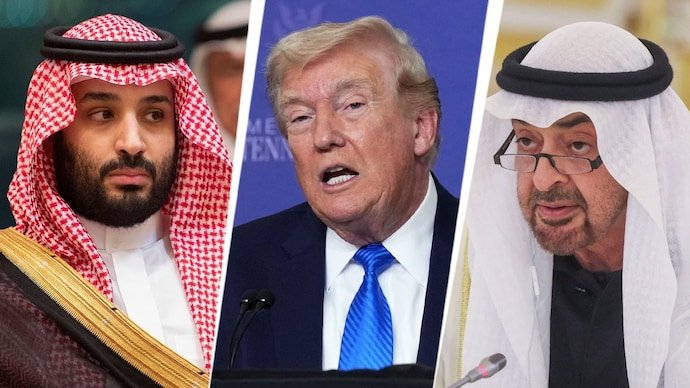
As tensions in the Middle East continue to rise, Saudi Arabia and the United Arab Emirates (UAE) are nearing a critical decision that could reshape the regional balance of power. Frustrated by repeated attacks on their territories and increasingly concerned about Iran’s influence over the strategically vital Strait of Hormuz, both nations are now seriously considering entering the ongoing US-Israel conflict against Iran.
Initially cautious and vocal about avoiding escalation, Gulf countries—including Saudi Arabia, the UAE, Bahrain, and Qatar—had preferred diplomatic solutions. However, recent developments have forced a major shift in their stance. Reports indicate that these nations are now evaluating the scale and nature of their potential involvement, ranging from economic pressure to direct military participation.
Why Gulf Nations Are Changing Their Strategy
At the beginning of the conflict, Gulf leaders questioned whether military operations such as Operation Epic Fury by the United States and Operation Roaring Lion by Israel would effectively curb Iran’s nuclear ambitions or missile capabilities. Many believed that diplomatic engagement offered a safer and more sustainable path forward.
However, that perspective has changed dramatically due to escalating Iranian actions. A series of missile and drone strikes targeting critical infrastructure across the Gulf region has significantly heightened security concerns.
One of the most alarming incidents was a high-profile attack on Qatar’s Ras Laffan gas facility—an essential hub for Global energy supply. Such strikes have not only threatened national security but also directly impacted key economic sectors, including oil production, gas exports, and tourism.
Rather than forcing Gulf nations to push for a ceasefire, as Tehran may have intended, these attacks have hardened their stance. Governments across the region now view Iran’s actions as a direct and escalating threat that cannot be ignored.
Key Triggers Behind the Policy Shift
| Trigger | Impact on Gulf Nations |
|---|---|
| Missile & Drone Attacks | Damage to infrastructure and rising security threats |
| Ras Laffan Gas Hub Strike | Threat to global energy supply chains |
| Closure of Strait of Hormuz | Disruption of global oil trade routes |
| Proposed Transit Fees by Iran | Concerns over economic dominance and control |
Strait of Hormuz: The Strategic Flashpoint
At the heart of the crisis lies the Strait of Hormuz, one of the world’s most critical maritime chokepoints. Approximately 20% of global oil supply flows through this narrow waterway, making it indispensable to global energy markets.
Iran’s actions—reportedly shutting down the strait and proposing transit fees—have alarmed Gulf nations. These moves are widely seen as attempts to assert unilateral control over an international trade route, raising fears of long-term economic and geopolitical consequences.
For oil-rich Gulf economies, the stakes are extremely high. The cost of inaction now appears greater than the risks associated with direct intervention.
Rising Financial and Military Pressure on Iran
Saudi Arabia has already taken a significant step by allowing the United States military access to King Fahd Air Base, signaling a shift from its earlier reluctance to be directly involved in military operations against Iran.
Meanwhile, the UAE is reportedly exploring financial measures, including the potential freezing of billions of dollars in Iranian assets held within its financial system. Such a move could severely restrict Tehran’s access to critical funds at a time when it is already grappling with war-related expenses and economic pressure.
Gulf allies are also urging Washington to ensure that any resolution to the conflict significantly weakens Iran’s military capabilities. There is a strong consensus that allowing Iran to retain its current level of power would pose a long-term strategic threat to the region.
Potential Actions Under Consideration
| Action Type | Proposed Measure | Expected Outcome |
|---|---|---|
| Military Support | Providing bases and logistical assistance | Strengthen US-led operations |
| Financial Pressure | Freezing Iranian assets | Weaken Iran’s economy |
| Diplomatic Influence | Push for stricter post-war conditions | Limit Iran’s future capabilities |
Strained Relations with the United States
Despite aligning with US objectives, Gulf nations have expressed frustration with Washington’s handling of the conflict. While former President Donald Trump suggested that Iran’s retaliatory actions were unexpected, Gulf leaders argue that such responses were entirely predictable.
Officials in the region have criticized what they perceive as inadequate preparation by the United States for Iran’s counterattacks. This has raised concerns about over-reliance on Washington for regional security.
Although Gulf countries maintain regular communication with US officials, their influence over key strategic decisions—particularly those made by the Pentagon—has been limited.
As a result, there is growing momentum among regional powers to diversify their security partnerships and reduce dependence on a single global ally.
Clear Objectives but an Uncertain Path Forward
Despite internal disagreements and external frustrations, Gulf nations share a common goal: ensuring that Iran does not emerge from the conflict stronger or emboldened.
Leaders across the region are united in their belief that any resolution must significantly diminish Iran’s ability to threaten its neighbors. This objective is now shaping both their diplomatic strategies and military considerations.
However, the path forward remains uncertain. With tensions escalating, alliances shifting, and economic risks mounting, the region stands at a critical crossroads that could define the future of Middle Eastern geopolitics.
As Saudi Arabia and the UAE move closer to a final decision, the world watches closely—aware that any escalation could have far-reaching consequences for global energy markets, security dynamics, and international stability.
For breaking news and live news updates, like us on Facebook or follow us on Twitter and Instagram. Read more on Latest World on thefoxdaily.com.




COMMENTS 0