
Saudi Crown Prince Mohammed bin Salman has made it clear that the Kingdom will not allow its land, airspace, or territorial facilities to be used for any military action against Iran. The statement was conveyed directly to Iranian President Masoud Pezeshkian during a phone conversation, according to Saudi Arabia’s state news agency SPA on Tuesday.
The assurance comes at a time of heightened geopolitical tension in the Middle East, as speculation continues over possible military escalation involving Iran. By publicly reiterating this position, Riyadh appears to be signaling its intention to avoid being drawn into a broader regional conflict.
During the call, the crown prince emphasized Saudi Arabia’s support for diplomatic solutions, stating that the Kingdom backs all “efforts that would resolve differences through dialogue” and contribute to greater security and stability in the region. The remarks underscore Saudi Arabia’s recent efforts to position itself as a stabilizing force amid growing uncertainty.
According to earlier reports in Iranian media, President Pezeshkian welcomed the message and told the Saudi leader that Tehran remains open to any process that prevents conflict, provided such efforts are carried out within the framework of international law.
Saudi Arabia’s stance closely mirrors a similar declaration made recently by the United Arab Emirates, which also stated that it would not allow its airspace or territorial waters to be used for military operations against Iran. Together, these positions reflect a broader regional reluctance to host or facilitate armed action targeting Tehran.
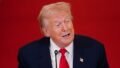
The diplomatic exchange follows comments last week by US President Donald Trump, who said that a US “armada” was moving toward Iran, while adding that he hoped military force would not be necessary. Trump also warned Tehran against killing protesters or restarting elements of its nuclear programme, further fueling uncertainty about Washington’s next steps.
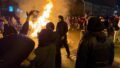
Although widespread protests inside Iran have largely subsided, tensions remain high. Human Rights organizations claim that thousands of people, including civilians, were killed during the unrest, describing it as the most severe crackdown since the 1979 Islamic Revolution that brought Shi’ite clerics to power.
Iranian authorities, however, have rejected those claims, blaming the violence and deaths on “terrorists and rioters” allegedly supported by opposition groups operating from exile. The competing narratives continue to complicate international assessments of the situation on the ground.
Meanwhile, two US officials told Reuters on Monday that an American aircraft carrier, along with several auxiliary warships, has arrived in the Middle East. The deployment significantly boosts Washington’s ability to protect US personnel in the region and, if required, to conduct military operations.
Against this backdrop, Saudi Arabia’s explicit refusal to allow attacks on Iran from its territory highlights the Kingdom’s cautious diplomatic approach. By advocating dialogue over confrontation, Riyadh appears intent on reducing the risk of escalation while maintaining its strategic interests and regional influence.
For breaking news and live news updates, like us on Facebook or follow us on Twitter and Instagram. Read more on Latest World on thefoxdaily.com.

COMMENTS 0