
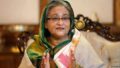
In a major political development following its sweeping victory in Bangladesh’s latest general elections, the Bangladesh Nationalist Party (BNP) has announced that it will formally seek the extradition of former Prime Minister Sheikh Hasina from India. Senior party leaders have stated that the request will be pursued through established diplomatic and legal channels, emphasizing that the move is rooted in judicial accountability rather than political retaliation.
The BNP, which secured a decisive mandate from voters in the first parliamentary election held after the 2024 uprising, has framed the extradition issue as a matter of legal due process. Party leaders have also stressed that while pressing for Hasina’s return to face trial in Bangladesh, Dhaka remains committed to maintaining stable and respectful bilateral ties with New Delhi.
BNP Leadership Confirms Legal and Diplomatic Route
Salahuddin Ahmed, a senior BNP leader, publicly reaffirmed the party’s position, stating that the new administration would consistently pursue Sheikh Hasina’s extradition in accordance with the law. He noted that the matter would be handled at the level of the foreign ministries of both countries.
“We support the foreign ministry’s decision to formally address this issue. We will continue to advocate for her extradition through proper legal frameworks. This is an issue to be resolved between the foreign ministries of Bangladesh and India,” Ahmed said, urging New Delhi to cooperate in sending the former prime minister back to face judicial proceedings.
His remarks signal that the BNP-led government intends to institutionalize the request rather than approach it through public rhetoric alone. Analysts note that extradition proceedings between neighboring countries typically involve treaty provisions, bilateral consultations, and judicial review.
Background: Sheikh Hasina’s Exit and Legal Proceedings
Sheikh Hasina has been residing in New Delhi since August 2024, after mass protests and political unrest forced her resignation and departure from Bangladesh. The upheaval marked one of the most turbulent chapters in the country’s recent political history.
In November 2025, a special tribunal in Bangladesh reportedly sentenced Hasina to death in absentia in a case linked to alleged crimes against humanity connected to the violent crackdown during the 2024 unrest. Legal proceedings related to the events of that period remain a central issue in Bangladesh’s political transition.
The tribunal’s decision, coupled with ongoing investigations into former officials, has intensified calls within the BNP for accountability. However, any extradition process would depend on diplomatic engagement and legal frameworks between Bangladesh and India.
Balancing Accountability and Bilateral Relations with India
Despite the strong stance on extradition, BNP leaders have repeatedly emphasized their desire to maintain constructive and balanced relations with India. Salahuddin Ahmed underscored that Bangladesh seeks friendly ties based on mutual respect, equality, and non-interference.
“We want a friendly relationship with all countries, including India, grounded in equality and mutual respect,” he stated, reiterating the party’s broader foreign policy vision.
Political observers view this messaging as an effort to reassure New Delhi that the extradition demand is a legal matter rather than a shift toward adversarial diplomacy. India and Bangladesh share deep economic, cultural, and security ties, making the issue particularly sensitive.
Post-Uprising Political Landscape in Bangladesh
The BNP’s announcement comes just days after it achieved a commanding victory in the first parliamentary elections since the 2024 uprising. The political environment had undergone significant transformation prior to the vote.
In 2025, the interim government led by Muhammad Yunus banned the operations of the Awami League following investigations into the party’s alleged involvement in the unrest. As a result, Sheikh Hasina’s party did not participate in the elections, reshaping the electoral landscape.
Addressing criticism over the Awami League’s absence from the ballot, Ahmed argued that public sentiment during the 2024 revolt had already demonstrated widespread rejection of the former ruling party. He added that legal cases and investigations involving party leaders were continuing under due process.
Diplomatic Implications for Dhaka–New Delhi Relations
As the BNP formally assumes power, its approach to Sheikh Hasina’s extradition request could test diplomatic relations between Dhaka and New Delhi. Extradition cases involving former heads of government are inherently complex and often require careful negotiation.
Bangladesh and India maintain extensive cooperation in trade, connectivity, border management, and regional security. Any developments in the extradition matter are likely to unfold within this broader strategic framework.
For now, the BNP appears focused on positioning the request as a judicial obligation rather than a political confrontation. Whether India responds positively to a formal extradition appeal remains to be seen.
For breaking news and live news updates, like us on Facebook or follow us on Twitter and Instagram. Read more on Latest World on thefoxdaily.com.





COMMENTS 0