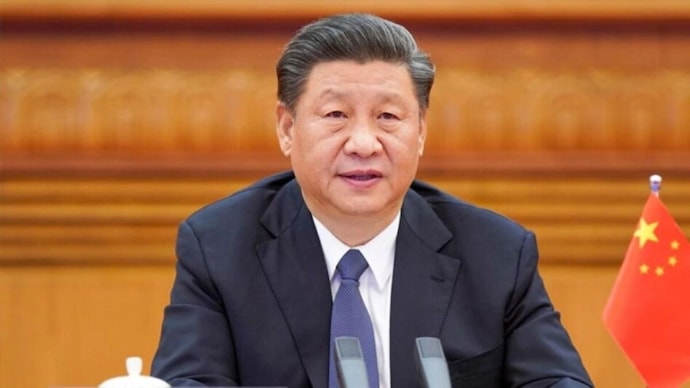
South Korean President Lee Jae Myung urged Chinese President Xi Jinping to assist in reviving diplomatic negotiations with North Korea during their bilateral summit, where both nations agreed to enhance collaboration in maintaining regional stability, promoting trade, and advancing peace efforts.
The meeting, held in Gyeongju, South Korea, marked Xi’s first state visit to the U.S. ally in 11 years. The summit followed the Asia-Pacific Economic Cooperation (APEC) gathering and included formal talks and a state dinner hosted by Lee.
According to Lee’s office, Xi emphasized that Beijing views Seoul as an essential strategic partner and places significant importance on maintaining strong bilateral relations. Lee, who came to power in a June snap election, has vowed to balance relations with the U.S. and china while seeking peaceful engagement with Pyongyang.
Lee stated optimistically, “I am encouraged by recent conditions that may allow re-engagement with North Korea. I hope South Korea and China will strengthen strategic communication to restore dialogue and regional stability.”
The South Korean president has consistently advocated for a phased denuclearization plan, emphasizing dialogue and halting nuclear development as the first step. However, North Korea dismissed the plan as a ‘pipe dream,’ stating that denuclearization is off the table.
Xi Jinping Calls for Mutual Respect and Cooperation
In response, Xi said China is ready to expand cooperation and work with South Korea to address shared challenges. He urged both sides to “respect each other’s social systems, core interests, and handle differences through friendly consultation,” as reported by Xinhua News Agency.
Xi also highlighted the importance of multilateralism and global collaboration, suggesting expanded ties in sectors such as biopharmaceuticals, green industries, artificial intelligence, and aging population management.
During the visit, both nations signed seven key agreements, including a won-yuan currency swap deal and memorandums of understanding on cybercrime prevention, elderly care, and technological innovation.
North Korea Rejects Dialogue Overtures
Despite Lee’s diplomatic push, Pyongyang has rejected any engagement with Seoul, calling the South a “hostile entity” and abandoning its traditional stance on unification. North Korean leader Kim Jong Un recently stated he would only talk to the U.S. if Washington dropped its denuclearization demands, though he has yet to respond to U.S. President Donald Trump’s offer for talks made during his visit to Seoul earlier in the week.
South Korean National Security Adviser Wi Sunglac confirmed that China showed “willingness to cooperate on peace and stability in the Korean Peninsula,” while both nations agreed that U.S.-North Korea dialogue remains essential for progress.
Economic and Political Challenges Persist
Although South Korea relies heavily on trade with China, it remains a crucial military ally of the United States. The balancing act continues to challenge Seoul’s foreign policy as it navigates growing U.S.-China rivalry.
While Xi and Lee met, hundreds of protesters gathered in Seoul for an anti-China rally, holding signs reading “South Korea belongs to South Korea” and “China Out.” Demonstrators chanted slogans condemning Chinese influence and communism. One protester, Kim Hye Kyung, 64, stated she joined to “protect liberal democracy” in South Korea.
To curb rising xenophobia, Lee had earlier ordered a crackdown on anti-Chinese demonstrations, arguing that such protests harm South Korea’s international reputation and economy.
Trade Sanctions and Security Concerns Discussed
Lee and Xi also discussed Chinese sanctions on five U.S.-affiliated subsidiaries of Hanwha Ocean (042660.KS), with Beijing citing “security risks” related to U.S. investigations. The leaders had what Wi described as a “productive” exchange on resolving the issue.
Talks also touched upon the long-standing cultural ban imposed by China following the 2017 deployment of the THAAD missile defense system in South Korea. Both parties expressed the need to expand cultural and entertainment exchanges through continued dialogue.
Lee raised maritime concerns over Chinese structures in disputed waters, which Beijing insists are for fishing activities. Meanwhile, South Korea’s Defense Minister brought up Chinese military incursions into the Korean Air Defense Identification Zone (KADIZ) during a separate meeting with his Chinese counterpart at an ASEAN defense summit in Malaysia.
Looking Ahead
The Lee–Xi summit signals a renewed attempt by Seoul to position itself as a stabilizing force amid rising regional tensions involving the U.S., China, and North Korea. While Beijing’s direct role in restarting talks with Pyongyang remains unclear, the diplomatic tone suggests a cautious willingness to re-engage.
As the geopolitical landscape in East Asia continues to shift, both Seoul and Beijing appear intent on balancing economic interests with strategic imperatives — though whether this will bring North Korea back to the negotiation table remains uncertain.
For breaking news and live news updates, like us on Facebook or follow us on Twitter and Instagram. Read more on Latest World on thefoxdaily.com.



COMMENTS 0