- Why the Strait of Hormuz Matters So Much
- Trump’s Strategy: From Military Conflict to Market Opportunity
- US Energy Independence: Reality and Narrative
- The Export Boom: Data Tells the Story
- Geography Advantage: Bypassing Hormuz
- Venezuela Factor: Expanding Supply Channels
- Insight: Crisis Creates Market Power
- Analysis: Can the US Fully Capitalise?
- Context: Who Loses the Most?
- Quotes That Define the Moment
- Fact-Based Analysis
- Conclusion: Opportunity in Crisis But at a Cost
The ongoing tensions in the Strait of Hormuz one of the most vital oil transit routes in the world are rapidly reshaping Global energy dynamics. As Iran strengthens its control over the strait amid escalating conflict, the disruption has triggered a supply shock with far-reaching consequences. In a recent national address, US President Donald Trump signaled a clear message to the world: if Middle Eastern oil routes remain unstable, countries should turn to the United States.
The situation raises critical questions: Who benefits from the disruption? Why is the Strait of Hormuz so important? And how could this crisis potentially strengthen America’s position in global energy markets?
The answers lie at the intersection of Geopolitics, energy economics, and strategic timing where disruption for some becomes opportunity for others.
Why the Strait of Hormuz Matters So Much
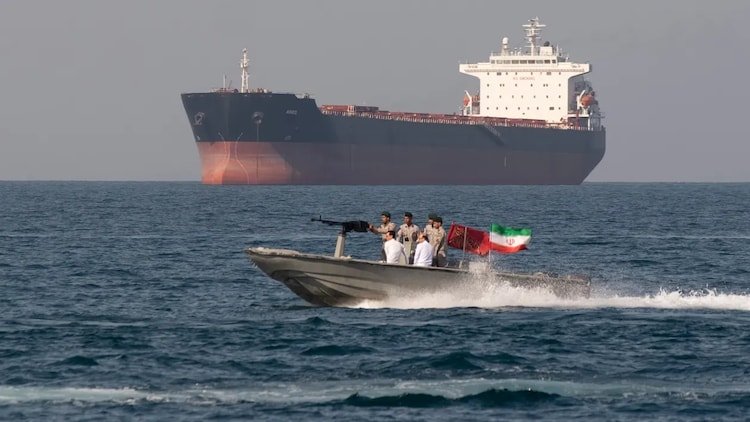
The Strait of Hormuz is not just another shipping route it is the backbone of global oil trade. Roughly 20% of the world’s oil supply passes through this narrow waterway, connecting major oil producers in the Middle East to markets in Asia, Europe, and beyond.
For countries like India, china, Japan, and South Korea, the strait is a lifeline. A significant portion of their crude oil and liquefied natural gas imports flow through this corridor. Any disruption even partial sends shockwaves through global markets.
Now, with Iran effectively restricting access, the world is facing one of the largest supply disruptions in modern history.
Trump’s Strategy: From Military Conflict to Market Opportunity
In his address, Trump framed the crisis not just as a geopolitical challenge but as an economic opportunity. His message was simple and direct:
“Buy oil from the US, we have plenty.”
This reflects a shift in approach from securing global oil routes to capitalising on their disruption. Instead of ensuring free flow through Hormuz at all costs, the US appears to be positioning itself as an alternative supplier.
It is a classic businessman’s calculation: when supply tightens, prices rise and those who can supply gain leverage.
US Energy Independence: Reality and Narrative
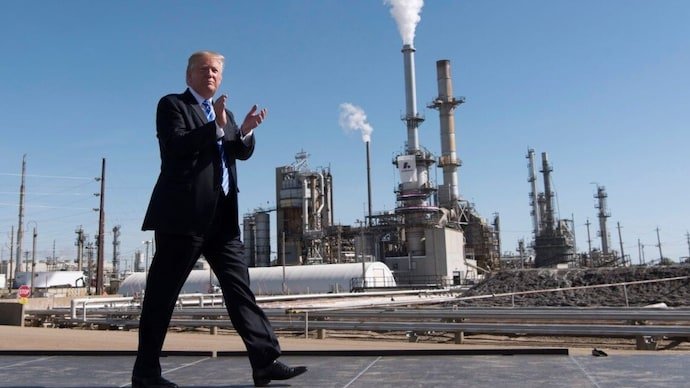
A key pillar of Trump’s argument is that the United States is now largely independent of Middle Eastern oil. Over the past decade, US shale production has surged, transforming the country into one of the world’s largest oil producers.
Current production levels, ranging between 13 to 13.6 million barrels per day, place the US among the top global producers. The country has also become a net exporter of petroleum products.
However, the claim of complete independence is only partially accurate. While US reliance on Middle Eastern oil has decreased significantly, it has not disappeared entirely. Even a small disruption in global supply can impact domestic prices because oil markets are interconnected.
In short: the US may produce its own oil, but it still feels global price shocks.
The Export Boom: Data Tells the Story
The real impact of the Hormuz crisis is visible in export data. As supply from the Middle East becomes uncertain, countries are turning to alternative sources primarily the United States.
According to market data, US fuel exports surged to record levels in March:
- Exports of refined fuels reached approximately 3.11 million barrels per day
- Up significantly from around 2.5 million barrels per day in February
- Exports to Europe increased by roughly 27%
- Shipments to Asia more than doubled during the same period
This is not a coincidence it is a direct response to supply disruptions in the Gulf.
When traditional routes become unreliable, buyers look elsewhere. And right now, the US is one of the few suppliers capable of filling that gap at scale.
Geography Advantage: Bypassing Hormuz
One of the United States’ biggest advantages in this crisis is geography. Unlike Middle Eastern producers, US oil exports do not rely on the Strait of Hormuz.
Instead, shipments to Asia and Europe can be routed via alternative maritime paths, including around the Cape of Good Hope. While these routes are longer and more expensive, they offer something invaluable in times of crisis: reliability.
In global trade, reliability often matters more than cost especially when energy security is at stake.
Venezuela Factor: Expanding Supply Channels
Another dimension of the US energy strategy is its access to Venezuelan oil. Venezuela holds some of the largest proven oil reserves in the world, and increased cooperation has added to US supply capabilities.
Recent figures suggest that tens of millions of barrels have been integrated into US-linked supply chains, further strengthening its export capacity.
This diversification allows the US to position itself not just as a producer, but as a global energy hub capable of sourcing, refining, and exporting at scale.
Insight: Crisis Creates Market Power
The Hormuz situation highlights a fundamental principle of energy economics: supply disruptions shift power toward alternative producers.
When a major chokepoint is compromised, the global market does not stop it adapts. And those who can adapt quickly gain influence.
In this case, the US benefits in three key ways:
- Higher demand for its oil and gas exports
- Stronger geopolitical leverage over energy-dependent nations
- Increased revenues from elevated global prices
It is not that the US “caused” the crisis but it is certainly positioned to benefit from it.
Analysis: Can the US Fully Capitalise?
Despite the advantages, there are limits to how much the US can benefit.
First, oil is a globally priced commodity. Even if the US exports more, rising prices can still hurt its domestic economy through higher fuel costs.
Second, infrastructure constraints such as shipping capacity and refining limits can restrict how quickly exports can scale.
Third, prolonged instability in the Middle East could trigger broader economic slowdowns, reducing overall demand.
In other words, the opportunity is real but it is not without risks.
Context: Who Loses the Most?
While the US may gain, other regions face significant challenges.
Asia, in particular, is highly vulnerable. Countries like India rely heavily on oil imports passing through the Strait of Hormuz. Any disruption directly impacts energy security, inflation, and economic growth.
Europe, already dealing with energy diversification challenges, also faces increased costs and supply uncertainty.
This imbalance creates a global shift where energy exporters gain influence while import-dependent economies bear the burden.
Quotes That Define the Moment
“We don’t need their oil… We are there to help our allies.”
This statement captures the essence of Trump’s positioning: strength, independence, and strategic choice.
“Buy oil from the US… we have so much.”
And this reflects the economic angle turning geopolitical disruption into market opportunity.
Fact-Based Analysis
This article is based on verifiable data, official statements, and widely accepted energy market principles.
In complex global situations, clarity and accuracy are essential for understanding the bigger picture.
Conclusion: Opportunity in Crisis But at a Cost
The tensions in the Strait of Hormuz are more than just a regional conflict they are a turning point in global energy dynamics.
For the United States, the crisis presents a clear opportunity to expand its role as a leading energy supplier. For President Trump, it aligns with a broader narrative of energy dominance and strategic independence.
But the benefits come with a caveat. Global instability, rising prices, and economic uncertainty affect everyone including those who stand to gain.
As the situation evolves, one thing remains certain: in the world of oil, disruption does not just create problems it reshapes power.
And right now, that shift is underway.
For breaking news and live news updates, like us on Facebook or follow us on Twitter and Instagram. Read more on Latest World on thefoxdaily.com.





COMMENTS 0