New Delhi: Fresh clashes broke out in northeastern Syria on Monday between Syrian government forces and Kurdish-led fighters, despite a newly announced ceasefire agreement aimed at integrating Kurdish-administered regions into the Syrian state framework.
The fighting centered on the fate of thousands of suspected Islamic State (IS) militants and their families held in detention centres and camps across the region. As Syrian government troops moved into parts of the area under the truce, violence erupted around key prison facilities, threatening already fragile security arrangements.
The Syrian Democratic Forces (SDF), a Kurdish-led alliance backed by the United States, have for years overseen prisons and displacement camps holding IS suspects and their relatives. These sites have long been a point of contention between Damascus, Kurdish authorities, and foreign governments whose citizens remain detained.
On Sunday, Syrian officials and Kurdish representatives announced a ceasefire agreement that called for the integration of the Kurdish administration into the Syrian state. The deal included provisions for transferring institutions responsible for IS detainees, camps, and security forces to Damascus, granting the central government “full legal and security responsibility” over the facilities.
However, confusion quickly emerged on the ground. Kurdish officials told AFP that the Shadadi prison in Hasakeh province—one of the largest facilities housing IS inmates—came under repeated attacks by groups aligned with Damascus. According to the SDF, the prison briefly slipped out of their control during the clashes.
The SDF said the fighting led to casualties among its fighters and caused instability that endangered prison security. Syrian authorities, meanwhile, rejected those claims, stating that government troops were deployed to secure the facility and search for potential escapees. Damascus accused Kurdish forces of deliberately releasing detainees, an allegation denied by the SDF.
Clashes Reported Near Second Detention Facility
Tensions also flared in neighboring Raqqa province, where the SDF reported heavy fighting near the Al-Aqtan prison. The facility holds a mix of IS detainees and prisoners from local Arab tribal groups.
According to the Kurdish-led force, at least nine SDF fighters were killed and around 20 injured during the clashes. The group said the violence posed a serious threat to detention operations and overall regional stability.
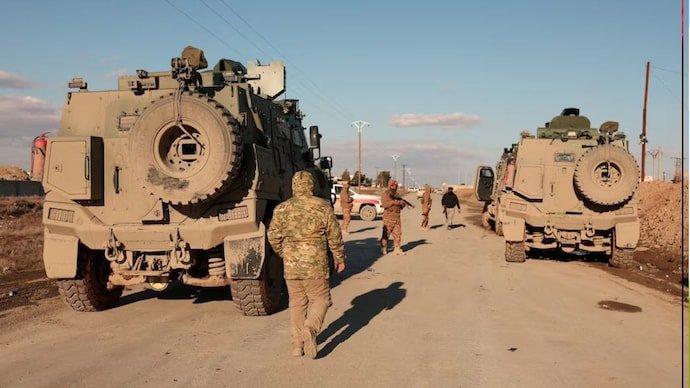
An AFP journalist at the scene did not witness active combat but reported a heavy security presence. Armed guards were positioned on rooftops, while government security forces and armored vehicles surrounded the prison complex. Two warplanes were also seen overhead, believed to belong to the US-led coalition against IS.
State news agency SANA quoted Syrian officials as saying that military police had been deployed around the prison to “secure it” and prevent chaos. Damascus maintained that its actions were aimed at stabilising the area rather than undermining detention efforts.
Al-Hol Camp Remains a Major Flashpoint
The clashes are unfolding against the backdrop of the sprawling Al-Hol camp in Hasakeh province, which remains under Kurdish control despite increased government deployments nearby. Nearly seven years after IS lost its last territorial stronghold in Syria, the camp continues to house a vast population linked to the extremist group.
According to camp director Jihan Hanan, more than 24,000 people remain detained at Al-Hol. This includes approximately 15,000 Syrians, 3,500 Iraqis, and over 6,000 foreign nationals.
Women and children from countries outside Syria and Iraq are confined in a high-security annex within the camp. Many of them are considered potential security risks, making Al-Hol a persistent challenge for both local authorities and the international community.
The renewed clashes underscore the fragility of ceasefire arrangements in Syria and highlight the unresolved issue of who should control and manage IS detention facilities—an issue with significant regional and global security implications.
For breaking news and live news updates, like us on Facebook or follow us on Twitter and Instagram. Read more on Latest World on thefoxdaily.com.

COMMENTS 0