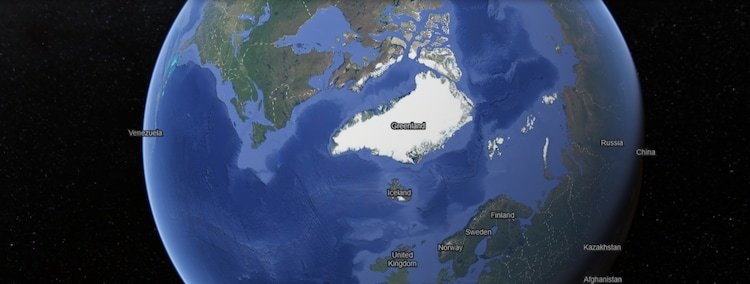
Greenland, the world’s largest island located between the Atlantic and Arctic Oceans, has rapidly emerged as a geopolitical flashpoint. Discussions surrounding its future have intensified following repeated remarks by US President Donald Trump expressing his desire to bring the strategically vital territory under American control, even hinting at the use of force. As Greenland remains an autonomous territory within the Kingdom of Denmark, Copenhagen and Washington now find themselves in an unprecedented strategic standoff.
From Denmark’s perspective, Trump’s rhetoric is not just provocative but a direct security concern. According to reports, Danish forces stationed in and around Greenland have been given strict directives to respond decisively to any unauthorized military landing. Trump’s dismissal of Greenland’s defences as negligible has only sharpened tensions and drawn attention to the elite forces quietly safeguarding the Arctic frontier.
Contrary to political bravado, any attempt to seize Greenland would be vastly different from diplomatic pressure campaigns elsewhere. Denmark maintains some of the most battle-hardened Arctic troops in the NATO alliance—units comparable to the US Navy SEALs and Britain’s SAS—specifically trained for polar warfare. These forces are deeply familiar with the terrain, climate, and survival demands of Greenland, giving them a formidable home advantage.
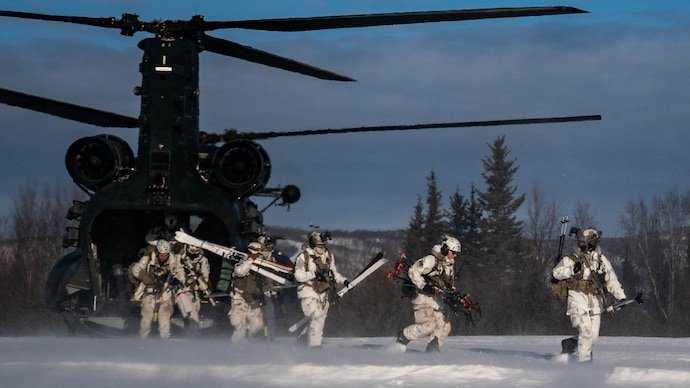
According to multiple defence assessments, Denmark’s Arctic units are conditioned to operate in extreme cold, dive beneath frozen seas, and survive for months in complete isolation. These soldiers routinely train to endure temperatures as low as minus 50 degrees Celsius, making Greenland not just a deployment zone but their natural operating environment.
The core Danish forces guarding Greenland include the elite Jaeger Corps, the naval Frogmen Corps, and the uniquely Arctic Sirius Dog Sled Patrol. Together, these units form the backbone of Denmark’s Joint Arctic Command, which is responsible for safeguarding Greenland and the Faroe Islands. Any foreign military advance would first encounter these highly specialized defenders.
Why Greenland Matters: Trump’s Strategic Obsession and Europe’s Response
Greenland’s significance extends far beyond ice and isolation. Sitting astride vital transatlantic and Arctic routes and rich in rare earth resources, the island is central to global strategic competition. Trump has repeatedly argued that US control over Greenland is necessary to counter Chinese and Russian influence in the Arctic, even warning that Washington could acquire it “the easy way or the hard way.”
Ironically, the United States already maintains a military presence at Pituffik Space Base—formerly Thule Air Base—under a 1951 defence agreement with Denmark. Any unilateral action would therefore place US forces in potential confrontation with allied troops, a scenario that underscores the gravity of the situation.
European allies are also responding. According to international reports, countries such as Germany and the United Kingdom are exploring options to enhance their Arctic military footprint to signal collective resolve and discourage unilateral action. Greenland, once geopolitically quiet, is now firmly at the centre of global power calculations.
Denmark’s SAS-Style Arctic Hunters: Inside the Jaeger Corps
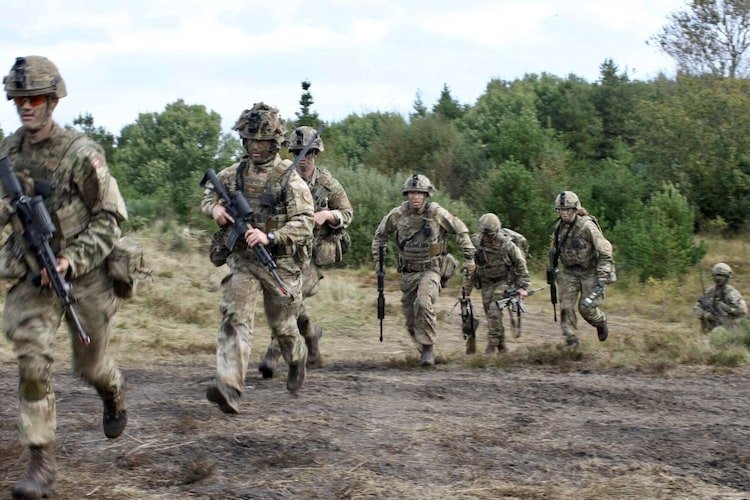
The Jaeger Corps—meaning “Hunters”—represents Denmark’s most elite land-based special forces unit. Modeled on Britain’s SAS and the US Army Rangers, the Jaegers specialize in deep reconnaissance, sabotage, and high-risk operations behind enemy lines.
Renowned for having one of NATO’s toughest selection processes, Jaeger recruits endure months of extreme navigation drills, weapons mastery, survival training, and prolonged sleep deprivation. Only a handful pass each year, underscoring the unit’s elite status.
Defence analysts note that Jaegers are uniquely adaptable, capable of operating in environments ranging from Arctic tundra to tropical conflict zones. In Greenland, they train to build shelters in snow, parachute into blizzards, function in complete darkness, and maintain weapons in sub-zero conditions.
For the Jaeger Corps, Greenland is not just a training ground—it is a frontline. In the event of any unauthorized land incursion, these Arctic-hardened soldiers would be among the first responders.
Under-Ice Commandos: The Frogmen Corps
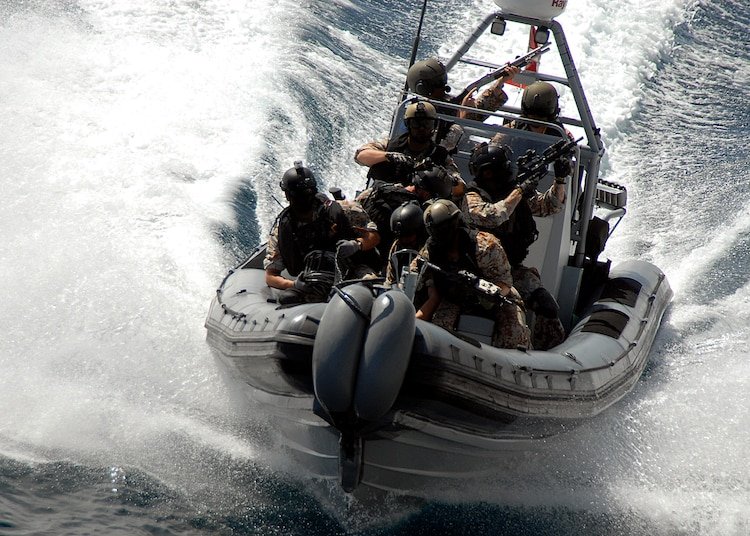
If the Jaegers are Denmark’s SAS, the Frogmen Corps is its answer to the US Navy SEALs. Established in 1957 and operating under the Danish Navy, the Frogmen specialize in combat diving, amphibious assaults, maritime counterterrorism, and covert reconnaissance.
In Greenland, their role is critical. Frogmen train for insertions beneath ice sheets, operations on frozen coastlines, and sabotage missions in conditions where survival is measured in minutes. As melting ice opens new Arctic sea routes, their importance has only increased.
The Frogmen’s operational credibility is well established. In a 2013 anti-piracy mission in the Gulf of Guinea, Danish Frogmen successfully neutralized armed pirates and freed a hijacked vessel without sustaining casualties—an operation widely cited in defence circles.
Any amphibious or naval approach toward Greenland would inevitably fall within the Frogmen’s operational domain.
Guardians of the Ice: The Sirius Dog Sled Patrol
Perhaps the most distinctive—and misunderstood—unit defending Greenland is the Sirius Dog Sled Patrol. Established during World War II to counter Nazi activity, Sirius patrols one of the most remote regions on Earth: northeastern Greenland.
Operating in two-man teams with dog sleds, Sirius patrols traverse thousands of kilometres across ice and wilderness, carrying weapons, supplies, and survival equipment. Far from symbolic, dog sleds remain the most reliable mode of transport in areas where machinery fails.
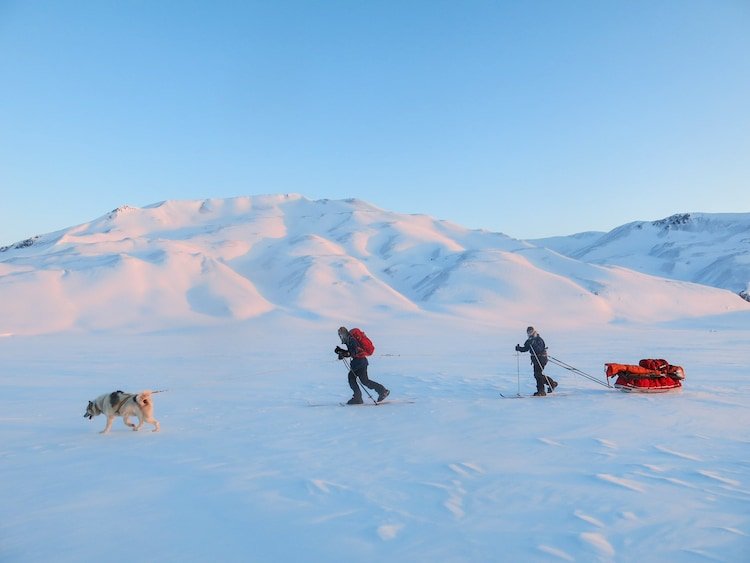
Patrols can last up to five months in near-total isolation, with the unit’s mission focused on detecting and deterring any unauthorized presence. Notably, Denmark’s Crown Prince Frederik once served in the Sirius Patrol, highlighting its national importance.
Today, Sirius guards vast stretches of Greenland, including the Northeast Greenland National Park—the largest national park in the world.
Conclusion: Arctic Resolve in a New Geopolitical Era
Once seen as a frozen backwater, Greenland has become a central arena in 21st-century Geopolitics. As rhetoric from Washington intensifies, Denmark’s elite Arctic warriors—on land, at sea, and across the ice—stand ready. Any military miscalculation in Greenland would not be a swift operation, but a severe test of endurance, strategy, and nerves in one of the harshest environments on Earth.
For breaking news and live news updates, like us on Facebook or follow us on Twitter and Instagram. Read more on Latest World on thefoxdaily.com.






COMMENTS 0