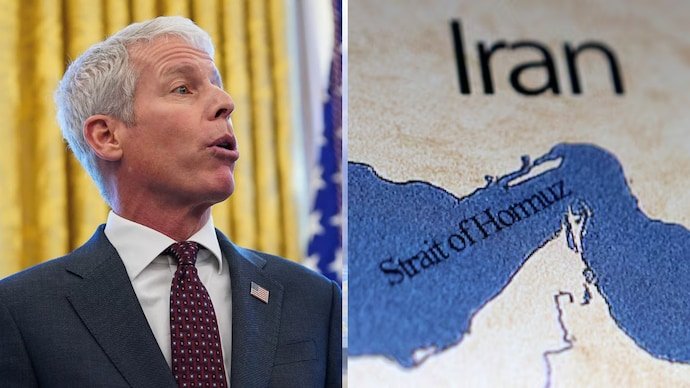
The Donald Trump administration has reversed an earlier claim about protecting oil shipments through the Strait of Hormuz, admitting that the United States Navy is currently not prepared to escort commercial tankers through the strategic waterway.
US Energy Secretary Chris Wright confirmed the development during an interview with CNBC, explaining that American military resources are presently focused on operations aimed at weakening Iran’s offensive military capabilities.
“The US Navy is not ready to escort oil tankers through the Strait of Hormuz,” Wright said, acknowledging that such operations cannot begin immediately.
“It can’t happen right now, but it will happen quite soon. We’re just not prepared. All of our military assets right now are focused on destroying Iran’s offensive capabilities and the manufacturing industry that supplies their offensive capabilities,” he added.
Earlier Claim Retracted
Wright’s statement marked a clear reversal of a previous claim he made on social media.
In a now-deleted post on X (formerly Twitter), the US Energy Secretary had earlier suggested that the US Navy had already escorted an oil tanker through the Strait of Hormuz to ensure that Global energy supplies continued to move without disruption.
However, the latest comments indicate that such escort operations have not yet begun.
Wright said he planned to meet officials at the Pentagon to discuss the logistics of potential escort missions in the near future.
“I’ll be over at the Pentagon later today — that is what the military is working on,” he said.
When asked whether tanker escorts could start by the end of the month, Wright responded that it was “quite likely.”
Why the Strait of Hormuz Is Critical
The Strait of Hormuz is one of the most important maritime chokepoints in the global energy system.
Located between Iran and Oman, the narrow passage connects the Persian Gulf with the Gulf of Oman and the wider Arabian Sea.
Roughly one-fifth of the world’s oil supply passes through this route, making it essential for global energy markets.
| Key Facts About the Strait of Hormuz | Details |
|---|---|
| Location | Between Iran and Oman |
| Global Oil Flow | About 20% of the world’s oil supply |
| Strategic Importance | Main export route for Gulf oil producers |
| Key Importers | Asia, Europe, and the United States |
Because of its narrow width and heavy traffic, the strait has long been considered vulnerable during geopolitical conflicts.
Iran Rejects US Escort Claims
Iran has also denied earlier US claims that an oil tanker had already been escorted by the US Navy through the Strait of Hormuz.
An Iranian Revolutionary Guards spokesperson dismissed the claim as false and warned that Iranian forces would respond to any American naval activity in the region.
“The claim that an oil tanker escorted by the US terrorist Army passed through the Strait of Hormuz is a complete lie,” Iranian official Alimohammad Naini said, according to Iranian state media.
Iran has repeatedly warned that it could target vessels traveling through the waterway if hostilities escalate further.
Oil Markets React to Rising Tensions
The growing uncertainty surrounding the Strait of Hormuz has already caused volatility in global energy markets.
Brent crude oil prices briefly touched $100 per barrel earlier this week as traders reacted to fears that attacks on commercial vessels could disrupt oil flows from the Middle East.
Energy companies and shipping firms are becoming increasingly cautious about sending tankers through the narrow passage.
Some shipping operators have delayed voyages or changed routes due to rising security risks and higher insurance premiums.
| Recent Market Indicators | Value |
|---|---|
| Brent Crude Peak | Approximately $100 per barrel |
| Global Oil Supply via Hormuz | About 20% |
| Market Concern | Shipping disruptions and tanker attacks |
| Insurance Costs | Increasing for vessels in the region |
Impact on Energy-Importing Nations
Any prolonged disruption in the Strait of Hormuz could have significant consequences for global economies.
Countries in Asia, including India, china, Japan, and South Korea, rely heavily on oil imports from Gulf producers that pass through the waterway.
Even short-term interruptions could drive up fuel prices worldwide and increase inflationary pressures.
With tensions between the United States, Israel, and Iran continuing to escalate, energy markets are closely monitoring whether naval escorts or additional security measures will be introduced to protect commercial shipping in the region.
For breaking news and live news updates, like us on Facebook or follow us on Twitter and Instagram. Read more on Latest World on thefoxdaily.com.






COMMENTS 0