- Justice Department Seeks Admissions Documents to Review Compliance with 2023 Supreme Court Ruling
- Background: Supreme Court Ruling and Federal Scrutiny
- Scope of the Lawsuit: What the Government Is Seeking
- Trump’s Broader Conflict with Harvard
- Harvard’s Response: Legal Compliance and Institutional Independence
- Legal and Political Implications
Justice Department Seeks Admissions Documents to Review Compliance with 2023 Supreme Court Ruling
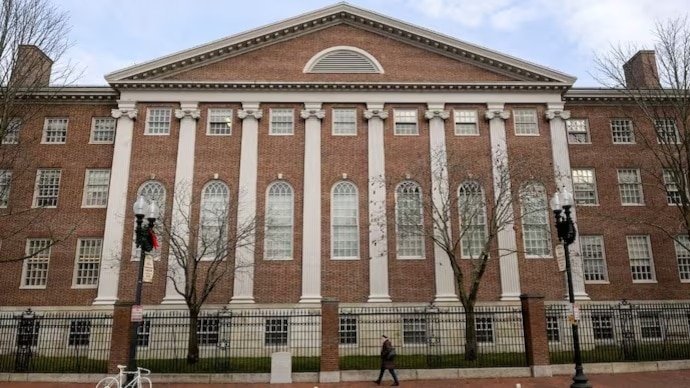
In a significant escalation of tensions between the federal government and elite academic institutions, the US Department of Justice has filed a lawsuit against Harvard University, alleging that the university failed to fully cooperate with a federal investigation into its admissions practices. The Trump administration is seeking access to Harvard’s admissions records to determine whether the university has continued to consider race in ways that may violate the US Supreme Court’s landmark 2023 decision restricting race-conscious college admissions programs.
According to court filings submitted in federal court in Boston, Justice Department attorneys argue that the requested documentation is essential to assess whether Harvard is complying with the Supreme Court’s ruling, which found that race-based affirmative action policies in higher education admissions are unconstitutional.
Background: Supreme Court Ruling and Federal Scrutiny
The 2023 Supreme Court decision fundamentally reshaped the legal framework governing college admissions in the United States. The ruling prohibited universities from using race as a determining factor in admissions decisions, effectively ending decades of affirmative action policies at many institutions.
In the aftermath of that decision, the Trump administration intensified oversight of universities suspected of maintaining race-conscious admissions frameworks under revised or indirect criteria. The lawsuit against Harvard represents one of the most high-profile enforcement actions stemming from that shift in federal policy.
The Justice Department stated in a press release that Harvard had “repeatedly slow-walked the pace of production and refused to produce pertinent data and documents,” including communications related to diversity, equity, and inclusion (DEI) initiatives and internal materials concerning admissions policies.
Scope of the Lawsuit: What the Government Is Seeking
Importantly, the Justice Department clarified that the lawsuit is procedural in nature. Federal officials emphasized that the action was filed “solely to compel Harvard to produce documents relating to any consideration of race in admission.”
The department further stated that the lawsuit does not accuse Harvard of discriminatory conduct, nor does it seek monetary damages or the revocation of federal funding at this stage. Instead, it is designed to force compliance with document requests that investigators say are necessary to evaluate adherence to federal law.
This distinction underscores that the legal dispute currently centers on access to records rather than a formal determination of wrongdoing.
Trump’s Broader Conflict with Harvard
The complaint follows public remarks by US President Donald Trump, who said less than two weeks ago that his administration was pursuing legal action against Harvard seeking $1 billion in connection with broader policy-related probes. That statement came amid media reports suggesting the administration had backed away from earlier financial demands directed at the Ivy League institution.
Beyond admissions policies, the Trump administration has threatened to withhold or revoke federal funding from Harvard and other universities over several contentious issues. These include campus diversity programs, policies related to transgender students, and pro-Palestinian demonstrations in response to Israel’s war in Gaza.
Last year, the administration moved to revoke hundreds of research grants awarded to Harvard, citing concerns that the university had not adequately addressed allegations of harassment against Jewish students. Harvard responded by filing its own lawsuit, challenging what it described as unlawful federal overreach.
Harvard’s Response: Legal Compliance and Institutional Independence
Harvard has strongly denied any refusal to cooperate with federal authorities. A university spokesperson stated that Harvard is committed to complying with the law and has responded to the government’s requests in good faith.
The spokesperson further emphasized that Harvard would not relinquish its institutional independence or constitutional rights in response to what it characterizes as retaliatory government action. According to the university, it will continue to defend itself against measures it views as politically motivated or legally unfounded.
From Harvard’s perspective, the dispute is not merely about document production but about protecting academic autonomy and constitutional protections in the face of federal pressure.
Legal and Political Implications
This lawsuit highlights the evolving intersection of higher education policy, constitutional law, and federal enforcement authority. The Supreme Court’s 2023 ruling marked a decisive shift in the legal treatment of affirmative action, but questions remain about how universities interpret and implement that decision in practice.
For the Trump administration, the case signals a broader commitment to strict enforcement of the ruling and to challenging diversity-focused policies that officials argue conflict with constitutional principles. For universities nationwide, the lawsuit serves as a warning that federal compliance reviews may intensify.
As the case proceeds in federal court, its outcome could have significant implications not only for Harvard but also for admissions practices at colleges and universities across the United States.
The central legal question remains whether Harvard’s admissions policies align fully with the Supreme Court’s directive — and whether the Justice Department’s demand for records constitutes routine enforcement or an overreach of executive authority.
For breaking news and live news updates, like us on Facebook or follow us on Twitter and Instagram. Read more on Latest World on thefoxdaily.com.






COMMENTS 0