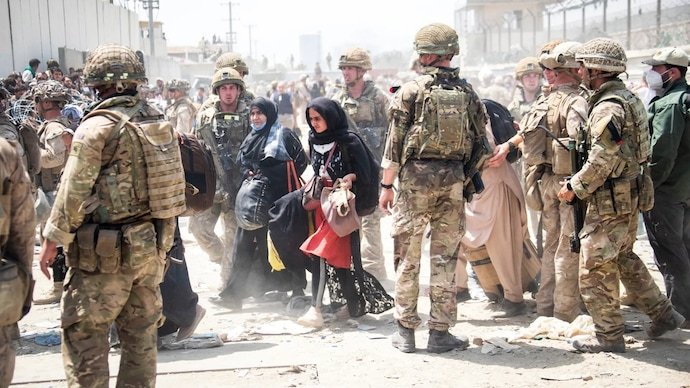
“My son was just 18 when he was killed in a blast while trying to save his fellow soldiers,” said the mother of the youngest British serviceman to die in Afghanistan. Her voice echoes the anger and grief felt by hundreds of European military veterans and bereaved families who have spoken out after former US President Donald Trump claimed that NATO troops largely stayed away from the front lines during the long Afghan conflict.
The outrage is rooted not just in emotion, but in history and facts. Throughout the two-decade war in Afghanistan, NATO allies did far more than offer logistical or symbolic support. Thousands of European soldiers fought, bled, and died alongside American forces in some of the most dangerous combat zones of the conflict.
The United States, along with its NATO allies, launched military operations in Afghanistan in 2001 following the September 11 terrorist attacks. This marked the first and only time Article 5 of the North Atlantic Treaty was formally invoked, declaring that an attack on one NATO member would be treated as an attack on all.
From that moment until the official end of NATO combat operations in 2014—and even beyond—troops from across Europe and North America were deployed on Afghan soil. These missions came at an immense cost, measured not only in billions of dollars but also in thousands of lives lost.
Against this backdrop, Trump’s remarks have angered NATO partners and veterans alike. The timing has further intensified diplomatic sensitivities, coinciding with renewed tensions involving Trump’s comments on Greenland, an autonomous territory of Denmark and a NATO member state.
“We never needed them. We really didn’t ask them for anything. They’ll say they sent some troops to Afghanistan… and they did, but they stayed a little back, a little off the front lines,” Trump said, sparking widespread condemnation across Europe.
But do the facts support this claim?
What the Afghanistan War Data Reveals
Official NATO records show that around 38 allied nations committed military personnel to Afghanistan starting in December 2001. While the United States consistently contributed the largest number of troops, NATO’s presence was multinational and operationally integrated.
NATO troop strength in Afghanistan peaked at approximately 140,000 personnel in 2011. Numbers gradually declined as combat missions transitioned toward training and advisory roles, but this shift came after years of intense fighting.
In absolute terms, the United States suffered the highest number of military casualties, reflecting its larger force size. However, when casualties are viewed in proportion to national populations and troop deployments, several European countries experienced comparable—and in some cases higher—loss rates.
Estimates indicate that the Afghanistan war claimed the lives of roughly 3,500 coalition soldiers over 20 years. Of these, 2,456 were American. The United Kingdom recorded 457 fatalities, making it the second-highest among NATO allies.
Denmark, despite having a population far smaller than many US states, lost around 50 soldiers. On a per-capita basis, Denmark’s military losses were comparable to those of the United States.
Canada suffered 159 fatalities, followed by France with 90, Germany with 62, Italy with 53, and Poland with 44. Several other NATO countries—including Estonia, Norway, the Netherlands, the Czech Republic, and Romania—also lost dozens of troops during the conflict.
Who Actually Fought on the Front Lines?
Contrary to Trump’s assertion, NATO partners were deeply involved in front-line combat. According to NATO’s own documentation, forces from 36 member countries were deployed across key operational regions, including Kabul, Kandahar in the south, Herat in the west, Mazar-e Sharif in the north, and Laghman in the east.
Each of these regions witnessed sustained combat operations and frequent insurgent attacks.
BBC defence analyst Frank Gardner has noted that British, Canadian, Danish, and Estonian troops were among those who experienced some of the fiercest fighting, particularly in Kandahar and Helmand provinces—areas considered Taliban strongholds.
In fact, British and Danish forces formed the backbone of early deployments to Helmand province. According to a CNN report, significant US troop reinforcements arrived only in 2008, years after NATO allies had already been engaged in intense ground operations.
Helmand, known for its opium production and entrenched insurgent networks, accounted for a large share of British and Danish casualties during the war.
Further reinforcing this assessment, a study by the Watson Institute for International and Public Affairs found that British and Canadian soldiers faced combat risks at nearly twice the rate of their American counterparts when measured against each nation’s peak deployment levels.
These findings underscore a reality often overlooked in political rhetoric: NATO’s contribution to the Afghanistan war was not symbolic or secondary. Allied forces were present, engaged, and exposed to the same dangers as US troops.
Based on verified data, battlefield records, and independent research, attempts to minimize or dismiss NATO’s role in Afghanistan do not withstand factual scrutiny. The sacrifices made by allied nations were real, substantial, and deeply felt—by soldiers, families, and entire societies.
For breaking news and live news updates, like us on Facebook or follow us on Twitter and Instagram. Read more on Latest World on thefoxdaily.com.





COMMENTS 0