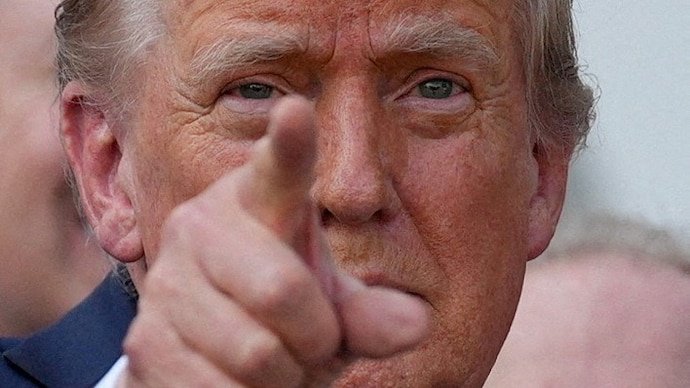
- Trump’s Warning: “Iran Has No Cards”
- Military Posturing: Warships Ready for Action
- High-Stakes Talks in Pakistan
- Key Issues on the Negotiation Table
- Dispute Over Preconditions
- The Strait of Hormuz: A Strategic Flashpoint
- Trust Deficit Between the US and Iran
- Economic Pressure and Sanctions
- What Happens Next?
- Conclusion: A Critical Moment for Diplomacy
US President Donald Trump issued a strong warning to Iran on Friday, stating that Tehran has “no cards” left and is relying on negotiations to survive. His remarks came just hours before critical diplomatic talks are expected to take place in Islamabad, Pakistan. The comments, shared on Social Media, were accompanied by signals of potential military escalation, with Trump indicating that US warships are prepared to resume strikes if Peace Talks fail. The situation highlights rising tensions and a narrow window for Diplomacy between the two sides.
Trump’s Warning: “Iran Has No Cards”
In his latest public statement, Trump sharply criticized Iran’s strategic position, claiming that its only leverage lies in temporarily disrupting global trade routes.
“The Iranians don’t seem to realize they have no cards, other than a short term extortion of the world by using international waterways… The only reason they are alive today is to negotiate!”
The statement underscores Washington’s increasingly hardline stance as negotiations approach. By framing Iran’s position as weak, Trump appears to be applying pressure ahead of the talks.
Military Posturing: Warships Ready for Action
Adding to the tension, Trump indicated in an interview that the United States is prepared for military action if diplomacy does not succeed.
He revealed that US warships have been reloaded with what he described as “the best ammunition,” signaling readiness to resume strikes if negotiations collapse.
This dual approach—combining diplomacy with military preparedness—is a familiar strategy in high-stakes geopolitical conflicts.
In simple terms: The message is clear—talks are preferred, but force remains an option.
High-Stakes Talks in Pakistan
The upcoming negotiations in Islamabad are expected to be a crucial moment in US-Iran Relations. US Vice President JD Vance is leading the American delegation, highlighting the importance of the talks.
Trump emphasized the urgency of the situation, stating that developments would become clear within a short timeframe.
“We’re going to find out in about 24 hours. We’re going to know soon,” he said.
On the Iranian side, senior leadership is expected to participate, including Foreign Minister Abbas Araghchi and Parliament Speaker Mohammad Bagher Ghalibaf.
Key Issues on the Negotiation Table
The talks are expected to focus on several critical and complex issues that have long defined tensions between the US and Iran.
Primary US Demands
- Nuclear program restrictions: Transfer or reduction of enriched uranium stockpiles
- Maritime security: Ensuring free passage through key international waterways
- Regional activities: Ending support for allied armed groups in the region
- Missile program: Addressing concerns over ballistic missile development
Iran’s Key Conditions
- Sanctions relief: Lifting of US economic restrictions
- Access to assets: Release of billions held in foreign banks
- Preconditions: ceasefire commitments and prior agreements must be fulfilled
These competing priorities highlight the complexity of the negotiations and the challenges in reaching a mutually acceptable agreement.
Dispute Over Preconditions
Iran has taken a firm stance ahead of the talks, insisting that certain conditions must be met before negotiations can proceed.
Parliament Speaker Mohammad Bagher Ghalibaf stated that two key measures—namely a ceasefire in Lebanon and the release of Iran’s blocked financial assets—must be implemented first.
“These two matters must be fulfilled before negotiations begin,” he said.
This position reflects Tehran’s attempt to strengthen its negotiating leverage, even as the US applies pressure.
The Strait of Hormuz: A Strategic Flashpoint
One of the most critical elements in the negotiations is the Strait of Hormuz, a vital global shipping route for oil and gas.
Trump has emphasized the importance of reopening the strait for unrestricted international shipping as part of any ceasefire agreement.
Currently, maritime activity in the region has been limited, raising concerns about global energy supply and trade stability.
Why it matters: Even minor disruptions in this region can have major global economic consequences.
Trust Deficit Between the US and Iran
A major challenge in the talks is the lack of trust between the two sides.
Trump openly questioned Iran’s credibility, suggesting that its public and private statements often differ.
“You’re dealing against people that we don’t know whether or not they tell the truth,” he said.
This skepticism complicates negotiations, as both sides may hesitate to commit without guarantees of compliance.
Economic Pressure and Sanctions
Iran’s economy continues to face significant challenges due to US sanctions, particularly in the banking and energy sectors.
These restrictions have limited Iran’s access to tens of billions of dollars in overseas assets, largely generated from oil and gas exports.
The demand for the release of these funds is a central issue for Tehran, as it seeks economic relief alongside any diplomatic agreement.
What Happens Next?
With both sides holding firm positions, the outcome of the Islamabad talks remains uncertain.
There are two possible scenarios:
- Diplomatic breakthrough: Agreements on key issues could ease tensions and stabilize the region
- Escalation: Failure of talks could lead to renewed military action
The next 24 to 48 hours are likely to be critical in determining which path unfolds.
Conclusion: A Critical Moment for Diplomacy
Donald Trump’s warning that Iran has “no cards” reflects the intensity of the current geopolitical standoff. With military options on the table and diplomacy under pressure, the upcoming talks represent a निर्णायक moment for both sides.
The outcome will not only shape US-Iran relations but also have broader implications for Global Security, energy markets, and regional stability.
As negotiations begin, the world will be watching closely—because in situations like this, every decision carries significant consequences.
For breaking news and live news updates, like us on Facebook or follow us on Twitter and Instagram. Read more on Latest World on thefoxdaily.com.





COMMENTS 0