- Trump’s Core Message: Victory Is Near, But Pressure Will Intensify
- Key Objectives of the US Military Campaign
- Claims of Military Success: How Much Is Real?
- Context: A War Moving Faster Than History - Or Appearing To?
- Energy and Strategy: “We Don’t Need Their Oil”
- Impact on Allies and Regional Stability
- Insight: The Dual Strategy of Pressure and Diplomacy
- Analysis: What Are the Possible Outcomes?
- Quotes That Define the Moment
- Global Implications: Beyond the Battlefield
- The Road Ahead: A Critical Window
- Conclusion: A Turning Point with Uncertain Outcomes
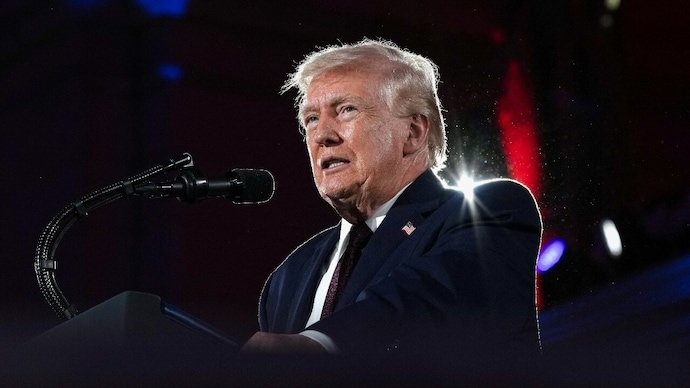
US President Donald Trump has issued one of his strongest warnings yet in the ongoing Iran conflict, declaring that the United States could “take Iran back to the Stone Age” if no agreement is reached. Speaking in a nationally televised address roughly four weeks after launching military operations, Trump said the US is close to achieving its strategic objectives but is prepared to escalate significantly in the coming weeks.
The address answers key questions clearly. Who? The United States under President Donald Trump and Iran. What? A rapidly escalating military conflict nearing a decisive phase. When? Just over a month into the campaign, with the next two to three weeks described as critical. Where? Across Iran and the broader Middle East region. Why? To dismantle Iran’s military capabilities and prevent it from acquiring nuclear weapons. And how? Through sustained military strikes combined with pressure for a negotiated settlement.
At the center of the message is a dual strategy: finish the war quickly if possible – or escalate aggressively if necessary.
Trump’s Core Message: Victory Is Near, But Pressure Will Intensify
Trump emphasized that US operations have made rapid progress, describing the campaign as marked by “swift, decisive, overwhelming victories.” According to the President, the US is on the verge of completing its mission.
“We are going to hit them extremely hard over the next two to three weeks. We are going to bring them back to the Stone Ages, where they belong.”
This statement reflects a clear escalation warning. While the US claims success, it is also preparing for the possibility that Iran may not accept its terms.
The message is simple: agree to a deal – or face intensified military action.
Key Objectives of the US Military Campaign
Trump outlined the primary goals driving what he called “Operation Epic Fury.” These objectives focus on limiting Iran’s long-term military and strategic capabilities.
- Destroy Iran’s offensive missile capabilities
- Dismantle missile production infrastructure
- Neutralise naval forces and security systems
- Prevent Iran from acquiring nuclear weapons
These goals are consistent with long-standing US concerns about Iran’s role in regional conflicts and its nuclear ambitions.
However, achieving these objectives fully – and verifying that they are achieved – remains a complex challenge.
Claims of Military Success: How Much Is Real?
In his address, Trump made sweeping claims about the extent of damage inflicted on Iran’s military. He stated that Iran’s navy is “gone,” its air force is in “ruins,” and much of its leadership has been eliminated.
He also claimed that Iran’s missile-launching capabilities have been significantly reduced, with key infrastructure destroyed.
“Their command and control is being decimated… their weapons factories are being blown to pieces.”
While these claims highlight the intensity of the campaign, independent verification remains limited. In modern conflicts, information is often shaped by strategic messaging.
This does not mean the claims are false – but it does mean they should be understood within the context of wartime communication.
Context: A War Moving Faster Than History – Or Appearing To?
Trump compared the current operation to past US wars, emphasizing its speed. He noted that previous conflicts lasted years, while the Iran campaign has shown rapid results in just over a month.
This comparison serves a narrative purpose – presenting the campaign as efficient and controlled.
However, history offers a cautionary perspective. Conflicts in the Middle East have a tendency to expand, evolve, and last longer than initially expected.
Quick victories on the battlefield do not always translate into long-term stability.
Energy and Strategy: “We Don’t Need Their Oil”
Another key part of Trump’s address focused on energy independence. He asserted that the United States does not rely on oil passing through the Strait of Hormuz and urged other nations to take responsibility for securing their own energy routes.
“We don’t need their oil… countries depending on it should take care of it.”
This statement reflects a broader shift in US strategy – from securing global supply routes to focusing on domestic energy strength.
However, global oil markets remain interconnected. Even if the US imports less oil from the region, disruptions still affect global prices and economic stability.
In other words, independence reduces risk – but does not eliminate it.
Impact on Allies and Regional Stability
Trump also reaffirmed support for US allies in the Middle East, including Israel and Gulf nations. He emphasized that the US would protect these allies from any threats.
This commitment expands the scope of the conflict beyond a direct US-Iran confrontation. It introduces a broader regional dimension, where multiple countries have stakes in the outcome.
The more actors involved, the more complex the situation becomes – both politically and militarily.
Insight: The Dual Strategy of Pressure and Diplomacy
One of the most notable aspects of Trump’s approach is the combination of military pressure and diplomatic possibility.
On one hand, the US is escalating its rhetoric and preparing for intensified strikes. On the other, it continues to leave the door open for a negotiated settlement.
This dual strategy is not new – but it is particularly visible in this case.
The logic is straightforward:
- Increase pressure to force negotiations
- Offer diplomacy as an exit option
Whether this approach succeeds depends largely on how Iran responds.
Analysis: What Are the Possible Outcomes?
The next two to three weeks, as highlighted by Trump, are likely to be decisive. Three main scenarios could unfold:
1. Negotiated Settlement
Iran agrees to US terms, leading to a de-escalation of conflict. This would allow both sides to claim some level of success.
2. Escalation
The US follows through on its warnings, launching more aggressive strikes, potentially targeting critical infrastructure.
3. Prolonged Conflict
Neither side backs down, resulting in a drawn-out conflict with regional consequences.
Each scenario carries significant risks – not just for the region, but for global stability.
Quotes That Define the Moment
“We are going to finish the job – and we’re going to finish it very fast.”
This reflects the confidence projected by the US administration.
“If no deal is reached, we will take them back to the Stone Age.”
This highlights the severity of the warning – and the stakes involved.
Global Implications: Beyond the Battlefield
The impact of this conflict extends far beyond Iran and the United States.
Energy markets are already reacting to uncertainty. Supply disruptions, rising prices, and shifting trade routes are affecting economies worldwide.
Geopolitically, the conflict is reshaping alliances and testing international responses.
Economically, it is adding pressure to an already fragile global system.
In today’s interconnected world, regional conflicts rarely stay regional.
The Road Ahead: A Critical Window
Trump’s timeline of two to three weeks sets expectations for rapid developments. Whether those developments lead to resolution or escalation remains uncertain.
Key factors to watch include:
- Iran’s response to US warnings
- Level of military escalation
- Involvement of regional actors
- Progress in diplomatic channels
These variables will shape the direction of the conflict.
Conclusion: A Turning Point with Uncertain Outcomes
Trump’s address marks a critical moment in the Iran conflict. It combines confidence in military success with a clear warning of further escalation.
The coming weeks will determine whether the situation moves toward resolution or intensifies further.
For now, the world is watching closely – aware that the stakes extend far beyond a single conflict.
Because in modern Geopolitics, decisions made in one region can reshape realities across the globe.
And as history has shown, wars often begin with clear objectives – but rarely end exactly as planned.
For breaking news and live news updates, like us on Facebook or follow us on Twitter and Instagram. Read more on Latest World on thefoxdaily.com.


COMMENTS 0