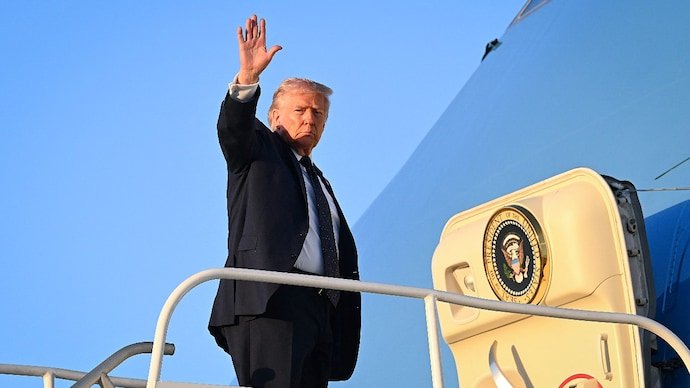
In a dramatic escalation of rhetoric amid ongoing Middle East tensions, former US President Donald Trump has issued a stark 48-hour ultimatum to Iran, demanding the immediate reopening of the strategically critical Strait of Hormuz. The warning has intensified global concerns over energy security, military conflict, and economic stability.
In a strongly worded social media post, Trump threatened severe military action against Iran’s energy infrastructure if the key maritime route is not restored to safe and unrestricted passage. The statement specifically mentioned targeting Iran’s power plants, beginning with its largest facility.
Trump stated, “The United States of America will hit and obliterate their various POWER PLANTS, starting with the biggest one first, if Iran does not FULLY OPEN, WITHOUT THREAT, the Strait of Hormuz within 48 HOURS from this exact point in time.”
The ultimatum underscores the growing urgency surrounding the Strait of Hormuz, a narrow but vital waterway that connects the Persian Gulf to global markets and carries nearly 20% of the world’s oil and liquefied natural gas supplies. Any disruption in this corridor has immediate and far-reaching consequences for Global energy markets.
Conflict Enters a More Dangerous Phase
The warning comes as the ongoing conflict in the region enters its fourth week, with hostilities expanding in scope and intensity. What initially began as targeted military operations has now evolved into a broader confrontation involving multiple countries and strategic assets.
Israeli officials have reported that Iran has launched long-range missile strikes for the first time since the conflict began. These developments have significantly raised fears that the conflict could extend beyond the Middle East, potentially impacting Europe and other regions.
According to Israeli military sources, Iran fired two ballistic missiles with an estimated range of up to 4,000 kilometers toward the US-UK military base at Diego Garcia. This marks a significant escalation in Iran’s military strategy and capability.
Israeli Chief of Staff Eyal Zamir warned that the reach of such missiles extends far beyond the immediate conflict zone. “Israel is not the only target. Cities like Berlin, Paris, and Rome are also within range,” he reportedly stated, highlighting the broader security implications.
At the same time, Iranian media has claimed that US and Israeli forces carried out strikes on the Shahid Ahmadi-Roshan nuclear enrichment facility in Natanz earlier on Saturday. However, these claims remain contested, with Israel denying involvement.
The ongoing conflict has already resulted in significant casualties. Reports indicate that over 2,000 people have died in Iran since the start of US-Israeli military operations, while Iranian strikes have caused at least 15 fatalities in Israel.
Strait of Hormuz Crisis Disrupts Global Energy Supply
The Strait of Hormuz remains at the center of the crisis. In recent weeks, Iran has effectively restricted maritime movement through the strait, causing major disruptions to global oil shipments and triggering a sharp rise in energy prices worldwide.
The situation has prompted urgent calls from more than 20 countries for the restoration of safe and secure navigation through the waterway. The disruption has not only impacted oil markets but also raised fears of a prolonged global energy crisis.
Shipping companies and energy firms have been forced to reroute or halt operations due to the heightened risk of attacks, further tightening global supply chains.
Japan and European Nations Signal Coordinated Response
In response to the growing crisis, major global economies have indicated their willingness to act collaboratively to ensure stability in energy markets. Countries including Britain, France, Germany, Italy, the Netherlands, and Japan have expressed readiness to support efforts aimed at maintaining safe passage through the Strait of Hormuz.
According to a joint statement reported by Reuters, these nations emphasized cooperation rather than military intervention. “We express our readiness to contribute to appropriate efforts to ensure safe passage through the Strait,” the statement read.
This coordinated approach reflects the global importance of the strait and the shared interest in preventing further escalation that could destabilize international markets.
Trump Criticizes NATO and Allies
Earlier, Trump also directed sharp criticism at NATO and its member nations, accusing them of failing to take decisive action in addressing the crisis. He described NATO as ineffective without US leadership and questioned the commitment of allied countries.
“Without the U.S.A., NATO IS A PAPER TIGER!” Trump declared, adding that many nations were unwilling to participate in efforts to counter what he described as a “nuclear-powered Iran.”
He further criticized allies for expressing concern over rising oil prices while not contributing actively to efforts aimed at reopening the Strait of Hormuz.
Signals of Potential De-escalation Mixed with Strategic Moves
Despite the aggressive tone of his recent ultimatum, Trump had earlier suggested that the United States might be nearing its strategic objectives in the conflict. In a recent post, he indicated that major military operations could soon wind down.
“We are getting very close to meeting our objectives as we consider winding down our major military efforts in the Middle East,” he wrote, signaling a possible shift toward de-escalation.
At the same time, the US administration has reportedly considered easing Sanctions on Iranian oil exports in an attempt to stabilize global fuel prices following recent market volatility.
This combination of military pressure and economic adjustments reflects a complex strategy aimed at balancing geopolitical objectives with domestic and global economic concerns.
| Key Issue | Details |
|---|---|
| Ultimatum Timeline | 48 hours to reopen the Strait of Hormuz |
| Main Threat | US strikes on Iran’s power plants |
| Strategic Location | Strait of Hormuz (handles ~20% of global oil supply) |
| Conflict Duration | Entering fourth week |
| Casualties | Over 2,000 in Iran; at least 15 in Israel |
| Missile Development | Iran reportedly used 4,000 km range missiles |
| Global Response | EU nations and Japan ready for coordinated action |
| Market Impact | Rising oil prices and disrupted shipping routes |
In conclusion, Trump’s 48-hour ultimatum to Iran has added a new layer of urgency to an already volatile situation. With the Strait of Hormuz at the heart of global energy flows and military tensions escalating, the coming days could prove decisive for regional stability and international markets. While diplomatic and coordinated efforts are underway, the risk of further escalation remains high, keeping the world on edge.
For breaking news and live news updates, like us on Facebook or follow us on Twitter and Instagram. Read more on Latest World on thefoxdaily.com.





COMMENTS 0