- Trump’s Strong Rebuke: “NATO Wasn’t There”
- Mark Rutte’s Response: Honest but Constructive Dialogue
- Core Issue: Disagreements Over Iran Strategy
- Strategic Flashpoint: Strait of Hormuz
- Ceasefire Development: A Temporary Pause
- Iran’s Response: Conditional Cooperation
- Broader Impact: Strain on NATO Unity
- Human and Global Impact of the Conflict
- Conclusion: A Test for NATO’s Future
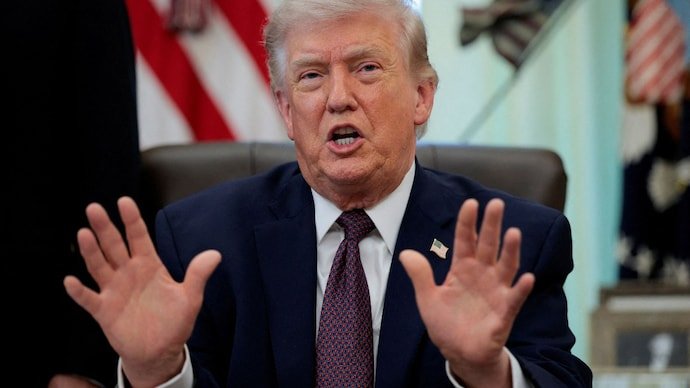
Tensions between the United States and its NATO allies came into sharp focus after President Donald Trump held a two-hour meeting with NATO Secretary General Mark Rutte at the White House. The meeting, described as candid but constructive, revealed growing disagreements over the alliance’s response to the Iran conflict. Trump openly criticized NATO members for failing to provide adequate support during a critical moment, raising questions about the future unity and effectiveness of the alliance.
Trump’s Strong Rebuke: “NATO Wasn’t There”
Following the meeting, Donald Trump did not hold back in expressing his frustration. Taking to Social Media, he delivered a blunt message about the alliance’s role during the crisis.
“NATO WASN’T THERE WHEN WE NEEDED THEM, AND THEY WON’T BE THERE IF WE NEED THEM AGAIN.”
The statement reflects a growing sentiment within the US leadership that NATO allies have not matched Washington’s expectations, particularly during the recent conflict involving Iran.
Trump has, in recent weeks, intensified his criticism of NATO, even referring to it as a “paper tiger.” His remarks signal a deeper concern about burden-sharing and the reliability of allied support in times of crisis.
Mark Rutte’s Response: Honest but Constructive Dialogue
Mark Rutte acknowledged that the discussions were frank and, at times, tense. However, he emphasized that the exchange remained constructive and rooted in a strong relationship between allies.
“He is clearly disappointed with many NATO allies, and I can see his point,” Rutte said, describing the conversation as open and honest.
Rutte’s response suggests that while disagreements exist, there is still a willingness on both sides to engage and address concerns. He also noted that a majority of European nations had provided support, even if some fell short of US expectations.
Key Takeaways from the Meeting
- Discussions were candid and direct
- US frustration with NATO allies was clearly expressed
- European support was acknowledged but seen as insufficient by Washington
- Alliance unity remains under strain
The tone of the meeting highlights a balancing act-maintaining diplomatic ties while confronting serious differences.
Core Issue: Disagreements Over Iran Strategy
At the heart of the tensions lies a fundamental disagreement over how to respond to Iran. The United States has taken a more aggressive stance, while several NATO members have opted for caution.
Some countries declined to support US military operations, including denying access to their airspace and withholding naval assistance for securing key maritime routes.
Areas of Disagreement
- Military engagement against Iran
- Access to airspace for operations
- Naval support in strategic waterways
- Level of direct involvement in conflict
These differences reflect varying national interests and risk assessments. While the US prioritizes assertive action, many European countries remain wary of escalating the conflict further.
Strategic Flashpoint: Strait of Hormuz
The Strait of Hormuz has emerged as a central issue in the conflict. This narrow waterway is one of the most critical oil routes in the world, carrying a significant share of Global energy supplies.
Trump has urged NATO allies, particularly those dependent on Gulf energy, to take a more active role in ensuring the security of the route. However, European governments have shown reluctance to participate in operations such as mine-clearing while hostilities continue.
Why the Strait of Hormuz Matters
| Factor | Importance |
|---|---|
| Energy Supply | Handles about one-fifth of global oil shipments |
| Economic Impact | Disruptions can trigger global price volatility |
| Geopolitical Significance | Key leverage point in Iran-related tensions |
| Security Concerns | Frequent site of military and strategic disputes |
The reluctance of NATO members to engage in securing the strait has been a major source of frustration for the US administration.
Ceasefire Development: A Temporary Pause
Amid rising tensions, Donald Trump agreed to a two-week ceasefire with Iran. The decision came shortly before a deadline set by Washington for Tehran to reopen the Strait of Hormuz or face potential consequences.
The ceasefire was described as conditional, requiring Iran to halt its blockade of oil and gas shipments through the waterway.
“This will be a double-sided CEASEFIRE!” Trump stated, emphasizing that both sides would pause hostilities.
The agreement followed diplomatic efforts, including a request from Pakistan’s Prime Minister Shehbaz Sharif, who advocated for additional time to allow negotiations to progress.
Iran’s Response: Conditional Cooperation
Iran signaled its willingness to cooperate by agreeing to halt counterattacks and ensure safe passage through the Strait of Hormuz. This move was seen as a step toward de-escalation, although uncertainties remain.
The conditional nature of the ceasefire means that any violation could quickly reignite tensions, making the situation highly fragile.
Broader Impact: Strain on NATO Unity
The disagreement between the US and NATO allies is not just about one conflict-it reflects deeper structural issues within the alliance.
Underlying Challenges
- Burden Sharing: Long-standing concerns about unequal contributions
- Strategic Priorities: Differing views on global threats
- Political Will: Varied appetite for military involvement
- Alliance Trust: Questions about reliability during crises
Trump’s remarks have brought these issues into the spotlight, raising questions about NATO’s future direction.
While the alliance remains one of the most powerful military partnerships in the world, internal divisions could weaken its effectiveness if not addressed.
Human and Global Impact of the Conflict
The ongoing conflict has had far-reaching consequences beyond diplomacy and military strategy. Thousands have been affected across the Middle East, with disruptions to energy supplies impacting global markets.
The ripple effects are being felt worldwide, from rising fuel prices to increased geopolitical uncertainty.
Key Impacts
- Loss of life and humanitarian challenges
- Disruption of global oil supply chains
- Economic instability in energy markets
- Increased geopolitical tensions
These factors underscore the importance of coordinated international action-something that remains elusive amid current disagreements.
Conclusion: A Test for NATO’s Future
The meeting between Donald Trump and Mark Rutte has exposed significant cracks in NATO’s unity at a critical time. While both leaders described the discussions as constructive, the underlying tensions are clear.
Trump’s sharp criticism reflects broader concerns about the alliance’s reliability, particularly during high-stakes conflicts like the one involving Iran. Meanwhile, NATO members continue to balance their commitments with caution, leading to differing approaches.
Looking ahead, the alliance faces a crucial test. Its ability to adapt, align strategies, and rebuild trust will determine whether it can remain a cohesive force in an increasingly complex global landscape. For now, the message is clear-unity cannot be assumed; it must be actively maintained.
For breaking news and live news updates, like us on Facebook or follow us on Twitter and Instagram. Read more on Latest World on thefoxdaily.com.





COMMENTS 0