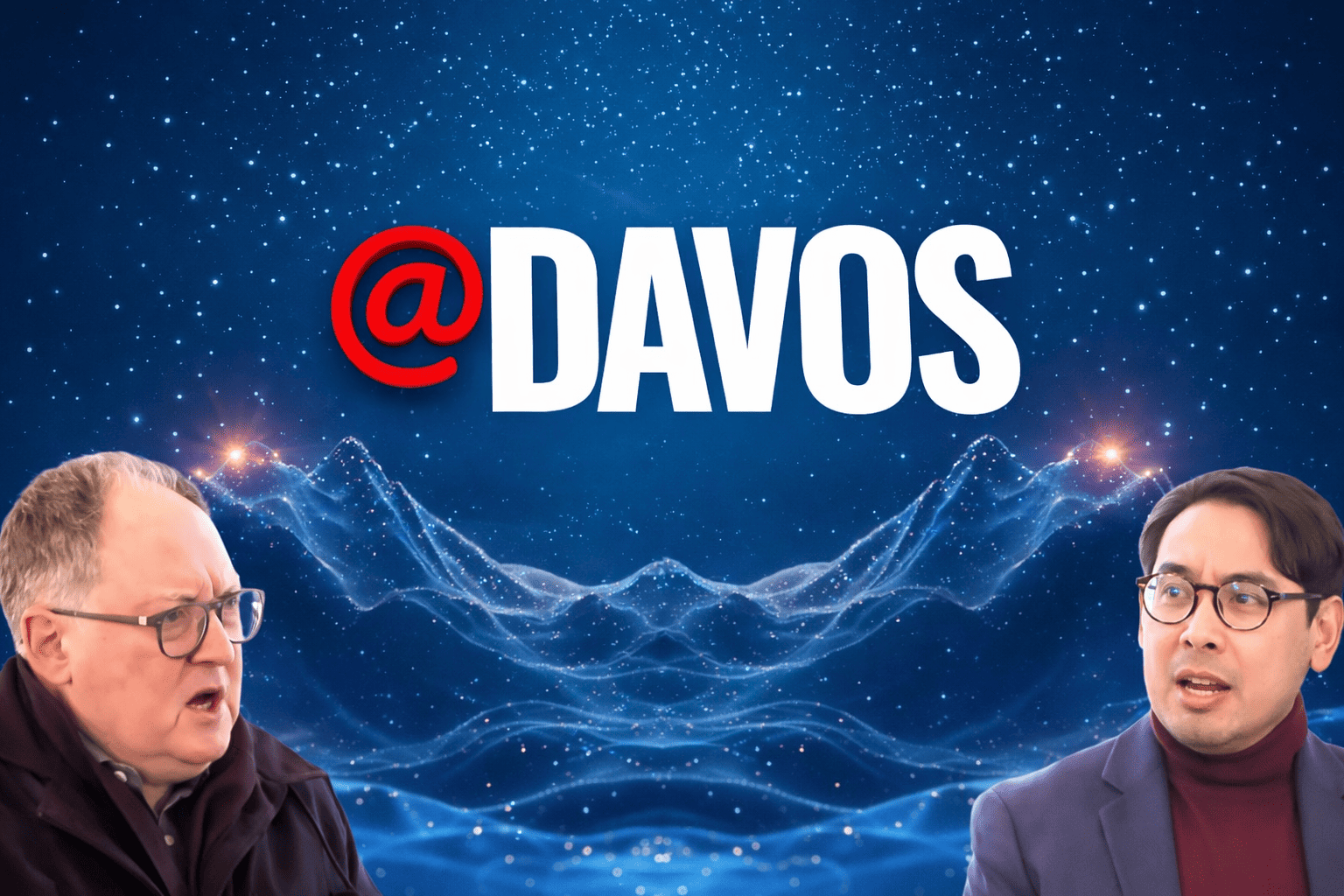
Renowned journalist Ishaan Tharoor, son of senior Congress leader and author Shashi Tharoor, on Monday asserted that former US President Donald Trump manages international affairs in a manner akin to a “mafia boss.” Speaking during the Davos Summit, Tharoor said Trump’s conduct in his second term has reinforced this perception among global observers.
In a conversation with India Today on the sidelines of the summit, Tharoor—who writes for The Washington Post—recalled that a year ago, analysts at the same forum were debating whether Trump would act as a custodian of a positive geopolitical realignment or adopt a coercive, transactional style of leadership.
“I think he has answered that question quite definitively on the side of being more of a mafia boss,” Tharoor said, underlining what he described as Trump’s intimidation-driven approach to foreign policy.
Adding to the discussion, Financial Times columnist Gideon Rachman, who was seated next to Tharoor during the panel, offered a striking analogy. “With mafia families, you get periods of peace, but eventually they start shooting at each other,” Rachman said, warning that such an approach is inherently unstable.
Rachman further observed that Trump’s broader geopolitical strategy bears an uncanny resemblance to how mafia bosses are portrayed in popular culture—driven by loyalty, threats, and short-term deals rather than enduring institutions or alliances.
Speaking on the panel titled ‘World in Trumpian Turmoil and What Happens Next?’, Tharoor argued that Trump’s personality has become the central force shaping American foreign policy. He claimed there is little effective legislative oversight, as Congress is “not doing what it is supposed to do,” allowing the executive to operate with minimal restraint.
Tharoor also stated that Trump has “wholesale captured” the Republican Party, leaving few internal checks on his decision-making and reinforcing the personalization of US policy on the global stage.
Highlighting the broader international consequences, Tharoor said the post–Second World War global order is steadily eroding. He referred to what the New York Times once described as an “à la carte world order,” where nations selectively choose which rules and commitments to follow. “That is the direction the world is heading,” he warned.
Framing the current geopolitical churn, Tharoor suggested that Trump’s actions have inadvertently created strategic opportunities for china. As Washington finds itself increasingly at odds with Europe over issues like Greenland and alienates long-standing allies such as Canada, partners in regions like the Indian Ocean are also reassessing their relationships with the US.
Despite calling the global situation “complicated,” Rachman maintained that India remains well-positioned in the evolving order. However, he cautioned against placing too much trust in Trump. “Putting your faith in Donald Trump is not a great idea because you can have a wonderful meeting with him in May and a disastrous meeting with him in June. With him, nothing endures. He will change his mind,” Rachman said.
Rachman added that many US allies are increasingly likely to view India as a “central partner,” given its scale, economic potential, and strategic depth, as they seek to diversify their geopolitical and economic ties away from Washington.
He noted that the European Union is keen to deepen engagement with India, the United Kingdom has already concluded a trade agreement, and countries such as South Korea and japan are also looking to expand cooperation with New Delhi across economic, security, and strategic domains.
Concluding the discussion, Rachman emphasized that while India traditionally avoids formal military alliances, the shifting global landscape presents New Delhi with multiple opportunities to enhance its influence and forge broader partnerships in a rapidly changing world order.
For breaking news and live news updates, like us on Facebook or follow us on Twitter and Instagram. Read more on Latest World on thefoxdaily.com.



COMMENTS 0