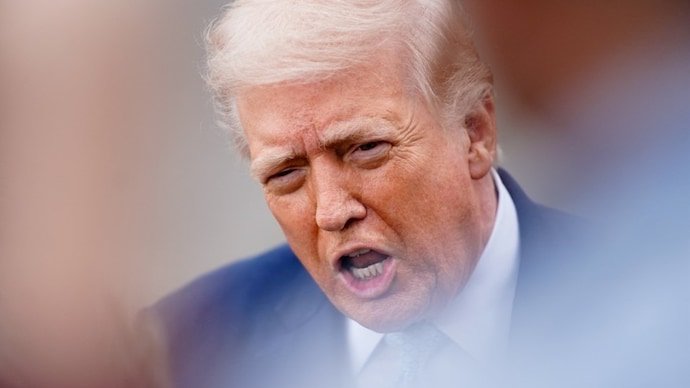
Amid a rapidly intensifying conflict involving the United States, Israel, and Iran, US President Donald Trump has indicated that Washington could take control of Iran’s oil resources, including the strategically vital Kharg Island. The remarks come as thousands of additional American troops are being deployed across the Middle East, signaling a potential escalation in military operations.
Speaking in an interview, Trump stated that his preferred strategy would be to “take the oil in Iran,” suggesting that controlling key energy infrastructure could be central to US objectives in the region. Kharg Island, which handles a majority of Iran’s crude oil exports, has emerged as a focal point in military planning discussions.
The President acknowledged that while no final decision has been made, the Pentagon is actively evaluating a range of operational scenarios. “Maybe we take Kharg Island, maybe we don’t,” he said, emphasizing that multiple strategic options remain on the table. However, he also noted that any such move would require a sustained presence on the ground.
Why Kharg Island Matters in the Iran Conflict
Kharg Island plays a critical role in Iran’s economy and global oil supply chains. A successful operation targeting the island could significantly disrupt Tehran’s export capabilities, but it also carries substantial geopolitical and military risks.
| Factor | Details |
|---|---|
| Strategic Importance | Main hub for Iran’s crude oil exports |
| Military Objective | Disrupt Iran’s revenue and energy leverage |
| Global Impact | Potential surge in oil prices and market instability |
| Operational Risk | High संभावना of retaliation and prolonged conflict |
| Deployment Requirement | Long-term military presence likely needed |
Energy markets have already begun reacting to the rising tensions. Brent crude prices surged beyond $116 per barrel during Asian trading, marking a sharp increase of over 50% in just a month. Analysts warn that any direct strike or occupation of Kharg Island could further destabilize Global energy supplies.
US Military Build-Up Gains Momentum
The United States has significantly increased its military footprint in the region. Reports indicate that approximately 10,000 troops trained in ground operations have been ordered to deploy, reinforcing Washington’s readiness for potential land-based missions.
In recent days, around 3,500 personnel—including nearly 2,200 Marines—have already arrived in the Middle East, with an additional 2,200 Marines currently en route. Furthermore, elements of the 82nd Airborne Division have been placed on standby, enhancing rapid deployment capabilities.
This growing military presence underscores the seriousness of the situation, even as officials continue to publicly emphasize that no final decision on ground operations has been taken.
Rising Risks and Regional Escalation
Military experts caution that any attempt to seize Kharg Island would be highly risky. The move could provoke direct retaliation from Iran, potentially expanding the conflict beyond its current scope and drawing in additional regional actors.
The war has already begun to spill over into neighboring regions. In a recent attack on a US airbase in Saudi Arabia, twelve American soldiers were injured and a high-value surveillance aircraft was destroyed. Meanwhile, Houthi forces in Yemen have launched ballistic missiles toward Israel, raising fears of a broader, multi-front conflict.
Such developments highlight the fragile security environment and the increasing احتمال of escalation across the Middle East.
Diplomatic Signals Amid Military Pressure
Despite the aggressive rhetoric and troop deployments, Trump indicated that indirect diplomatic efforts are still ongoing. According to his statements, backchannel talks with Iran—reportedly facilitated through intermediaries—are showing signs of progress.
He revealed that Iran has been given a deadline to agree to a ceasefire framework, warning that failure to comply could lead to intensified strikes on its energy infrastructure. At the same time, he suggested that a deal could still be reached quickly under the right conditions.
Trump also claimed that Iran had allowed safe passage for certain oil tankers through the Strait of Hormuz as a gesture during negotiations, though such claims remain unverified.
Uncertainty Over Iran’s Leadership
Adding another layer of uncertainty, Trump made controversial remarks regarding Iran’s leadership, suggesting that the country has effectively undergone a “regime change” following the deaths of several senior figures earlier in the conflict.
He further claimed that Mojtaba Khamenei, son of the late Supreme Leader Ayatollah Ali Khamenei, may be dead or seriously injured. However, no independent confirmation of this assertion has been provided.
According to Trump, the individuals currently leading Iran are “a totally different group of people,” describing them as more professional but also unpredictable.
Global Implications and What Lies Ahead
The situation remains highly fluid, with military preparations, economic pressures, and diplomatic efforts unfolding simultaneously. While the Pentagon continues to refine its strategic options, the possibility of a major escalation—such as the seizure of Kharg Island—could redefine the trajectory of the conflict.
For now, the world watches closely as tensions in the Middle East continue to rise, with significant implications for global energy markets, international security, and geopolitical stability.
For breaking news and live news updates, like us on Facebook or follow us on Twitter and Instagram. Read more on Latest World on thefoxdaily.com.





COMMENTS 0