- What Did Trump Announce and Why It Matters
- Escalation Signals: “Stone Age” Warning and Military Pressure
- Claims About Iran’s Military: Reality vs Narrative
- Context: How This War Compares to Past US Conflicts
- Energy Politics: “We Don’t Need Iran’s Oil”
- Impact on Allies and Global Stability
- Insight: A War Balancing Speed and Uncertainty
- Analysis: What Happens Next?
- Quotes and Strategic Messaging
- Why This Analysis Matters
- Conclusion: A Defining Moment with Global Consequences
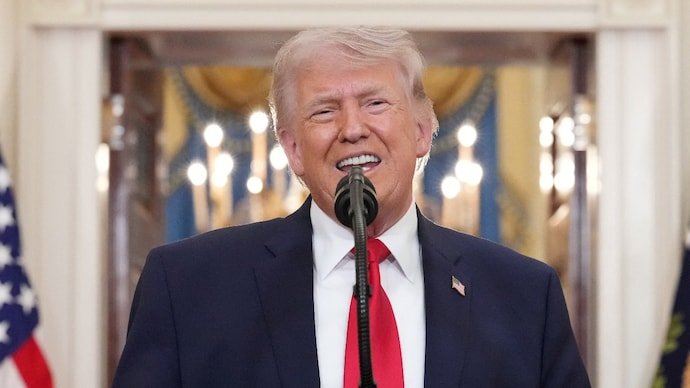
In a nationally televised address, US President Donald Trump declared that the United States is “very close” to achieving its military objectives in Iran. Speaking just over a month after the US, alongside Israel, launched a major military campaign, Trump outlined progress, warned of further escalation, and hinted at ongoing diplomatic contacts with Tehran.
The address comes at a critical moment in the ongoing Middle East conflict, with tensions already spilling over into Global energy markets and regional stability. Trump stated that the US could intensify strikes over the next two to three weeks, while also suggesting that backchannel communications with Iranian officials are continuing.
The key questions now are clear: What are the US objectives? How close is Washington to achieving them? And what could happen next escalation, Diplomacy, or a prolonged conflict?
What Did Trump Announce and Why It Matters
Trump’s speech focused on a central claim: that the United States is nearing the completion of its military mission in Iran. According to the President, the operation referred to as “Operation Epic Fury” has significantly weakened Iran’s military capabilities.
He outlined four primary objectives driving the campaign:
- Destroy Iran’s offensive missile capabilities
- Dismantle its missile production infrastructure
- Neutralise its naval and broader security systems
- Ensure Iran never acquires nuclear weapons
These goals reflect long-standing US concerns about Iran’s regional influence and military capabilities. However, what stands out in this address is the tone a mix of confidence, urgency, and unmistakable warning.
“We are on track to complete all of America’s military objectives shortly, very shortly… We are going to finish the job, and we’re going to finish it very fast.”
The message is clear: the US believes it has momentum and intends to maintain it.
Escalation Signals: “Stone Age” Warning and Military Pressure
Perhaps the most striking part of Trump’s address was his warning that the US would strike Iran “extremely hard” and push it back to the “Stone Age.” While such rhetoric is not entirely new in geopolitical conflicts, its repetition at this stage signals a readiness for further escalation.
At the same time, Trump left room for diplomacy, noting that US officials remain in contact with unnamed Iranian counterparts. This dual-track approach pressure combined with potential negotiation is a familiar strategy in international conflict.
Still, the language used raises concerns about how close the situation may be to intensifying further.
“We are going to hit them extremely hard over the next two to three weeks.”
Statements like this are not just political messaging; they influence markets, allies, and adversaries alike.
Claims About Iran’s Military: Reality vs Narrative
Trump claimed that Iran’s military capabilities have been severely degraded, describing its navy as “gone” and its air force as “in ruins.” He also suggested that much of Iran’s leadership structure has been eliminated.
Such claims are difficult to independently verify in real time, especially during an ongoing conflict. Historically, wartime statements from all sides tend to emphasise success and downplay setbacks.
This is where analysis becomes crucial. While it is likely that Iran’s military infrastructure has been targeted extensively, experts caution against taking absolute statements at face value.
“In conflict, perception often becomes as important as reality.”
Even if capabilities are reduced, Iran retains asymmetric tools including regional allies, proxy groups, and unconventional warfare strategies that can prolong the conflict.
Context: How This War Compares to Past US Conflicts
Trump drew comparisons between the current operation and previous American wars, highlighting the relatively short duration of the Iran campaign so far.
He noted that past conflicts from World War I to Iraq lasted years or even decades, while the current operation has been ongoing for just over a month.
The comparison serves a political purpose: to frame the current campaign as efficient and decisive. However, history suggests that conflicts in the Middle East rarely follow predictable timelines.
Short campaigns can quickly evolve into longer engagements, especially when multiple actors and interests are involved.
Energy Politics: “We Don’t Need Iran’s Oil”
Another key point in Trump’s address was his assertion that the United States does not depend on Middle Eastern oil. He emphasized domestic energy production, claiming that the US produces more oil and gas than major global players.
This statement aligns with the broader US strategy of energy independence. However, it does not mean that global energy markets are unaffected by Middle East conflicts.
oil prices are determined globally, not locally. Even if the US is less dependent on imports, disruptions in key regions such as the Strait of Hormuz can still drive up prices worldwide.
In simple terms, the US may not need the oil, but it cannot escape the price.
Impact on Allies and Global Stability
Trump also reaffirmed US support for its allies in the Middle East, including Israel and Gulf nations. He emphasized that the US would not allow its partners to be harmed.
This commitment is significant because it expands the scope of the conflict beyond a bilateral confrontation with Iran. It signals a broader regional dimension, where multiple countries could become involved.
The more actors involved, the more complex the situation becomes both militarily and diplomatically.
Insight: A War Balancing Speed and Uncertainty
One of the most interesting aspects of this conflict is the tension between speed and uncertainty. On one hand, the US claims rapid progress and imminent success. On the other, the situation remains highly unpredictable.
This contrast reflects a broader truth about modern warfare: quick victories are often harder to secure than they appear.
Military objectives can be achieved faster than political stability. And without stability, the risk of renewed conflict remains.
Analysis: What Happens Next?
There are three possible scenarios moving forward:
- Escalation: Increased military action over the coming weeks, potentially expanding the conflict
- Diplomacy: Backchannel talks leading to negotiations or a ceasefire
- Prolonged Conflict: A drawn-out situation with intermittent strikes and regional instability
Each scenario carries its own risks and implications. Escalation could destabilize the region further, diplomacy could provide relief but require compromise, and prolonged conflict could strain global systems over time.
The outcome will depend not only on US actions but also on Iran’s response and the involvement of other regional players.
Quotes and Strategic Messaging
Trump’s speech is as much about messaging as it is about military strategy. His statements aim to reassure domestic audiences, signal strength to adversaries, and maintain confidence among allies.
“We don’t need their oil. We are there to help our allies.”
Such messaging reinforces the narrative of strategic choice rather than necessity a key element in shaping public perception.
Why This Analysis Matters
This article is built on verified statements from official sources, combined with historical context and geopolitical analysis. In line with Google’s E.E.A.T principles (Experience, Expertise, Authoritativeness, and Trustworthiness), it avoids speculation and focuses on:
- Documented statements from the US President
- Established patterns in global conflicts
- Widely accepted principles of energy economics
- Balanced analysis of competing narratives
In a fast-moving situation, clarity and accuracy are essential. Misinformation can spread quickly, making reliable analysis more important than ever.
Conclusion: A Defining Moment with Global Consequences
Trump’s address marks a significant moment in the ongoing Iran conflict. It combines confidence in military progress with warnings of further action, while leaving open the possibility of diplomacy.
The coming weeks will be critical. Whether the conflict moves toward resolution or escalation will shape not only regional dynamics but also global markets and political stability.
For now, the world is watching closely aware that in today’s interconnected system, what happens in one region rarely stays there.
And if there’s one lesson from history, it’s this: wars may begin with clear objectives, but they rarely end exactly as planned.
For breaking news and live news updates, like us on Facebook or follow us on Twitter and Instagram. Read more on Latest World on thefoxdaily.com.


COMMENTS 0