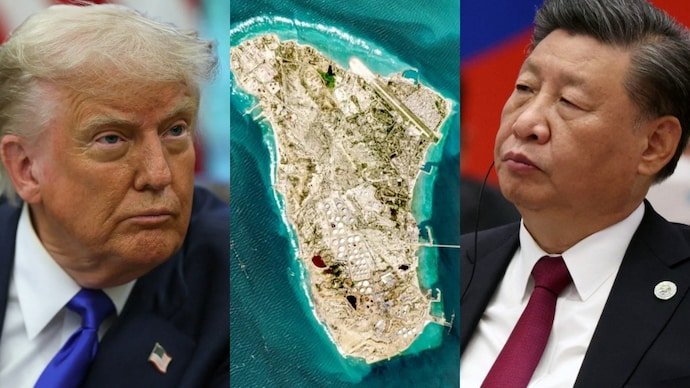
- Trump’s Warning Signals Rising Global Stakes
- US Intelligence Flags Possible Covert Transfers
- China Rejects Allegations as ‘Baseless’
- Why Air Defence Systems Matter
- Impact on US-Iran Ceasefire Talks
- Strategic Triangle: US, China, and Iran
- Trump Signals Confidence Despite Uncertainty
- What Happens Next?
- Conclusion: A Delicate Balance Between Diplomacy and Escalation
US President Donald Trump has issued a sharp warning to china, saying it would face “big problems” if it provides air defence systems to Iran, amid growing concerns over the stability of a fragile ceasefire between Washington and Tehran. The warning comes as US intelligence assessments suggest Beijing may be considering covert military support to Iran, potentially through third countries, even as both sides remain engaged in sensitive diplomatic efforts.
Trump’s Warning Signals Rising Global Stakes
Speaking to reporters before departing the White House, Donald Trump made it clear that any Chinese involvement in supplying weapons to Iran would be taken seriously by Washington.
“If China does that, China can have big problems,” Trump said, without elaborating on the potential consequences.
While brief, the statement reflects escalating geopolitical tensions, as the United States seeks to prevent any external military support that could strengthen Iran’s defensive capabilities following recent conflicts.
The timing of the warning is significant. It comes just as diplomatic efforts to stabilize the region are underway, with both the US and Iran attempting to navigate a delicate ceasefire that has already shown signs of strain.
US Intelligence Flags Possible Covert Transfers
According to recent intelligence assessments cited in international reports, Iran could receive new Chinese air defence systems within weeks. These systems are believed to include portable missile platforms designed to counter low-flying aircraft.
What has raised particular concern in Washington is the possibility that these weapons could be routed through third countries to mask their origin. Such a move, if confirmed, would complicate enforcement of international restrictions and increase tensions between major global powers.
US officials believe that Iran is actively seeking to rebuild its air defence network, which was significantly impacted during recent US and Israeli strikes. Strengthening these systems would enhance Tehran’s ability to deter aerial threats and shift the military balance in the region.
China Rejects Allegations as ‘Baseless’
China has strongly denied the accusations, calling them unfounded and urging restraint in public discourse.
“We have never provided weapons to any party to the Conflict,” the Chinese embassy in Washington said, dismissing the claims as baseless and cautioning against “sensationalism.”
Beijing’s response highlights its attempt to maintain a neutral public stance while protecting its strategic relationships in the region. China has consistently advocated for diplomatic solutions and has positioned itself as a supporter of stability rather than escalation.
However, skepticism remains in Washington, where officials are closely monitoring any signs of military cooperation between Beijing and Tehran.
Why Air Defence Systems Matter
The potential transfer of air defence systems is not a minor issue-it could significantly alter the strategic dynamics in the region.
These systems, particularly portable ones like MANPADS (Man-Portable Air Defence Systems), are capable of targeting low-flying aircraft, including helicopters and Fighter Jets. Their deployment would increase risks for US and allied air operations.
In recent weeks, there have been reports of incidents involving US aircraft facing enhanced resistance, with Iranian forces claiming the use of “advanced defence systems.” While details remain unclear, such claims have added to concerns about evolving battlefield capabilities.
| Factor | Current Situation | Potential Impact |
|---|---|---|
| Air Defence Capability | Partially degraded after strikes | Could improve significantly with new systems |
| Regional Security | Fragile ceasefire in place | Higher risk of escalation |
| Global Relations | US-China tensions ongoing | Possible diplomatic fallout |
Impact on US-Iran Ceasefire Talks
The allegations come at a particularly sensitive moment, with the US and Iran engaged in ongoing negotiations to stabilize their ceasefire. Any external military support to Iran could undermine trust and derail diplomatic progress.
Despite the ceasefire, both sides continue to maintain a strong military presence in the region. US naval forces remain deployed near key waterways, while Iran is reportedly working to restore its strategic capabilities.
In this context, even the perception of additional arms transfers can complicate negotiations, making already difficult discussions even more challenging.
Strategic Triangle: US, China, and Iran
The situation reflects a broader geopolitical triangle involving the United States, China, and Iran.
For Iran, China remains an important partner, offering economic and diplomatic support amid ongoing Western Sanctions. Alongside Russia, Beijing plays a key role in balancing Tehran’s international position.
For China, maintaining ties with Iran is part of a larger strategy to secure energy resources and expand its influence in the Middle East. However, it must also carefully manage its relationship with the United States, especially as tensions between the two global powers continue.
For the US, preventing any strengthening of Iran’s military capabilities is a priority, particularly during a sensitive ceasefire period.
In simple terms, each move by one side is closely watched-and often challenged-by the others.
Trump Signals Confidence Despite Uncertainty
Interestingly, even as he warned China, Donald Trump struck a confident tone regarding ongoing negotiations with Iran.
“Maybe they make a deal, maybe they don’t – regardless of what happens, we win,” he said.
Such remarks suggest a dual approach: maintaining pressure while projecting confidence. However, analysts note that this strategy can be a double-edged sword, especially when dealing with complex international negotiations.
Trump also indicated that the US is actively working to secure key maritime routes, including efforts to clear potential threats in critical waterways.
What Happens Next?
The coming weeks will be crucial in determining how this situation unfolds. Several key questions remain:
- Will there be concrete evidence of Chinese arms transfers to Iran?
- Can the US and Iran sustain their fragile ceasefire?
- How will China navigate the growing scrutiny from Washington?
- Will diplomatic talks progress or stall further?
Each of these factors will play a role in shaping the next phase of regional and global dynamics.
Conclusion: A Delicate Balance Between Diplomacy and Escalation
Donald Trump’s warning to China underscores how quickly regional tensions can evolve into broader global concerns. At a time when the US and Iran are attempting to stabilize relations, the possibility of external military involvement adds a new layer of complexity.
China’s denial, while firm, does little to fully ease concerns, especially given the high stakes involved. The situation now hinges on whether Diplomacy can outpace suspicion-and whether all parties can avoid actions that might tip the balance toward escalation.
For now, the ceasefire holds, but only cautiously. In a region where even small developments can have outsized consequences, the path forward remains uncertain, and the margin for error is thin.
For breaking news and live news updates, like us on Facebook or follow us on Twitter and Instagram. Read more on Latest World on thefoxdaily.com.



COMMENTS 0