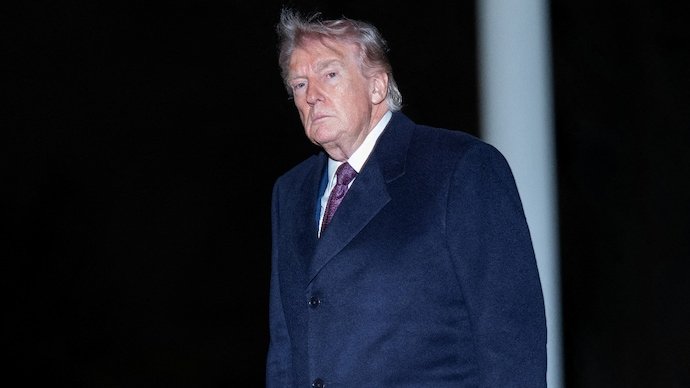
US President Donald Trump has warned that the North Atlantic Treaty Organization (NATO) could face a “very bad future” if member nations fail to support Washington’s efforts to reopen the strategically vital Strait of Hormuz during the ongoing conflict involving the United States, Israel, and Iran.
In an interview with the British newspaper Financial Times, Trump called on allied countries — particularly European nations — to contribute to what he described as a collective effort to secure the crucial maritime chokepoint through which a significant portion of the world’s oil supply passes.
The warning comes as tensions in the Middle East continue to escalate following military operations launched by the United States and Israel against Iran more than two weeks ago.
“I think it will be very bad for the future of NATO if there is no response or if it’s a negative response,” Trump said, emphasizing that many countries benefiting from oil shipments passing through the Strait should help ensure the route remains open and secure.
Strategic Importance of the Strait of Hormuz
The Strait of Hormuz is considered one of the most important maritime chokepoints in the Global energy market. The narrow waterway connects the Persian Gulf with the Gulf of Oman and the Arabian Sea.
Nearly one-fifth of the world’s oil supply moves through the strait, making it a critical route for global energy transportation.
Since the conflict began, Iran has effectively disrupted tanker traffic through the channel, raising concerns about the stability of global oil markets and energy supply chains.
| Key Fact | Details |
|---|---|
| Location | Between Iran and Oman |
| Global Oil Transit | Approximately 20% of global oil supply |
| Pre-Conflict Oil Price | About $72–$73 per barrel |
| Current Oil Price | Close to $100 per barrel after disruption |
Trump Calls for NATO Support
Trump argued that countries heavily dependent on energy imports from the Gulf region should contribute more actively to protecting the maritime corridor.
“It’s only appropriate that people who are the beneficiaries of the Strait will help to make sure that nothing bad happens there,” he said.
He also questioned whether NATO allies would support the United States in the same way that Washington has backed European security initiatives in the past.
“We have an organization known as NATO. We’ve been very kind. They didn’t need our assistance with Ukraine — we are thousands of miles away — but we helped them,” Trump said.
“We’ll see if they can help us now,” he added, suggesting that the alliance’s credibility could be tested during the crisis.
Possible Naval Escort Mission
Trump has previously suggested that the United States Navy could escort oil tankers through the Strait of Hormuz to guarantee safe passage for commercial vessels.
However, officials have not yet announced a detailed operational plan for such a mission.
The White House has indicated that discussions are ongoing with multiple countries regarding the formation of an international coalition that would protect shipping routes and escort tankers through the strait.
Warning to China as Well
Trump also hinted that china could face diplomatic consequences if it does not support efforts to reopen the strait.
The US President suggested that a planned meeting with Chinese President Xi Jinping later this month could be postponed if Beijing refuses to cooperate.
China is one of the largest importers of Gulf oil, and a prolonged closure of the Strait of Hormuz could significantly affect its energy supply.
Conflict Continues to Impact Global Markets
The crisis in the Middle East began escalating after the United States and Israel launched a joint military campaign against Iran on February 28.
Since then, Iran has carried out multiple retaliatory missile and drone attacks across the region, targeting US military bases, shipping routes, and infrastructure connected to Western allies.
The disruption of shipping routes has already caused significant volatility in global oil markets.
International crude oil prices have surged to nearly $100 per barrel, compared with around $72–$73 before the conflict began.
Energy analysts warn that if the Strait of Hormuz remains blocked for an extended period, the world could face further spikes in oil prices and widespread economic consequences.
For breaking news and live news updates, like us on Facebook or follow us on Twitter and Instagram. Read more on Latest World on thefoxdaily.com.



COMMENTS 0