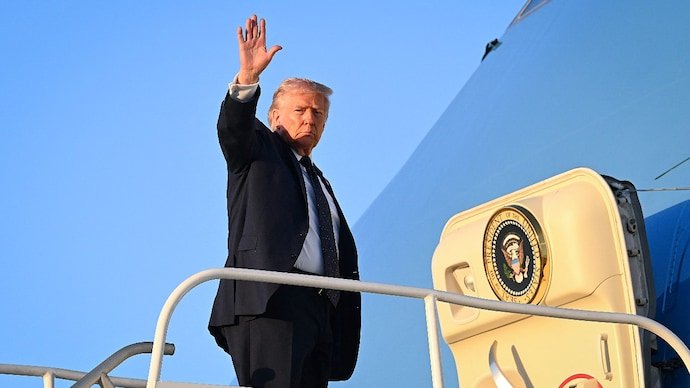
Amid rising tensions in the Middle East, former U.S. President Donald Trump has warned Iran that any attempt to disrupt global oil supplies or attack American and Israeli interests could lead to severe consequences. Trump said the United States could consider taking control of the Strait of Hormuz, one of the world’s most important oil transit routes, if Iran escalates its actions in the region.
In a strong statement during an interview with CBS News, Trump cautioned Iran against what he described as “trying anything cute” that could threaten international oil shipments or Western interests in the Middle East.
“They have shot everything they have to shoot, and they better not try anything cute,” Trump said. “If they do anything bad, that would be the end of Iran, and you’d never hear the name again.”
His remarks come as the ongoing conflict in the Middle East enters its second week, raising global concerns about energy supplies, shipping security, and the stability of international markets.
Strait of Hormuz: A Critical Global Oil Route
The Strait of Hormuz is one of the most strategically important maritime chokepoints in the world. Located between Iran and Oman, the narrow waterway connects the Persian Gulf with the Gulf of Oman and the Arabian Sea.
A significant portion of the world’s oil exports passes through this corridor every day, making it a vital artery for Global energy markets.
| Key Facts About the Strait of Hormuz | Details |
|---|---|
| Location | Between Iran and Oman |
| Global Oil Transit | About 20% of the world’s oil supply passes through the strait |
| Strategic Importance | Primary route for oil exports from Gulf nations |
| Impact of Disruptions | Can significantly increase global oil prices and affect supply chains |
Because such a large portion of global oil supply moves through this narrow channel, any disruption in the region can quickly trigger volatility in global energy markets.
Trump Says U.S. Could Take Control of the Strait
During the interview, Trump suggested that the United States might consider taking control of the Strait of Hormuz if Iran attempted to interfere with international oil shipments.
“The Strait of Hormuz is open now,” Trump said, adding that he was “thinking about taking it over” if necessary to secure global oil transit.
The statement reflects growing concern in Washington about the safety of maritime trade routes in the Persian Gulf as geopolitical tensions continue to rise.
Shipping activity through the strait has reportedly slowed significantly amid the escalating crisis, with some commercial vessels avoiding the region due to security concerns.
This disruption has already contributed to rising crude oil prices and increased uncertainty in global energy markets.
Iran Warns Oil Tankers to Be Careful
Trump’s warning came shortly after Iran’s Foreign Ministry issued its own statement advising oil tankers traveling through the Strait of Hormuz to exercise extreme caution.
The warning heightened concerns among international shipping companies and energy traders, who fear that the vital maritime corridor could become a flashpoint in the ongoing conflict.
Any military confrontation or blockade in the area could severely disrupt the flow of oil from major producers in the Gulf region.
Threat of Stronger U.S. Military Response
Trump has repeatedly warned that the United States would respond aggressively if Iran attempted to block oil shipments through the Strait of Hormuz.
In a post on his social media platform Truth Social, Trump stated that Iran would face a far stronger response if it interfered with oil transit.
“If Iran does anything that stops the flow of oil within the Strait of Hormuz, they will be hit by the U.S. twenty times harder than they have been hit thus far,” he wrote.
The message reflects Washington’s longstanding position that maintaining free navigation through international waterways is a key strategic priority.
Global Markets Watching Closely
The escalating rhetoric between the United States and Iran has raised fears among investors and policymakers about potential disruptions to global energy supplies.
Oil prices have already surged amid concerns that tensions in the region could limit production or block shipping routes.
Countries that rely heavily on imported oil—including several major economies in Asia—are particularly sensitive to developments in the Strait of Hormuz.
Analysts say that any prolonged disruption in the strait could trigger significant increases in global energy prices and further destabilize international markets.
As the situation unfolds, governments, energy companies, and shipping operators around the world are closely monitoring developments in one of the most strategically important waterways on the planet.
For breaking news and live news updates, like us on Facebook or follow us on Twitter and Instagram. Read more on Latest World on thefoxdaily.com.




COMMENTS 0