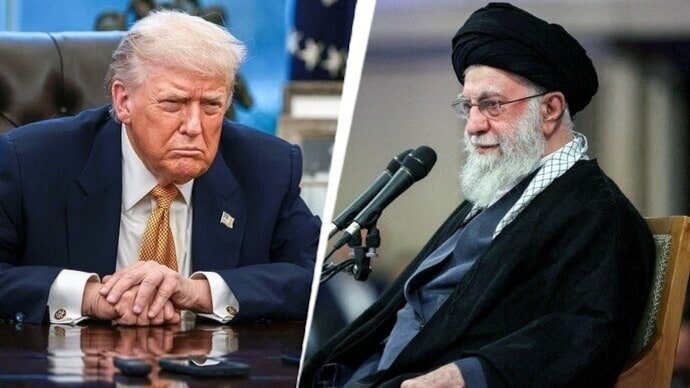
US President Donald Trump has issued a stern warning to Iran, asserting that a “massive armada” led by the USS Abraham Lincoln aircraft carrier strike group is sailing toward Iranian waters and urging Tehran to re-enter nuclear negotiations before it’s too late.
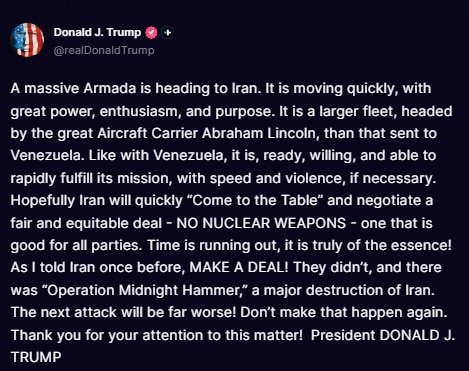
In a statement on his Social Media platform, Truth Social, Trump characterized the naval force as moving “quickly, with great power, enthusiasm and purpose,” noting that it is larger than the fleet previously sent near Venezuela. He warned that the armada is “ready, willing and able to rapidly fulfill its mission, with speed and violence, if necessary.”
Trump emphasized his desire for diplomacy, stating he wants Iran to “quickly ‘Come to the Table’ and negotiate a fair and equitable deal — NO nuclear weapons — one that is good for all parties.” He added that “time is running out,” underscoring escalating pressure on Tehran to engage directly with the United States.
Trump Invokes Past Conflicts, Warns of Worse Consequences
Referencing a previous U.S. military action against Iran, Trump said, “As I told Iran once before, MAKE A DEAL!” and warned that Iran’s failure to negotiate previously led to military consequences. He cautioned that any future conflict — if diplomacy fails — could be “far worse.”
Trump concluded his message by thanking the public for their attention and reiterating his hope that Tehran will act swiftly and engage in negotiations.
Military Build-Up and Regional Preparations
U.S. Central Command confirmed preparations for multi-day readiness drills designed to enhance force dispersal, strengthen regional partnerships, and ensure flexible military response capabilities. The drills are also intended to demonstrate a “credible, combat-ready and responsible presence” to deter potential aggression and reduce the risk of miscalculation.
Defense officials report that the USS Abraham Lincoln strike group — including cruisers, destroyers and fighter aircraft — has reached U.S. Central Command (CENTCOM) waters in the Indian Ocean and is positioning for further operations in the region.
Iran and Regional Reaction
Tehran has not publicly confirmed direct contact with U.S. negotiators but maintains that its nuclear program is peaceful and that foreign military warmongering will not deter its strategic interests. Iranian officials have warned they will treat any overseas military strike as an act of full-scale war, signaling Iran’s readiness to defend its sovereignty.
Amid the tensions, regional partners have sounded varied responses. Turkey has urged that disputes between the U.S. and Iran be addressed incrementally, starting with nuclear negotiations, and warned that foreign intervention could worsen instability. Iran has expressed openness to nuclear talks through diplomatic channels, though trust remains low on all sides.
Global Diplomatic Context and Economic Impact
Heightened U.S.-Iran tensions have prompted concern from international actors and institutions. The United Nations has called for restraint and stressed the importance of diplomatic engagement to avert broader conflict. │ Oil markets have reacted modestly to the increased risk in the Middle East, reflecting sensitivity to potential disruptions.
With both military positioning and diplomatic overtures ongoing, the global community watches closely as the U.S. presses for a nuclear deal and Iran balances internal pressures with regional defense posturing.
As of now, the situation remains highly dynamic, with continued deployments, official statements, and diplomatic efforts shaping the unfolding geopolitical landscape.
For breaking news and live news updates, like us on Facebook or follow us on Twitter and Instagram. Read more on Latest World on thefoxdaily.com.





COMMENTS 0