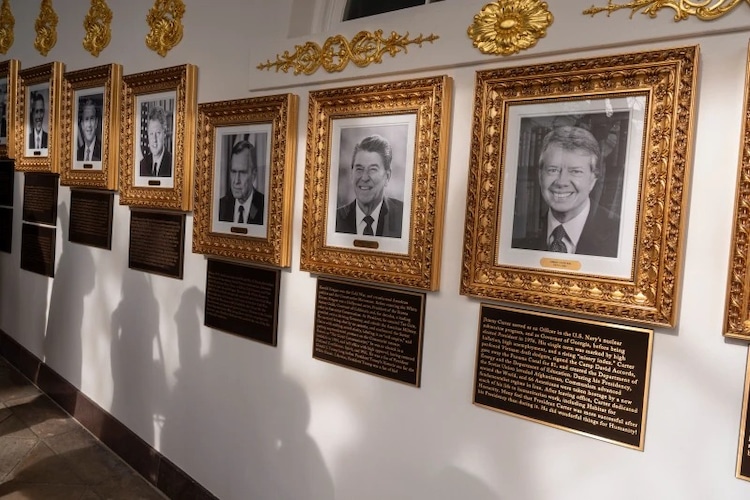
In a move that has ignited intense political debate and public reaction, the White House has revealed a series of newly installed plaques beneath the portraits of former US Presidents as part of Donald Trump’s much-publicised Presidential Walk of Fame. The exhibit, which Trump has described as being “conceived, built, and dedicated” by himself, is presented as a monument to presidents who were “good, bad, and somewhere in the middle” during their time in office.
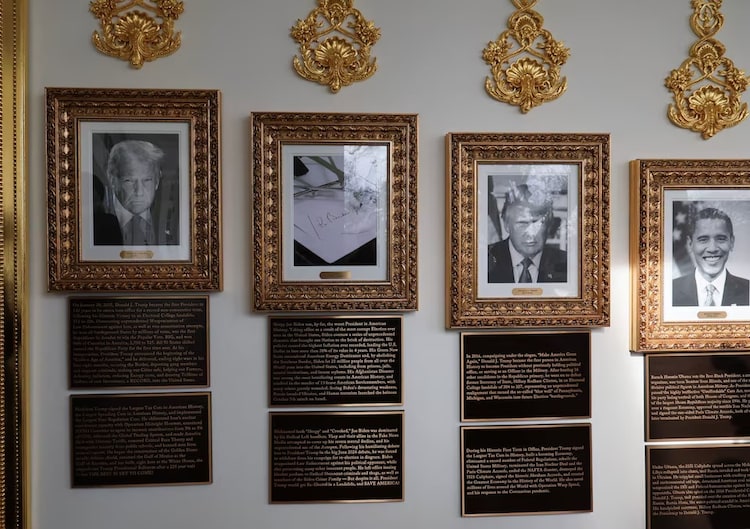
However, rather than serving as a neutral historical showcase, the plaques appear to elevate Trump’s own legacy while sharply criticising – and in some cases ridiculing — both Democratic and Republican predecessors. The plaques were made public on Wednesday and quickly became the focus of widespread criticism on social media, where many users described the tone as unprecedented, unpresidential, and a clear departure from long-standing traditions of decorum associated with the office.
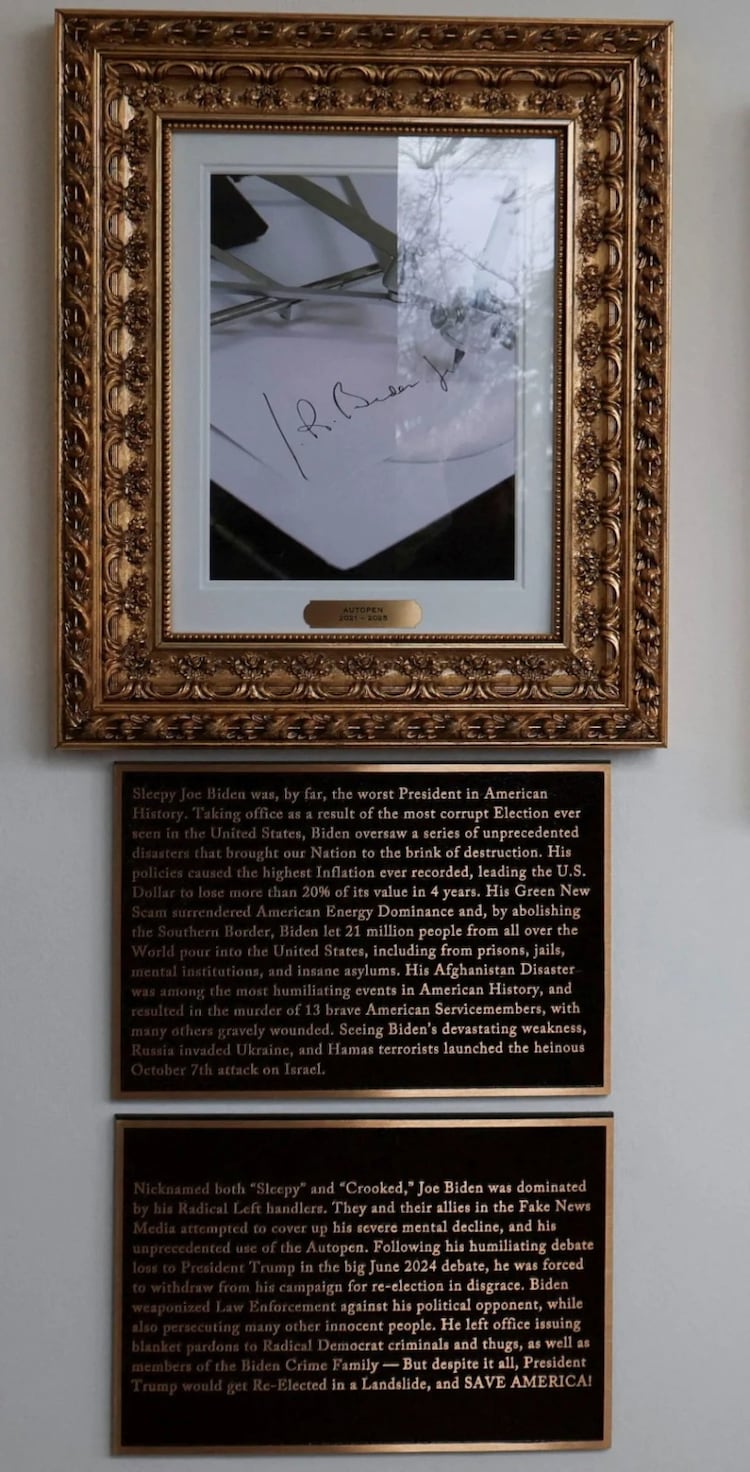
One of the most striking examples is the plaque placed beneath President Joe Biden’s photograph. It labels him as “Sleepy Joe” and bluntly describes him as “the worst President in American history.”
According to the plaque, “The worst president in American history was, without a doubt, Sleepy Joe Biden.” It goes on to claim that Biden assumed office after what it calls “the most crooked election in American history” and presided over a series of historic crises that nearly destroyed the nation. The inscription further asserts that despite these challenges, “President Trump would be re-elected in a landslide and save America.”
The text continues with further allegations, stating that Joe Biden was “controlled by Radical Left handlers” and portraying him as both “drowsy and corrupt.” It accuses his administration and what it terms the “Fake News Media” of concealing his alleged mental decline and highlights his use of an autopen. The plaque also references Biden’s withdrawal from the 2024 re-election race, claiming he exited “disgracefully” after losing to Trump in the June 2024 debate.
Former President Barack Obama also comes under scrutiny. His plaque acknowledges his historic role as the first Black President of the United States but simultaneously labels him as one of the most polarising political figures in American history.
The inscription describes Barack Hussein Obama as a former community organiser and one-term Illinois senator who went on to become president. It criticises his signature Healthcare reform, referring to the Affordable Care Act as the “Unaffordable Care Act,” and claims that it resulted in his party losing control of both chambers of congress due to its inefficiency.
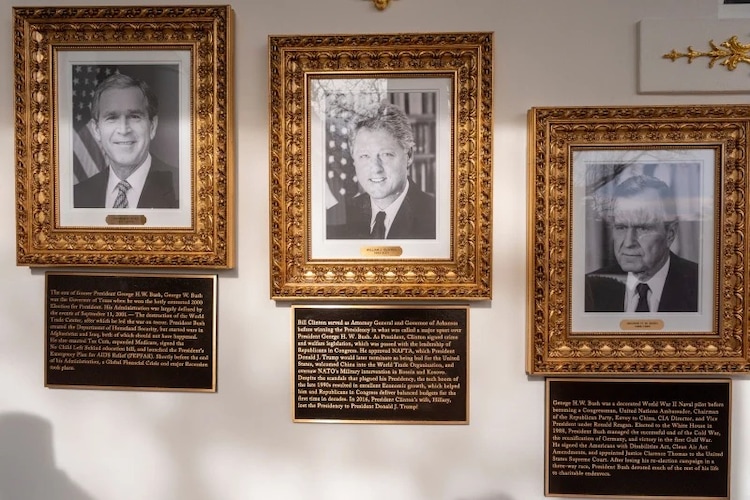
The plaque dedicated to former President Bill Clinton strikes a comparatively measured tone but still carries pointed political references. Clinton, once considered an ally of Donald Trump, is credited for overseeing balanced budgets, reforming the social safety net, and contributing to significant reductions in crime during his presidency.
At the same time, the plaque underscores the role of the 1990s technology boom and a Republican-controlled Congress in shaping his tenure, while noting that these achievements occurred “despite the scandals that plagued his Presidency.” Notably, it also highlights that Hillary Clinton “lost the Presidency to President Donald J. Trump in 2016,” ensuring that Trump’s electoral victory remains central to the narrative.
In sharp contrast, Donald Trump’s own plaque presents an expansive and triumphant account of his leadership. It credits him with beginning a second, non-consecutive term on January 20, 2025, and claims he ended eight wars, secured US borders, lowered energy costs, reduced inflation, and attracted “trillions of dollars in new investment” into the American economy.
The plaque states that Trump became the first President in 132 years to return for a second non-consecutive term following what it describes as a historic Electoral College landslide victory of 312 to 226. It further claims he overcame two assassination attempts and what it calls the “weaponization of law enforcement” to win every battleground state by millions of votes. According to the text, Trump became the first Republican in decades to win the popular vote and secured victories in 86% of US counties, with all 50 states shifting toward the Republican Party.
Even Trump’s Republican predecessors are not spared from criticism. Former President George W. Bush’s plaque acknowledges his role in establishing the Department of Homeland Security and leading the country through the aftermath of the September 11 attacks, but also criticises him for initiating the wars in Afghanistan and Iraq.
While the plaque credits Bush with launching the President’s Emergency Plan for AIDS Relief (PEPFAR), it notably omits references to funding disruptions that occurred during the Trump administration, a detail that has drawn criticism from policy experts.
The plaque dedicated to President John F. Kennedy focuses on his historic election as the first Catholic president, his diplomatic leadership during the Cuban Missile Crisis, and the tragic circumstances of his assassination in Dallas in 1963. It also references major setbacks such as the failed Bay of Pigs invasion.
According to the inscription, Kennedy faced significant global challenges, including the construction of the Berlin Wall by the Soviet Union and the humiliation of the Bay of Pigs fiasco. However, it credits him with skillfully navigating the threat of nuclear war during the Cuban Missile Crisis before his presidency came to a devastating end on November 22, 1963.
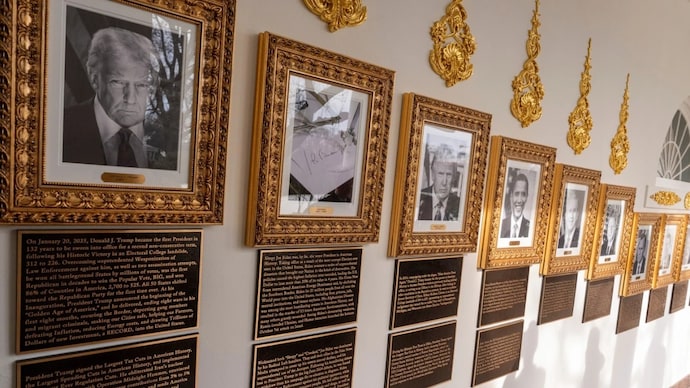
Defending the initiative, White House Press Secretary Karoline Leavitt told CNN that the plaques are “beautifully written summaries” of each president and their legacy. She added that many of the inscriptions were authored by President Trump himself, noting his personal interest in history.
The Presidential Walk of Fame has generated nationwide attention, admiration from supporters, and sharp criticism from opponents. Political analysts view the display as Trump’s latest effort to leave a deeply personal imprint on the White House while reshaping America’s historical narrative through his own lens.
Whether regarded as bold self-promotion or a breach of presidential tradition, the exhibit has undeniably succeeded in reigniting debate over leadership, legacy, and how history is remembered in modern American politics.
For breaking news and live news updates, like us on Facebook or follow us on Twitter and Instagram. Read more on Latest World on thefoxdaily.com.


COMMENTS 0