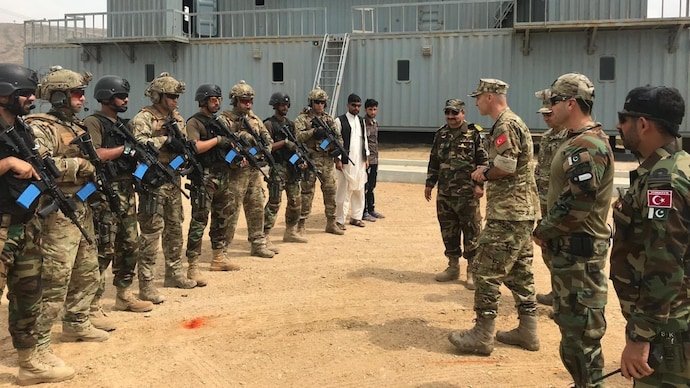
From the standpoint of a journalist who has closely tracked regional security alignments across South Asia and West Asia, Turkey’s reported negotiations to join a Saudi Arabia–Pakistan-led defence framework mark a potentially significant geopolitical development. According to a Bloomberg report citing officials familiar with the discussions, Ankara is in advanced talks to become part of a strategic military arrangement that analysts have described as a “Muslim NATO.” While the proposal is still evolving, its implications merit serious attention—particularly from India’s strategic community.
What Is the Proposed Saudi-Pakistan-Turkey Defence Pact?
The foundation of this emerging bloc lies in the Strategic Mutual Defense Agreement signed between Saudi Arabia and Pakistan in 2025. Modeled loosely on NATO’s Article 5, the pact reportedly contains collective defence language that treats an attack on one member as an attack on all. Bloomberg notes that negotiations to bring Turkey into this framework have progressed substantially, potentially transforming the bilateral agreement into a trilateral security alliance.
If finalised, the grouping would combine three distinct strengths: Saudi Arabia’s immense financial resources, Pakistan’s nuclear deterrence and ballistic missile capabilities, and Turkey’s operational military experience alongside its rapidly expanding defence manufacturing sector. This convergence of assets has led several analysts to label the proposed bloc an “Islamic NATO” or “Muslim NATO,” though no official terminology has been adopted.
Why Turkey’s Role Is Strategically Significant
Turkey’s potential participation is particularly noteworthy given its unique position as a long-standing member of NATO with the alliance’s second-largest standing military after the United States. In recent years, Ankara has increasingly pursued strategic autonomy, diversifying its defence partnerships amid uncertainty over Washington’s long-term regional priorities.
From an Indian perspective, Turkey’s growing alignment with Pakistan is a critical factor. During Operation Sindoor in May 2025, Turkey reportedly provided direct military assistance to Pakistan, including drones, logistical support, and trained personnel. Ankara has also been vocal in its diplomatic backing of Pakistan on the Kashmir issue, further complicating bilateral ties with New Delhi.
Deepening Pakistan–Turkey Defence Cooperation
Defence cooperation between Islamabad and Ankara has steadily intensified over the past decade. Turkey has supplied Pakistan with advanced unmanned aerial systems such as the Bayraktar TB2 and loitering munitions, significantly enhancing Pakistan’s drone warfare capabilities. Naval cooperation has also expanded, with Turkey assisting Pakistan in constructing Babur-class corvettes based on the MILGEM design.
In the air domain, Turkish Aerospace Industries is overseeing the mid-life upgrade of 42 Pakistan Air Force F-16 fighter jets, extending their operational lifespan to approximately 12,000 flying hours. According to UN COMTRADE data, Pakistan imported over $5 million worth of arms and related equipment from Turkey in 2024 alone.
Strategist Nihat Ali Özcan of Ankara-based think tank TEPAV told Bloomberg that the proposed alignment brings together “complementary assets,” arguing that Turkey’s operational expertise, Pakistan’s strategic deterrence, and Saudi Arabia’s financial power create a logically cohesive framework.
Saudi Arabia–Pakistan Axis: The Strategic Backbone
The Saudi-Pakistan defence agreement, reportedly signed during Prime Minister Shehbaz Sharif’s visit to Doha in September 2025, forms the backbone of this emerging bloc. While the full text remains undisclosed, reports suggest that Pakistan’s nuclear capabilities could factor into Saudi Arabia’s defence planning under certain contingencies.
This understanding reflects Riyadh’s broader effort to diversify its security partnerships amid shifting US engagement in the Middle East. For Turkey, participation would signal a recalibration of alliances, balancing its NATO commitments with regional strategic ambitions.
How Could This Affect India’s Security Calculus?
Retired Indian Air Force Air Marshal Anil Chopra has cautioned that while Turkey’s inclusion may not pose an immediate military threat to India, it would undoubtedly complicate the regional security environment. Writing in The Eurasian Times, Chopra argues that a trilateral bloc involving Pakistan, Turkey, and Saudi Arabia could challenge the interests of India, Israel, Greece, Cyprus, and Armenia.
For India, the concern lies not only in direct military confrontation but also in the broader strategic ripple effects. Enhanced Pakistan–Turkey coordination, backed by Saudi resources, could embolden Islamabad’s posture in South Asia while influencing dynamics in West Asia—regions where India has deep economic, energy, and diaspora interests.
India’s growing defence and strategic ties with Israel, Greece, and Cyprus may gain additional momentum as New Delhi seeks to balance emerging alignments. In the Mediterranean and West Asian theatres, overlapping interests could drive closer cooperation among these actors.
A Broader Geopolitical Reset in the Making
Turkey’s potential entry into the Saudi-Pakistan framework also signals a tentative reset in Ankara–Riyadh relations after years of rivalry over Sunni leadership in the Islamic world. Recent improvements in economic and defence cooperation, coupled with shared concerns over Iran, Syria, and Palestine, appear to be bridging past divides.
Beyond the immediate region, such a trilateral alliance could complicate strategic calculations for NATO, the United States, and Iran, while drawing heightened scrutiny from India. Security dynamics across West Asia, South Asia, and parts of Africa may gradually shift if the bloc materialises.
Conclusion: Vigilance, Not Alarm
In my assessment, India does not need to panic—but it cannot afford complacency. The prospect of a Saudi-Pakistan-Turkey defence axis underscores the fluidity of contemporary geopolitics. For New Delhi, sustained diplomatic engagement, strategic partnerships, and defence preparedness will be essential to navigate an increasingly complex regional landscape shaped by evolving alliances.
For breaking news and live news updates, like us on Facebook or follow us on Twitter and Instagram. Read more on Latest World on thefoxdaily.com.




COMMENTS 0