- UK’s Clear Position: No Support for Blockade
- Legal and Strategic Concerns Behind the Decision
- UK Military Presence: Focus on Stability, Not Escalation
- US Blockade Plan: A Point of Contention
- Signs of a Wider NATO Divide
- Why the Strait of Hormuz Matters
- Global Stakes: More Than a Regional Dispute
- Conclusion: A Test of Alliance Unity
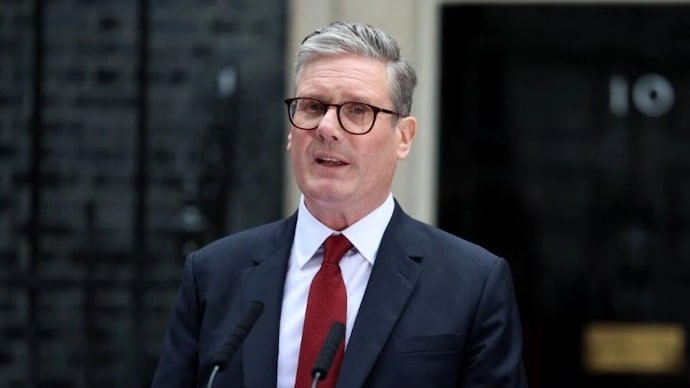
London/Washington: The United Kingdom has publicly distanced itself from the United States’ planned naval blockade in the Strait of Hormuz, with Prime Minister Keir Starmer declaring that Britain will not support the move or be drawn into a wider conflict with Iran.
The statement marks a significant divergence between key Western allies, highlighting emerging tensions within NATO as the crisis in the Gulf intensifies.
UK’s Clear Position: No Support for Blockade
Speaking amid escalating geopolitical tensions, Starmer made it clear that Britain’s priority is to ensure the Strait of Hormuz remains open rather than participate in restrictive Military action.
“We’re not supporting the blockade… It is vital that we get the Strait open and fully open,” he said.
The UK’s stance signals a preference for de-escalation and stability over confrontation, even as pressure mounts from allies.
Legal and Strategic Concerns Behind the Decision
No “Clear Lawful Basis”
Starmer emphasized that Britain would only consider involvement if two key conditions were met:
- A clear legal justification under international law
- A well-defined and credible strategic plan
Without these, the UK government sees participation as both risky and unjustified.
“Whatever the pressure… we’re not getting dragged into the war,” Starmer said.
Balancing Alliance and Autonomy
The decision reflects a careful balancing act maintaining alignment with allies while preserving independent strategic judgment.
It also suggests growing discomfort in Europe over the potential consequences of the US approach.
UK Military Presence: Focus on Stability, Not Escalation
Despite refusing to support the blockade, Britain maintains a military presence in the region.
Starmer confirmed that UK minesweepers are deployed, with their role focused on:
- Ensuring safe navigation
- Clearing potential maritime threats
- Supporting efforts to keep the Strait open
This indicates that while the UK is engaged in regional security, it is avoiding direct involvement in offensive or coercive operations.
US Blockade Plan: A Point of Contention
The United States has announced that it will begin enforcing a blockade targeting vessels entering or leaving Iranian Ports across the persian gulf and Gulf of Oman.
According to US Central Command:
- The blockade applies to vessels of all nationalities
- It targets Iranian-linked maritime activity
- Transit between non-Iranian ports via the Strait of Hormuz remains permitted
President Donald Trump has taken a hardline stance, warning that vessels engaging with Iran could face interception.
“No one who pays an illegal toll will have safe passage on the high seas,” he said.
Signs of a Wider NATO Divide
Strategic Differences Emerging
The UK’s refusal to back the blockade points to a broader divergence within NATO on how to handle the Iran crisis.
Key differences include:
- US approach: Pressure and coercion through military means
- UK/European approach: De-escalation and diplomatic engagement
This gap raises questions about alliance cohesion in handling Global Security challenges.
Risk of Fragmented Response
A divided NATO response could complicate efforts to manage the crisis, potentially:
- Weakening collective deterrence
- Encouraging further escalation by regional actors
- Creating uncertainty in global security frameworks
Why the Strait of Hormuz Matters
The Strait of Hormuz remains at the center of the crisis due to its critical role in global energy supply.
| Key Metric | Details |
|---|---|
| Global Oil Flow | ~20% passes through Hormuz |
| Strategic Importance | Primary route for Gulf oil exports |
| Global Impact | Direct influence on fuel prices and trade |
Any disruption in this narrow corridor has immediate and far-reaching economic consequences.
Global Stakes: More Than a Regional Dispute
The disagreement between the US and UK comes at a time when the stakes are already high:
- Shipping disruptions are increasing
- Oil prices remain volatile
- Regional tensions are escalating
The addition of alliance-level disagreements further complicates an already fragile situation.
Conclusion: A Test of Alliance Unity
The UK’s decision not to support the US-led Hormuz blockade highlights a critical moment for Western alliances. As the crisis deepens, differences in strategy and risk tolerance are becoming more visible.
While Washington pushes for increased pressure on Iran, London is prioritizing stability, legality, and de-escalation.
Forward-looking insight: If these divisions persist, NATO may face challenges in presenting a unified response not just in the Gulf, but in future global crises where coordination and trust are essential.
For breaking news and live news updates, like us on Facebook or follow us on Twitter and Instagram. Read more on Latest World on thefoxdaily.com.



COMMENTS 0