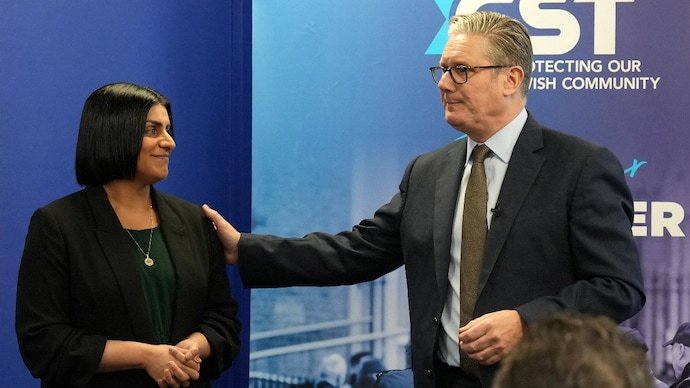
Political uncertainty is mounting in the United Kingdom as Prime Minister Keir Starmer faces sustained pressure following controversy surrounding the appointment—and subsequent removal—of former British envoy to the United States, Peter Mandelson. Mandelson’s past association with convicted sex offender Jeffrey Epstein has sparked sharp criticism, raising serious questions about judgment and accountability at the highest levels of government.
The situation has placed Starmer’s leadership under intense scrutiny, particularly as public and parliamentary confidence continues to erode. Critics argue that the episode has exposed vulnerabilities within Downing Street, with opposition voices demanding greater transparency and political responsibility.
Matters escalated further when Morgan McSweeney, Starmer’s closest adviser and chief of staff, stepped down after his involvement in Mandelson’s appointment came to light. The resignation was widely seen as a significant blow to the Prime Minister’s inner circle and an acknowledgment of the growing political damage.
The crisis deepened soon after with the departure of the Prime Minister’s communications chief, Tim Allan, compounding the sense of instability within the government. Together, these exits have fueled perceptions of a leadership in turmoil, struggling to regain control of the political narrative.
With dissent within Labour showing little sign of easing, speculation has intensified over who could step in should Starmer’s position weaken further. Among several names being discussed, Home Secretary Shabana Mahmood has emerged as one of the most prominent and widely respected potential successors.
If elevated to the top office, Mahmood would make history as the United Kingdom’s first Prime Minister of Pakistani descent and the first Muslim woman to lead the country—an unprecedented milestone in British political history.
Who Is Shabana Mahmood?
Shabana Mahmood has represented the Birmingham Ladywood constituency as a Member of Parliament since 2010 and is widely regarded as one of Labour’s most capable and politically astute figures. Her longevity in Parliament and steady rise through party ranks have earned her a reputation for competence and discipline.
A qualified barrister by training, Mahmood entered Parliament as one of Labour’s first Muslim women MPs. From the outset, she demonstrated strong legal and policy expertise, which helped her secure a position in the shadow cabinet early in her parliamentary career.
Over the years, she has held several senior front-bench roles, including shadow education secretary and shadow justice secretary. These positions allowed her to shape key policy debates and reinforced her standing as a dependable and pragmatic voice within the Labour Party.
Following Labour’s return to power last year, Mahmood was appointed Home Secretary in 2025. Since then, she has overseen one of the most demanding and politically sensitive portfolios in government, encompassing public order, immigration, national security, and policing.
Born in Birmingham to Pakistani immigrant parents, Mahmood has frequently spoken about her working-class upbringing and her British Muslim identity. She has consistently highlighted the transformative role of education in shaping her political journey, often citing it as a cornerstone of her personal and professional development.
In recent years, however, Mahmood has adopted a noticeably firmer stance on immigration policy. Just last week, she defended the Labour government’s proposed changes to permanent settlement rights, describing them as “fair” amid criticism from civil rights groups and opposition lawmakers.
Addressing the Home Affairs Committee, Mahmood stated that it would be “odd” for Britain not to seek to attract the “brightest and best” talent from around the world. She emphasized that while the UK remains open to global talent, settling in the country should be regarded as “a privilege, not a right.”
As political pressure on Keir Starmer continues to build, Mahmood’s growing visibility and steady leadership have positioned her as a serious contender in any future succession scenario. Whether the current turmoil translates into a leadership change remains uncertain, but her rise reflects shifting dynamics within British politics at a critical moment.
For breaking news and live news updates, like us on Facebook or follow us on Twitter and Instagram. Read more on Latest World on thefoxdaily.com.






COMMENTS 0