Amid escalating rhetoric from Washington and Tel Aviv over Iran’s nuclear activities, the United Nations’ nuclear watchdog has stated that it has found no concrete evidence that Tehran is pursuing a coordinated programme to build a nuclear weapon.
Despite Iran enriching uranium to 60% purity – a level significantly above civilian requirements – the International Atomic Energy Agency (IAEA) maintains that inspectors have not uncovered proof of an active, structured nuclear weapons strategy.
IAEA: No ‘Systematic Programme’ to Build a Bomb
IAEA Director General Rafael Grossi emphasized in an interview with NBC News that the agency’s findings contradict claims that Iran is currently developing a nuclear weapon.
“Inspectors have not found any proof of a systematic and structured programme to manufacture nuclear weapons in Iran,” Grossi stated.
His remarks directly challenge repeated assertions by US and Israeli officials that Tehran is moving closer to acquiring nuclear arms capability.
However, Grossi acknowledged that Iran has enriched uranium to 60% purity – a level that is technically much closer to weapons-grade material, which typically requires enrichment of around 90%.
“Only countries with nuclear weapons have” reached similar enrichment levels, Grossi noted. Still, he clarified that enrichment alone does not automatically translate into the development or possession of nuclear warheads.
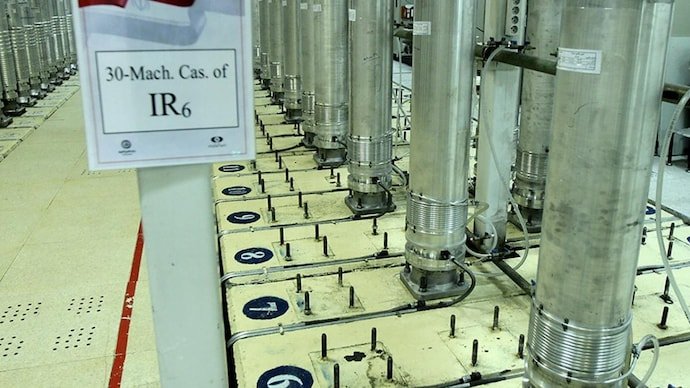
“The centrifuges were spinning constantly and producing more and more of that material,” Grossi explained. He added that the theoretical stockpile could be sufficient to produce more than 10 nuclear warheads – “but they don’t have them.”
Understanding the Enrichment Debate
| Enrichment Level | Typical Use | Significance |
|---|---|---|
| 3–5% | Civilian nuclear power reactors | Standard level for energy generation |
| 20% | Research reactors | Considered highly enriched uranium |
| 60% | No common civilian use | Technically closer to weapons-grade |
| 90%+ | Weapons-grade uranium | Required for nuclear bomb production |
While 60% enrichment raises alarm internationally, the IAEA stresses that the leap from enriched uranium stockpiles to a deliverable nuclear weapon requires additional weaponisation steps, infrastructure, and testing – none of which inspectors have confirmed.
US Envoy Claims Iran ‘Boasted’ About Stockpile
In contrast to the IAEA’s assessment, US special envoy Steve Witkoff offered a more critical view in an interview with Fox News.
According to Witkoff, Iranian negotiators earlier this year acknowledged possessing approximately 460 kilograms of uranium enriched to 60% purity.
“In that first meeting, both the Iranian negotiators said to us directly – with no shame – that they controlled 460 kilograms of 60 per cent enriched uranium and that they’re aware that could make 11 nuclear bombs,” Witkoff claimed.
He added that Iranian representatives appeared “proud” of having advanced their enrichment activities despite international oversight mechanisms.
Witkoff further alleged that Iran’s stockpile could theoretically be converted into weapons-grade uranium within a week to ten days, although he noted that certain facilities required for such a step were damaged during last year’s 12-day conflict.
Washington Seeks Broader Nuclear Deal
According to Witkoff, US President Donald Trump is seeking a comprehensive agreement that would require Iran to:
- Halt all uranium enrichment activities
- Dismantle its missile programme
- Cease support for regional proxy groups
- Scale back naval capabilities
“We responded that the president feels we have the inalienable right to stop you dead in your tracks,” Witkoff said, recalling the tense diplomatic exchange.
Despite Washington’s forceful rhetoric, the IAEA has reiterated that there is no verified evidence of an organised nuclear weapons programme underway.
Iran Denies Seeking Nuclear Weapons
Iran has consistently maintained that its nuclear programme is intended solely for peaceful purposes, particularly energy generation.
President Masoud Pezeshkian has repeatedly stated that Tehran has “never sought and will never seek to build a nuclear bomb,” asserting that uranium enrichment is part of Iran’s sovereign right under international law.
The divergence between intelligence assessments, diplomatic claims, and IAEA inspections underscores the complexity of the ongoing nuclear standoff.
Global Implications of the IAEA Findings
The IAEA’s position – that no structured nuclear weapons programme has been detected – may influence ongoing diplomatic efforts and shape the international response to Iran’s enrichment activities.
At the same time, Iran’s 60% enrichment level continues to raise geopolitical tensions, particularly given its proximity to weapons-grade thresholds.
As debates intensify over nuclear capability versus intent, the watchdog’s findings highlight a critical distinction: possessing enriched uranium is not equivalent to building a bomb – but it remains a flashpoint in one of the world’s most sensitive security disputes.
For breaking news and live news updates, like us on Facebook or follow us on Twitter and Instagram. Read more on Latest World on thefoxdaily.com.






COMMENTS 0